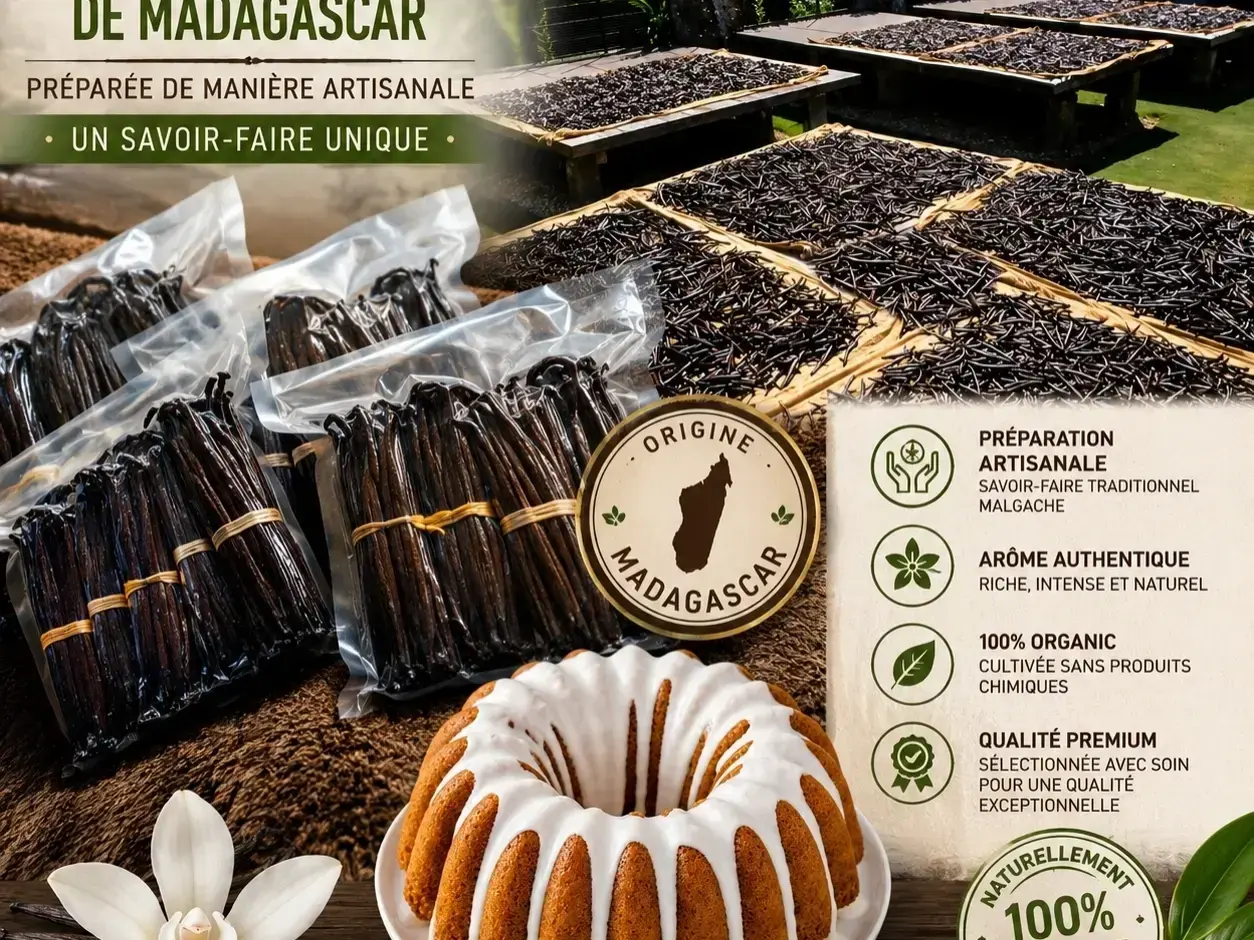
Madagascar Vanilla Pod Types: Extra Long, Short & Unsorted Explained
Madagascar exporters classify vanilla pods into types (Extra Long, Long, Standard, Short, Unsorted) by length, grade and quality; each type serves different markets, price points and uses for export buyers.
Overview: Madagascar vanilla export types
Madagascar vanilla pods are grouped into export grades to match buyer needs and expected price bands. Typical grade classification names are Extra Long pods, Long, Standard, Short pods and Unsorted pods.
Comparison table—Types, Features, Cost & Best Use
| Type | Key Features | Typical Cost (typical ranges) | Best For |
|---|---|---|---|
| Extra Long pods | Longest pod length, glossy skin, high curing quality and higher vanillin concentration; low blemishes; low moisture content variability. | Premium band—typically the highest commercial grade (typical ranges vary by season and lot). | Premium whole beans for retail, gourmet chefs and branded packaging; buyers seeking premium vanilla beans. |
| Long pods | Long length but slightly shorter than extra long; good aroma and consistent curing; moderate blemishes possible. | Upper-mid band—less than extra long but above standard. | Retail packaging, bulk gourmet customers and small-scale food producers. |
| Standard pods | Moderate length, acceptable curing quality for culinary uses; balance of price and aroma; grading focuses on moisture content and seed cavity fullness. | Mid band—common for bulk culinary buyers seeking value. | Bulk culinary buyers, restaurants and foodservice who need reliable aroma at sensible cost. |
| Short pods | Shorter length, can have higher incidence of splits or blemishes; still useful when curing quality preserves aroma and vanillin concentration. | Lower-mid to low band—priced below standard and long pods. | Confectionery industry, blenders and users who prefer cost-effective beans or cut extracts. |
| Unsorted/Unclassified pods | Mixed-length bulk lots, variable moisture content and curing quality; not sized by a grading checklist or sizing sieve. | Lowest band—bulk unsorted pricing for industrial buyers (typical ranges depend on vanillin concentration in lot). | Industrial extraction, flavor houses, and manufacturers needing bulk unsorted beans for vanillin extraction or processing. |
How exporters define types: length, moisture, and grade?
Exporters define types first by pod length and then by moisture content and visible defects; this front-loads buyer expectations. Length measurement is done with a sizing sieve or ruler, moisture content is measured after the vanilla curing process, and grade classification reflects these combined checks.
Extra Long pods (definition, use, pros & cons)
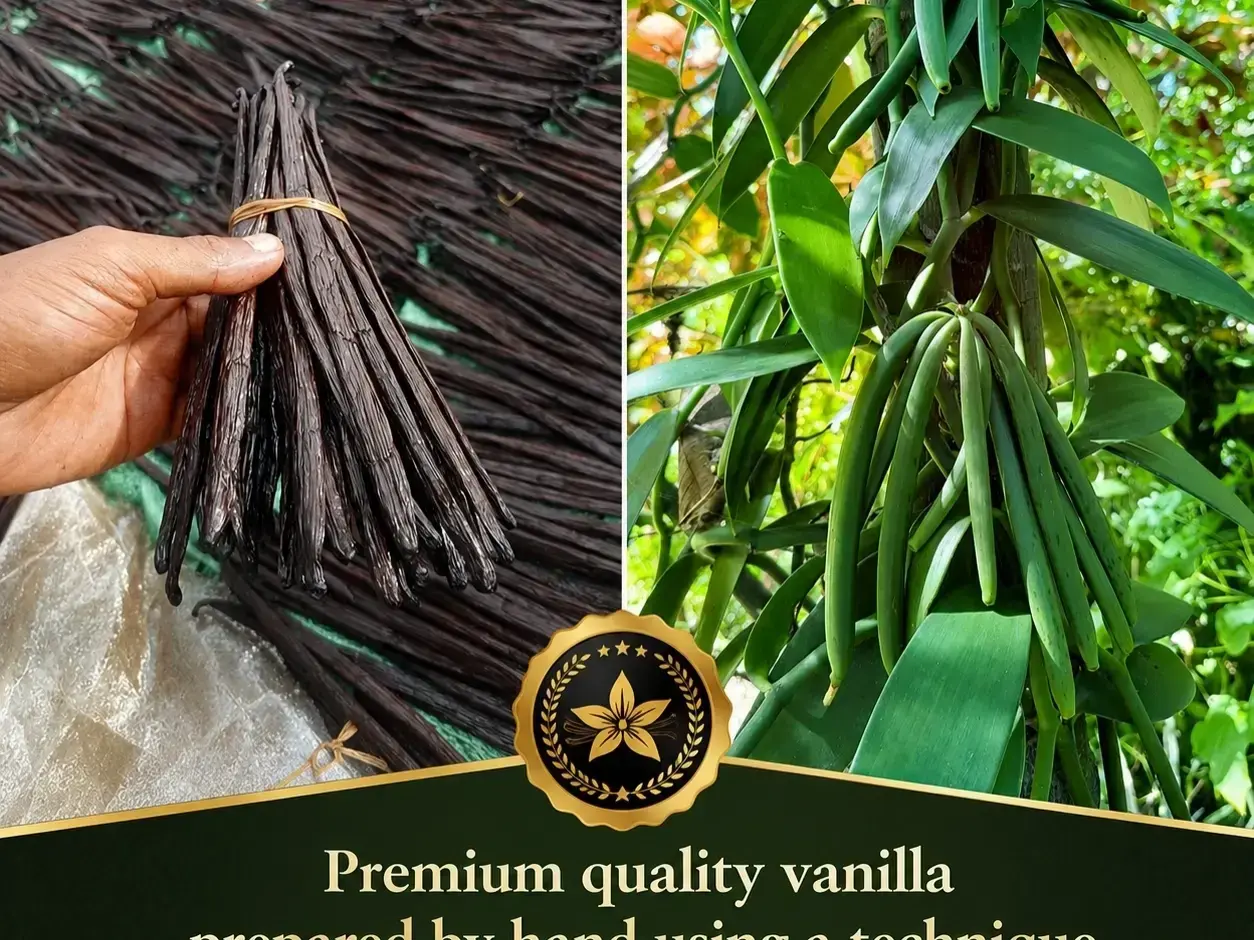
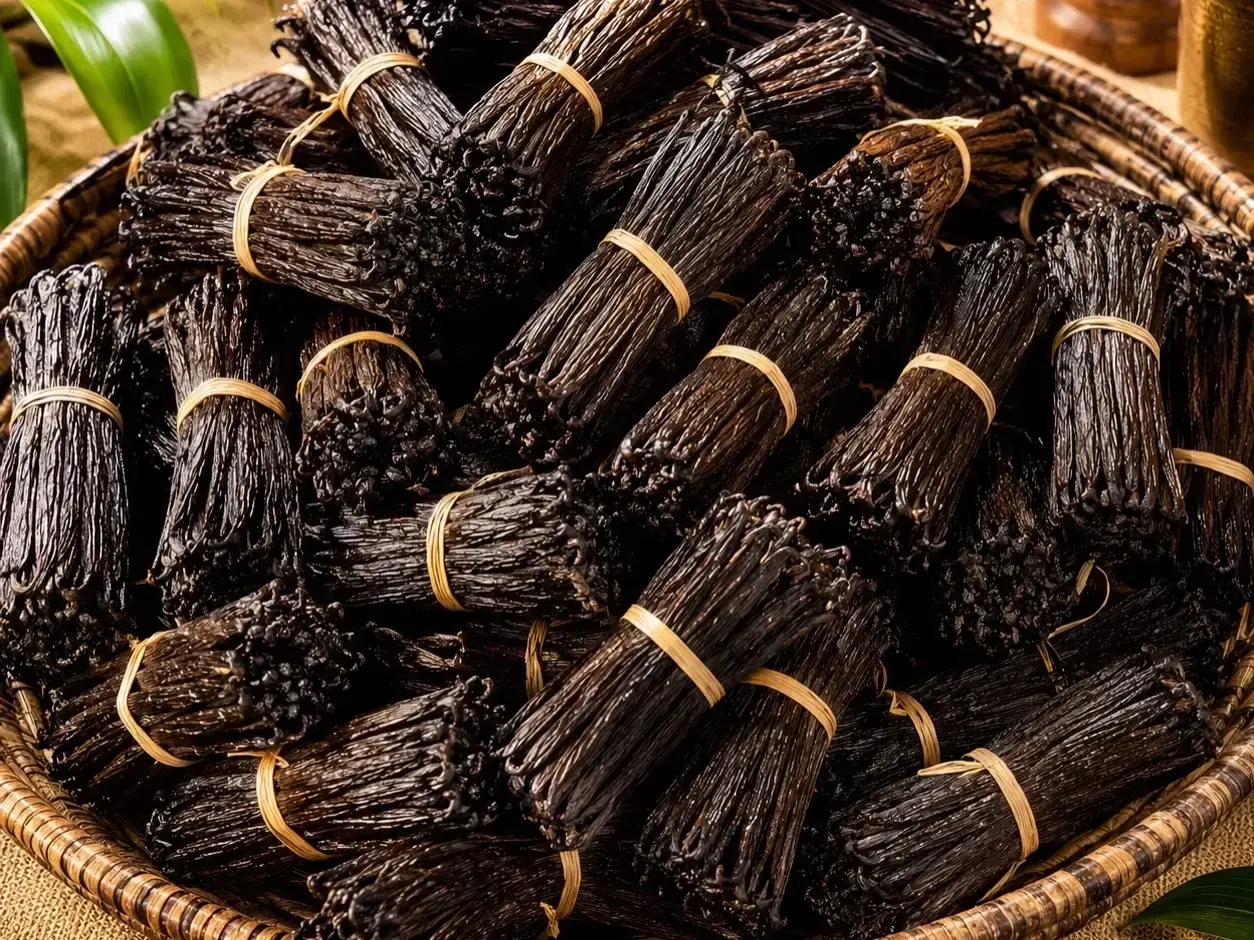
Extra Long pods are the longest export grade and are chosen for premium markets because they show the best curing quality and seed cavity fullness. Use them when packaging premium whole beans for retail or for branded products. Pros: high vanillin concentration, visual appeal, and commanding price. Cons: seasonal availability and higher cost; buyers should check moisture content and grade classification carefully before contracting.
Long pods (definition, use, pros & cons)
Long pods are a step below extra long but still preferred for retail packaging and gourmet uses. Use these when you want a balance of quality and cost. Pros: good aroma, reliable curing quality, suitable for premium-looking retail packs. Cons: slightly lower vanillin concentration and occasional minor blemishes compared with extra long pods.
Standard pods (definition, use, pros & cons)
Standard pods are the typical commercial grade for bulk culinary buyers. Use them in restaurant kitchens, foodservice and for general culinary supply. Pros: predictable cost, reasonable aroma when curing quality is good, and broad availability. Cons: not as visually uniform as premium beans and variable moisture content can affect weight-based contracts.
Short pods (definition, use, pros & cons)
Short pods are shorter-length export grade sold at a lower price point and often used by the confectionery industry or for blended extracts. Use them where visual length is less important than aroma or cost. Pros: cost-effective and useful for cutting or extraction. Cons: can show more splits and blemishes; check curing and vanillin concentration if aroma is critical.
Unsorted/Unclassified pods (definition, use, pros & cons)
Unsorted pods are mixed-length bulk lots not passed through a sizing sieve or grading checklist and are best for industrial extraction. Use them when buying for vanillin extraction or large-scale processing. Pros: lowest cost per kilo and practical for bulk unsorted needs. Cons: variable moisture content, mixed curing quality and unpredictable seed cavity fullness require lab testing before processing.
How to sort, measure and grade vanilla pods (step checklist)?
- Front-load the lot inspection — inspect an export lot immediately and note if the shipment is bulk unsorted or pre-graded.
- Measure pod length using a sizing sieve or calibrated ruler to classify Extra Long, Long, Standard or Short.
- Check moisture content with a portable meter after the vanilla curing process; record values on the grading checklist.
- Assess visible defects: splits, mould, blemishes and skin condition (pod skin / pericarp).
- Evaluate seed cavity fullness by gently squeezing a sample to estimate vanillin concentration potential.
- Weigh and sample multiple cartons to create a representative export lot sample for lab testing.
- Run lab tests for moisture content, microbial limits and vanillin assay if buyer requires it.
- Document the grade classification, include the phytosanitary certificate and packing list for export regulations (Madagascar).
Export compliance, lab testing and packing notes for Madagascar shipments
- Obtain required export documentation and a phytosanitary certificate as per export regulations (Madagascar).
- Include clear grading notes listing vanilla grade/quality, pod length ranges, and moisture content on the export lot paperwork.
- Run lab testing for moisture and vanillin concentration when selling to flavor houses or industrial buyers.
- Pack to protect curing quality: sealed cartons, moisture control and clear lot numbering for traceability.
- For commercial grade or premium whole beans, state buyer specifications (length, blemish tolerance, curing quality) in the purchase contract.
Frequently Asked Questions
This guide combines Madagascar-first commercial expertise and an exporter-side sorting checklist to make sourcing and contracting simple for international vanilla buyers. For quotes and to view current export lots: /contact/
Vanilla pod—primary product grown and exported in Madagascar. Remember: curing and fermentation, pod length, grade classification and export regulations all shape final value.
Related Resources
Pricing Guide: Whole Pods, Vanilla Cuts, Extract, Paste and Powder
How It WorksVanilla Curing, Processing and Grading: Preparing Pods for International Export
Compared ToBlack Bourbon Vanilla vs Red Bourbon Vanilla: Trade-offs for Export Buyers
Compared ToExtra Long Pods Vanilla vs Short Pod Vanilla: Packaging, Pricing and Retail Appeal