Madagascar Vanilla Curing, Processing and Export Grading
Madagascar producers cure, process, and grade vanilla pods for export by harvesting mature green pods, killing and sweating to develop vanillin, drying and conditioning to target moisture, sorting by length/appearance/moisture and assigning export grades (Grade A, cuts, short/long) before final packaging and phytosanitary clearance.
Overview: Why curing and grading matter for Madagascar export vanilla
Direct answer: Proper curing and grading make Madagascar vanilla stable for shipment, meet international export standards, and determine whether pods qualify as Grade A Gourmet Vanilla or lower categories.
Curing is the core of vanilla processing and pod curing: it converts green pods into aromatic, marketable beans through hot-water killing, sweating and controlled drying. International export standards require consistent moisture content, absence of pests, and traceable handling so organoleptic quality and vanillin content meet buyer expectations. Grading sorts pods by length, appearance and split status into categories such as Extra long pods vanilla, Short pod vanilla, and Vanilla cuts - Split vanilla. Good post-harvest handling—an agri-food processing practice—reduces disputes at inspection and protects value for Madagascar producers targeting gourmet and industrial buyers.
Step-by-step curing and processing (ordered checklist)
Direct answer: Harvest mature green pods then follow a sequence of killing, sweating, drying, conditioning and sorting to reach export-grade moisture and vanillin levels.
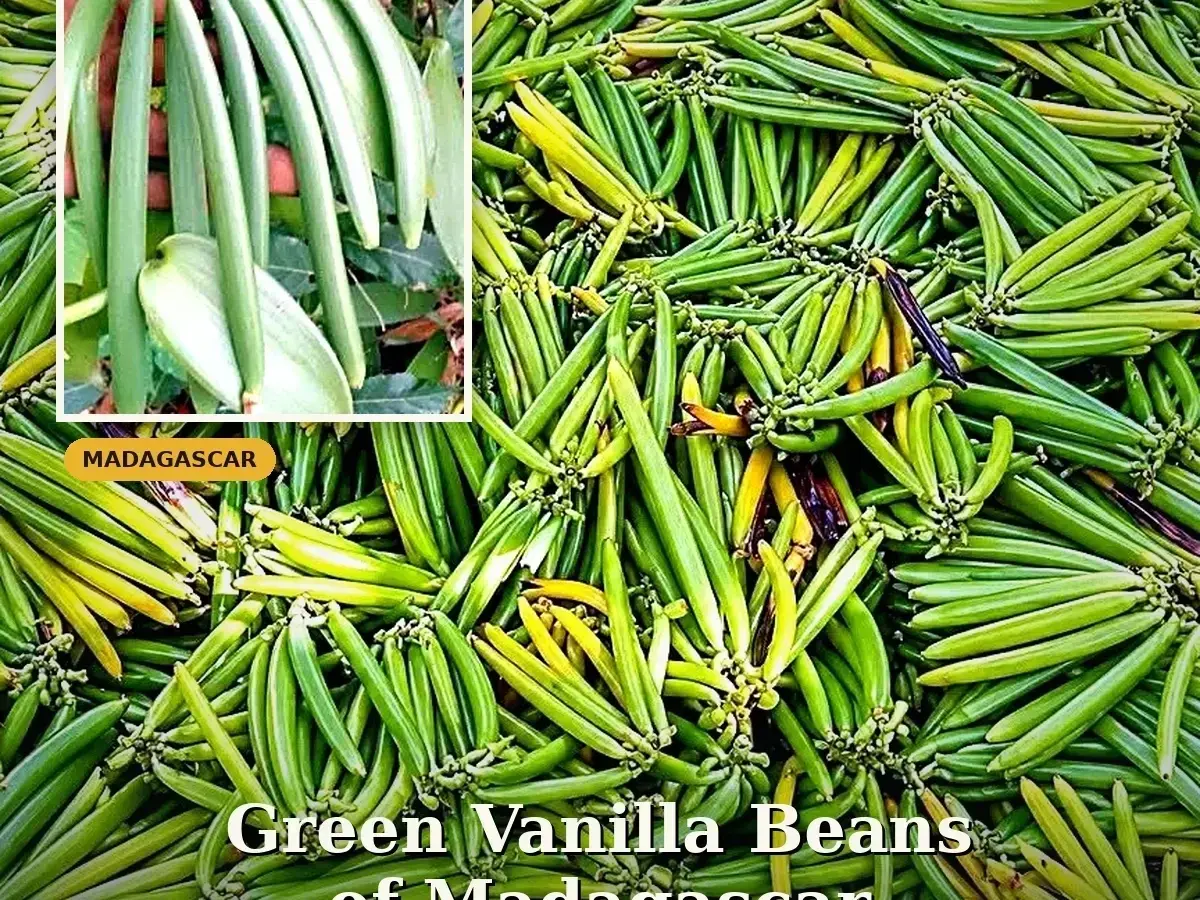
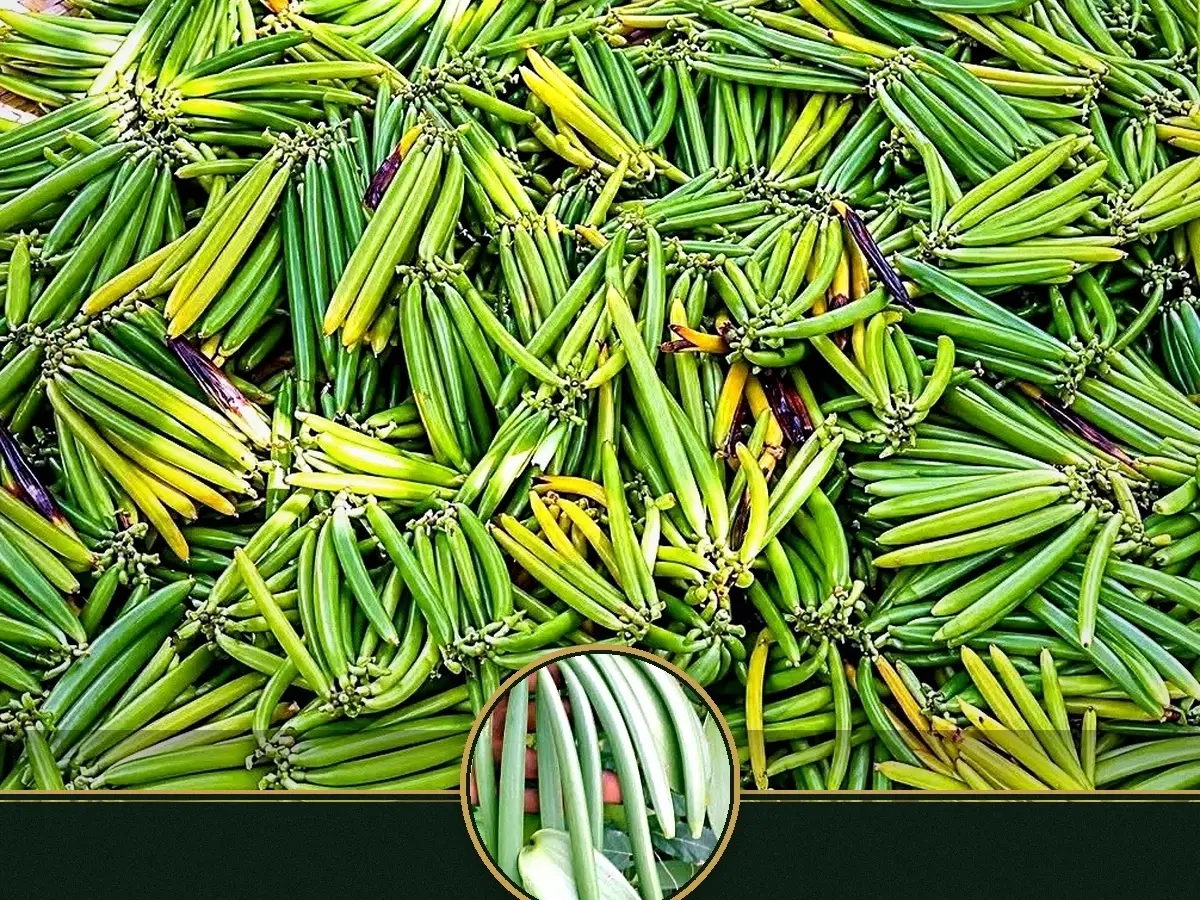
- Harvest timing — Pick pods at physiological maturity, typically when the blossom scar shows and the pod is full but still green. Harvesting at the right stage starts the curing process correctly and protects potential vanillin content.
- Killing (hot-water killing or scalding) — Immediately plunge pods in hot water (typical hot-water killing method) or apply brief steam to stop vegetative growth and activate enzymes that later form vanillin. This step begins enzymatic conversion during subsequent sweating.
- Sweating (barn sweating or insulated boxes) — After killing, wrap pods in blankets or place in insulated boxes to maintain warmth and humidity for 24–72 hours. Sweating promotes enzymatic reactions and the development of aroma; monitor the drying curve from sweat to surface tackiness.
- Initial drying (sun drying / low-heat drying) — Spread pods in single layers in shaded sun or ventilated racks; alternate sun and shade over several days to reduce moisture without cracking. This hyponym of drying must be managed to avoid rapid loss of moisture and preserve organoleptic quality.
- Controlled drying curve — Move pods to lower humidity, cooler drying rooms to slowly reach target moisture content. Typical target ranges are given later; consistent drying protects against mold and excessive blackening.
- Conditioning — Store dried pods in closed boxes for 2–6 weeks to redistribute moisture, stabilize flavor and finish vanillin extraction. Conditioning is essential before grading to ensure uniform moisture content across batches.
- Sorting and grading — Sort by length, appearance (silverskin, blemishes), and moisture. Assign export categories: Grade A Gourmet Vanilla for premium long, intact beans; Extra long pods vanilla as a premium length spec; Short pod vanilla and Vanilla cuts - Split vanilla as lower or processing grades.
- Packing and phytosanitary prep — Vacuum packing, fumigation if required, and paperwork prep for the Phytosanitary certificate clearances required to export from Madagascar.
Detailed sub-steps and best-practice parameters
Direct answer: Maintain killing water near scalding temperatures, sweat at warm humid conditions, and dry along a controlled temperature/humidity curve to stabilize moisture and vanillin formation.
Best-practice parameters are typical ranges: killing water often at ~60–80°C for short exposure (hot-water killing), sweating in 30–40°C with high humidity for 24–72 hours, and a drying curve that gradually lowers humidity to reach moisture content targets. During conditioning, keep storage at moderate temperature (15–25°C) and relative humidity that allows moisture redistribution. These parameters minimize mold, blackening and loss of organoleptic quality while encouraging vanillin extraction.
Grading categories, specifications and sample tolerance for export
Direct answer: Export grading divides beans into Grade A (gourmet), extra long, short, and cuts with tolerances for splits, moisture and appearance stated as typical sample ranges.
| Export Grade | Typical Specs (illustrative ranges) | Common Tolerance / Sample Notes |
|---|---|---|
| Grade A Gourmet Vanilla | Long, intact pods; high oil sheen; uniform dark brown to black; target low moisture for stability. Emphasises organoleptic quality and vanillin content. | Typical sample allows small % of minor blemishes; most buyers accept small variance in length within the grade. |
| Extra long pods vanilla | Premium length specification often above typical length bands; selected for retail gourmet markets. | Lower tolerance for splits or cuts; often lower accepted moisture variability. |
| Short pod vanilla | Shorter length beans sold at lower price point or blended for extract production. | Higher tolerance for size variance; used where length is not critical to buyers. |
| Vanilla cuts - Split vanilla | Split, broken or otherwise cut pods; useful for industrial extraction and value-added processing. | Expected higher % of broken beans; typically priced lower and used for vanillin extraction. |
Sample tolerances and acceptance levels are illustrative and depend on buyer contracts; declare moisture content and measured vanillin content when offering product for inspection to reduce grading disputes.
Processing timeline by project size (Small / Average / Large)
Direct answer: Typical project timelines vary by scale: small farms move quicker on coordination but have limited capacity; large exporters manage volume in longer, staged workflows.
| Project Size | Typical Duration (illustrative) | Notes |
|---|---|---|
| Small farm | 4–8 weeks | On-site curing, manual sweating and sun drying; short throughput, flexible conditioning batches. |
| Average cooperative | 6–10 weeks | Centralised facilities, batch scheduling for drying curve control, shared QC testing. |
| Large exporter | 8–14 weeks (staged) | Industrial drying rooms, larger conditioning stores, formal lab testing and packaging lines to meet export grade demands. |
Quality control, laboratory tests and export compliance
Direct answer: QC combines moisture and vanillin testing, sensory checks and phytosanitary documentation to satisfy buyers and authorities.
- Moisture content — Test representative samples using oven-dry or rapid moisture meters; report typical ranges and ensure conformity to buyer specs to prevent mold during shipment.
- Vanillin content — Laboratory assays (HPLC or typical extraction methods) measure vanillin concentration as a chemical quality marker; report values when offering Grade A Gourmet Vanilla or industrial lots.
- Organoleptic quality—Trained cuppers assess aroma and flavor after conditioning; sensory results complement chemical test results.
- Phytosanitary certificate—Obtain official inspection and the required phytosanitary clearance for export from Madagascar; this document is mandatory for many markets and reduces risk of border rejections.
- Traceability and sampling—Keep batch records, sample retention and chain-of-custody notes to resolve grading disputes and support export compliance.
Packaging, storage and logistics for international shipment from Madagascar
Direct answer: Use vacuum packaging, appropriate fumigation and controlled storage to protect pods during transit, while meeting phytosanitary and buyer requirements.
After grading, vacuum packaging is commonly used to limit oxidation and moisture exchange; it preserves oil sheen and reduces risk of silverskin abrasion. For some destinations, fumigation or treatment may be required before export—coordinate treatments with the phytosanitary certificate process. Maintain cool, ventilated storage away from direct sun to avoid heat-induced blackening. Cold chain is not usually required for cured vanilla, but temperature control during long transit helps preserve organoleptic quality. Label batches with grade, moisture, vanillin notes and origin to smooth customs and commercial inspections. Severe cases must be rejected and destroyed per buyer rules to avoid export rejection.
Frequently Asked Questions
For commercial enquiries, product listings and export checklists contact our team: /contact/
Semantic triple: Vanilla curing prepares Madagascar vanilla pods for international export (quality, grade, and shelf stability).
Keywords used: killing, sweating, curing, conditioning, drying curve, moisture content, vanillin extraction, organoleptic quality, export grade, phytosanitary clearance.
Related Resources
Cost Comparison: Grade A Gourmet Vanilla vs Grade B Vanilla (Madagascar Bourbon)
What It CostsPricing Guide: Whole Pods, Vanilla Cuts, Extract, Paste and Powder
What It CostsHow Seasonality and Pre-Harvest Contracts Affect Vanilla Prices in Madagascar
Compared ToGrade A Gourmet Vanilla vs Grade B Vanilla: Which Madagascar Export Should You Buy?