Vanilla Pod Storage & Perishability Checklist for Madagascar Exporters
Vanilla pod storage checklist pre export helps Madagascar exporters keep vanilla pods dry, stable, and mold-free before shipment. Store Grade B Vanilla, Black Bourbon Vanilla, and Red Bourbon Vanilla in a cool, ventilated, low-humidity space. Check for condensation, mold, and over-drying. Separate grades and damaged pods. Recondition only when needed. Vanillababa can help buyers and exporters align storage, conditioning, and export-ready handling in Madagascar.
What Should a Vanilla Pod Storage Checklist Include Before Export?
Vanilla pod storage before export should include moisture control, ventilation, grading separation, contamination checks, and daily inspection. A correct checklist protects cured pods from mold, sweating, over-drying, and flavor loss while keeping Grade B Vanilla export-ready in Madagascar.
A practical vanilla bean storage checklist starts with the basics. Confirm moisture content, log the lot, and keep a clean inspection record. Then check each storage container for airflow, seal damage, and odd smells. Madagascar exporters also need lot segregation, so mixed grades don't weaken quality control. Because Madagascar vanilla exports often move through warm staging areas, each bundle should be watched for surface dampness, soft spots, or brittle tips. Pre-export conditioning isn't only about looking neat. It's about keeping aroma retention, flexibility, and perishability in balance until packing. In humid coastal zones, even a short delay can raise mold growth risk, so ventilated storage and routine sorting matter every day.
Before Export: How Should Vanilla Pods Be Stored in Madagascar?
Before export, vanilla pods should be kept in a cool, dry, well-ventilated storage area, away from sunlight, strong odors, and sealed heat buildup. Madagascar exporters should use clean, breathable packaging, separate grades, and monitor moisture so pods remain supple without becoming damp.
In Madagascar, the warm, humid coast can raise sweating and mold prevention concerns, while inland transport and port-bound staging can stretch the holding period. That means the warehouse plan should protect curing, allow ventilation, and avoid stacking that blocks airflow. Seasonal rain and humidity swings can also shift moisture content, so exporters shouldn't rely on one check alone. Reconditioning should be used only when the pods need it. Too much handling can reduce flexibility and dull flavor. A simple post-harvest handling routine, built around post-harvest handling discipline and export quality control, helps keep each batch stable until packing.
During Storage: What Signs Show Vanilla Pods Are Perishing?
During storage, vanilla pods are perishing when mold appears, surfaces sweat, pods become brittle, or the aroma turns sour, smoky, or flat. These signs mean the lot needs immediate inspection, reconditioning, or segregation before export quality declines further.
If any of these signs appear, move the batch out of general stock and inspect it at once. In Madagascar's coastal heat, a lot can shift from safe to risky faster than exporters expect, especially during long inland transport or rainy staging periods. A small issue can spread to nearby cured pods if lot segregation is weak. The safest response is to document the issue, isolate the batch, and decide whether reconditioning, trimming, or removal is needed before the package is marked export-ready.
How Do You Inspect Grade B, Black Bourbon, and Red Bourbon Vanilla?
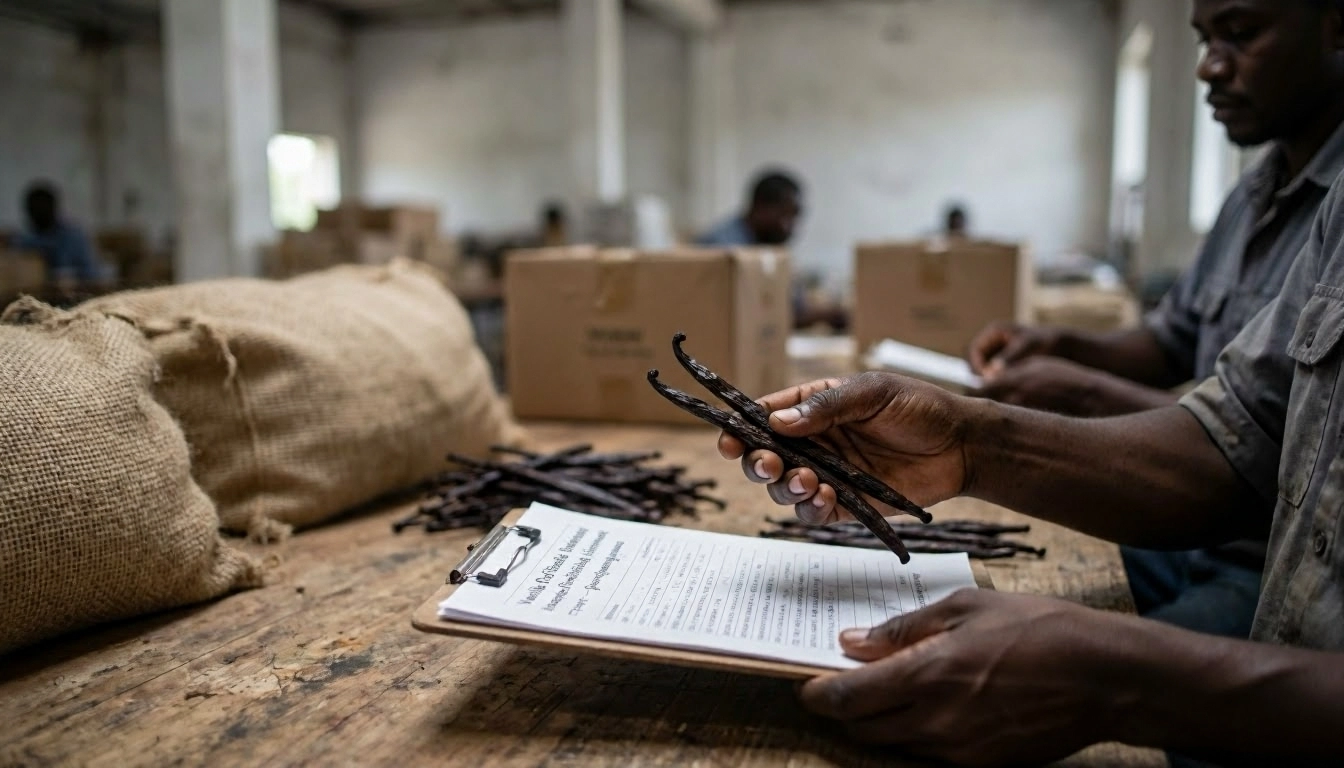
Grade B Vanilla, Black Bourbon Vanilla, and Red Bourbon Vanilla should be inspected separately because each lot can differ in moisture, color, flexibility, and defect rate. Sorting by grade helps exporters protect consistency, reduce contamination risk, and choose the right storage response for each batch.
| Lot type | What to check | Typical storage response |
|---|---|---|
| Grade B Vanilla | Look for pliability, even cure, clean aroma, and any signs of mold or over-drying. | Keep in ventilated storage, isolate defects, and recondition only if moisture balance has drifted. |
| Black Bourbon Vanilla | Check the dark cured surface, aroma depth, and whether the skin is supple rather than sweaty. | Use careful lot segregation and tighter inspection because dark pods can hide early damage. |
| Red Bourbon Vanilla | Review color uniformity, cure stage, softness, and whether the pods need more stabilization. | Hold separately, monitor moisture content closely, and avoid mixing with drier stock. |
For Madagascar exporters, quality sorting isn't cosmetic. It's the fastest way to protect export packing decisions. A batch of darker pods may look sound but still carry hidden defects, while a lighter Bourbon vanilla lot may need gentler handling. The inspection should note flexibility, aroma retention, and any contamination from storage containers. Because the island's supply chain can add days between farm, warehouse, and port, repeated checks are useful. One lot may need reconditioning, while another can move straight to export-ready packing with only minor trimming and verification.
After Storage: What Is the Reconditioning and Packing Checklist?
After storage, vanilla pods should be reconditioned only if needed, then packed in clean, protective, export-ready materials that preserve aroma and flexibility. The final checklist includes lot confirmation, defect removal, moisture balance, and secure packing that prevents crushing and re-wetting in transit.
In Madagascar, reconditioning should be practical, not routine. If seasonal rain has changed the warehouse climate or long port staging has dried the pods too much, a short correction may help restore balance. If the lot is already stable, skip extra handling and move to packing. Good export quality control means the final bundle is protected from re-wetting, odor contamination, and rough handling. The goal is simple. Preserve cured pods in a condition that still feels supple, smells clean, and stays export-ready until the buyer receives it.
Which Red Flags Mean a Vanilla Lot Should Not Ship Yet?
A vanilla lot should not ship yet if it shows visible mold, wet packaging, insect damage, off-odors, or unstable moisture. These red flags usually indicate storage failure, contamination, or poor conditioning and must be corrected before export documents and packing are finalized.
If one of these red flags appears, stop the shipment flow and recheck the entire lot. In Madagascar's warm, humid shipping chain, a small storage problem can grow quickly once cartons are staged near port. That is why ventilated storage, lot segregation, and repeated inspection matter right up to dispatch. The safest decision is to hold the load, correct the issue, and only then finalize export packing and paperwork.
Frequently Asked Questions
Author: Randrianantenaina Landry
Related Resources
Cost Comparison: Grade A Gourmet Vanilla vs Grade B Vanilla (Madagascar Bourbon)
how much does Grade A vs Grade B Madagascar vanilla cost
What It CostsHow Seasonality and Pre-Harvest Contracts Affect Vanilla Prices in Madagascar
how does Madagascar vanilla season affect prices and what do pre-harvest contracts cost
How It WorksMadagascar Vanilla Export: Step-by-Step Export Process for Bourbon Vanilla
how does Madagascar vanilla export process work step by step
How It WorksSourcing & Contracting Process for Vanilla Export: Pre-harvest Contracts and Supplier Verification
how does vanilla pre-harvest contract sourcing work for exporters