How Madagascar Vanilla Export Works Step by Step
Madagascar vanilla export works by sourcing cured Bourbon vanilla, sorting and grading beans, testing quality and moisture, preparing export documents, meeting phytosanitary and customs requirements, packing for transit, and shipping to the buyer’s destination. Each step protects aroma, moisture, and traceability, and it also lowers rejection risk. For Europe and wholesale buyers, the process depends on harvest timing, curing quality, and compliance checks before the beans leave Madagascar.
What Happens First in Madagascar Vanilla Export?
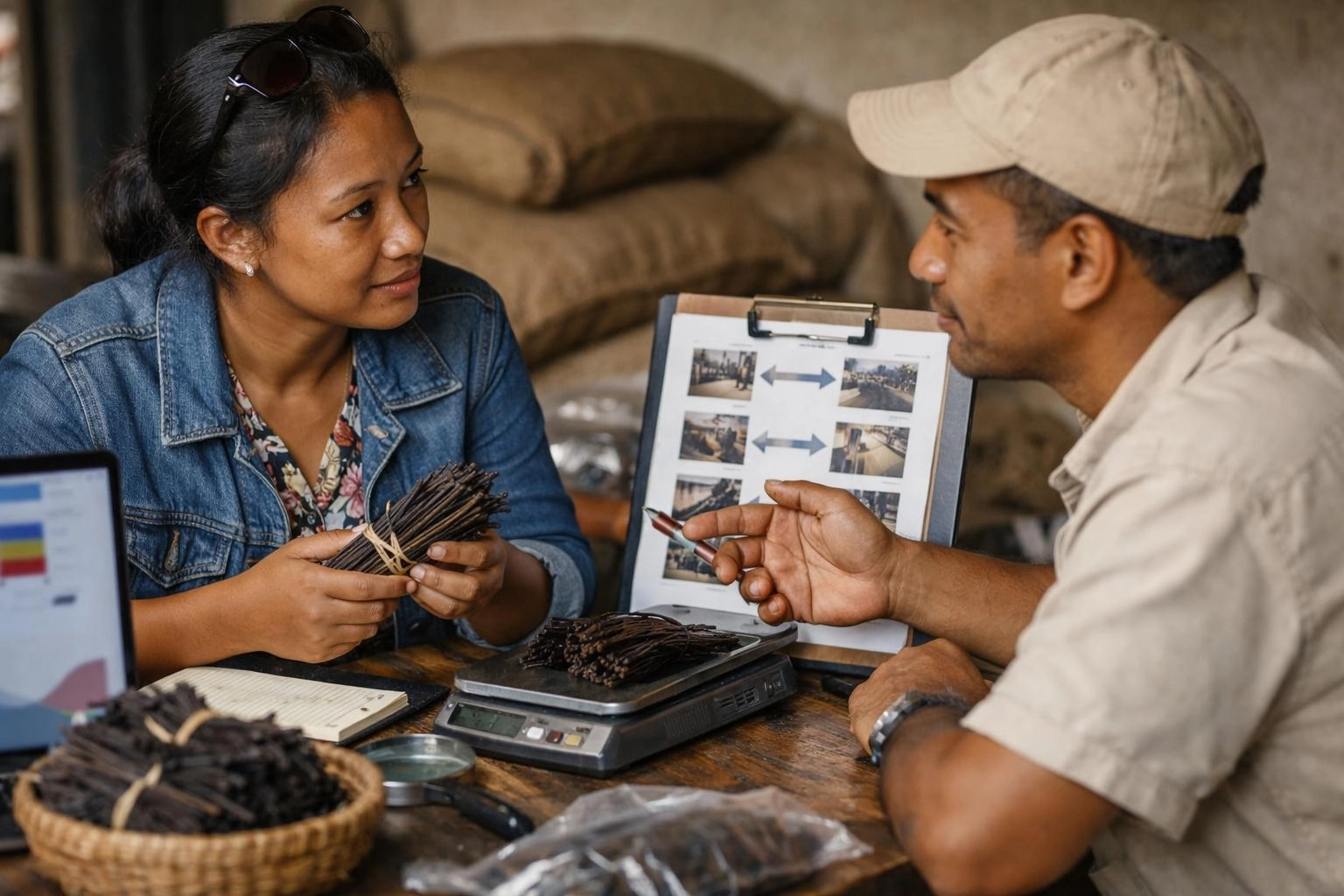
Madagascar vanilla export starts with sourcing cured Bourbon vanilla beans from farmers or local collectors, then confirming origin, cure quality, and grade consistency. Exporters like Vanillababa usually inspect moisture, aroma, length, and defect levels before they commit stock to a buyer order.
At this point, a skilled exporter checks whether the lot fits a specific market, whether the moisture content is stable, and whether the beans are uniform enough for the order. That is why firms such as Vanillababa pay close attention to source records before they agree to ship. The first choice is not just buying stock. It is making sure the crop can move through the next steps without trouble.
How Are Vanilla Beans Sorted, Graded, and Prepared for Export?
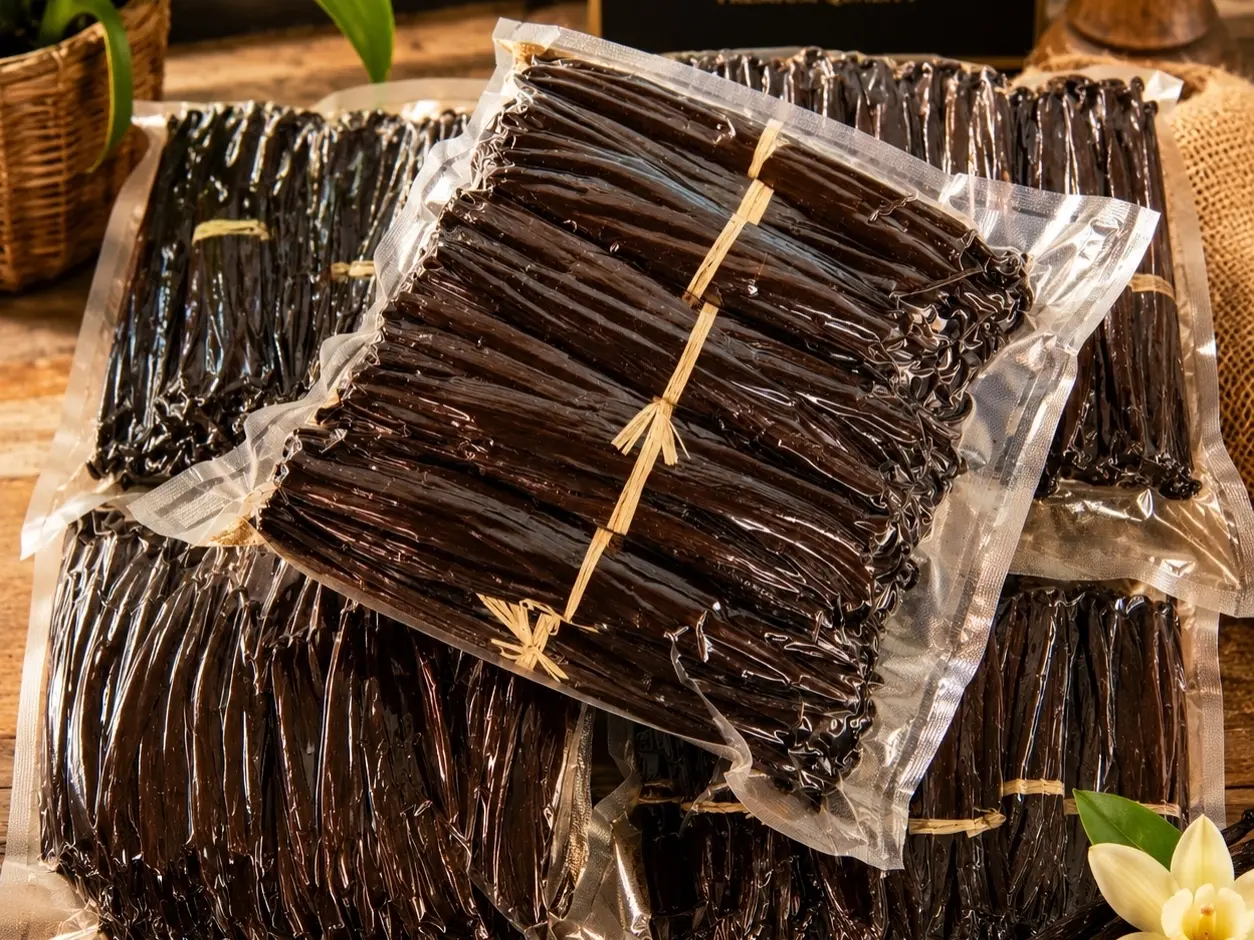
Vanilla beans are sorted by size, color, aroma, and condition, then graded into export lots such as Grade A Gourmet Vanilla or black Bourbon vanilla. Export preparation also includes moisture control, defect removal, bundling, and lot separation so buyers receive uniform beans that meet their market needs.
Good grading turns mixed farm output into a market-ready spice export supply chain product. In a strong lot, the beans look even, smell rich, and meet the buyer’s needs for color, length, and flexibility. Exporters may also review the lots again after resting, because vanilla can change a little as it settles before packing. That extra check helps protect acceptance in Europe and Other careful markets.
Which Documents and Checks Are Needed Before Export?
Before export, Madagascar vanilla shipments need the right export paperwork, quality records, traceability details, and phytosanitary clearance. These checks confirm that the beans are legally exported, free from major inspection issues, and ready for customs review in the destination market.
These documents do more than fill a file. They create a chain of proof that shows the agricultural export process is controlled from source to port. When the exporter keeps clear traceability, the buyer can track origin verification, and the customs officer can review the customs declaration faster. That lowers delay risk and helps the lot move through inspection with fewer surprises.
What Packing and Shipping Method Protects Vanilla Beans in Transit?
Packing and shipping protect vanilla beans by limiting moisture loss, contamination, and aroma degradation during transit. Exporters usually use sealed inner packaging, outer cartons, and careful handling, then choose air freight or sea freight based on buyer urgency, destination, and lot value.
Most exporters use vacuum packing or tightly sealed inner liners to slow moisture change and preserve aroma, then place those packs inside strong cartons for handling. This helps maintain humidity control during transit, especially when shipments pass through hot ports or different climate zones. A premium order may travel by air freight to reduce transit time, while a larger wholesale supply lot may go by sea freight if the buyer can wait longer and wants lower transport cost.
The best method depends on bean condition, buyer deadline, and destination market. Exporters protect the lot by keeping packing clean, using clear lot labels, and avoiding repeated opening after sealing. Good handling matters because vanilla is an aromatic product, and once aroma weakens, the market value can drop. For that reason, freight booking often happens only after packing is complete and documents are ready.
How Long Does the Madagascar Vanilla Export Process Take?
Madagascar vanilla export time depends on lot readiness, documentation, inspection, and shipping mode. Small ready-to-ship lots usually move fastest, while larger wholesale orders take longer because of grading, packing, and coordination across sourcing, compliance, and freight scheduling.
| Project size | Typical lead time | What usually affects timing |
|---|---|---|
| Small order | Usually fastest when the lot is already graded and packed | Ready inventory, simple export documentation, and quick freight booking |
| Average order | Commonly takes a moderate lead time from confirmation to shipment | Final bean grading, phytosanitary certificate processing, and carton packing |
| Large order | Takes the longest because of sourcing, compliance, and transport coordination | Lot aggregation, quality inspection, customs declaration, and shipping schedule alignment |
In practice, the real lead time depends on harvest timing, cure readiness, and how fast each step moves. If the crop is already mature and the paperwork is clean, the order can move quickly. If the exporter still needs to separate lots, confirm moisture content, or wait for customs clearance, the schedule gets longer. That is why buyers should plan early, especially for time-sensitive wholesale supply.
What Makes Europe-bound Vanilla Exports Different?
Europe-bound vanilla exports require tighter attention to food safety, residue control, labeling, and buyer specifications. Exporters serving wholesale vanilla beans into Europe must align quality documents, traceability, and packing standards with import expectations to reduce rejection or delay at destination.
When exporters export vanilla to Europe, they usually face stricter review of food safety compliance and supporting paperwork than in some Other markets. Buyers may ask for stronger residue control evidence, more detailed origin verification, and clear lot photos before they approve the order. That is especially true when the shipment is meant for food manufacturers, ingredient traders, or high-end retail supply chains. The paper trail needs to match the physical lot from packing through customs clearance.
Europe also rewards consistency. A buyer may compare grade, moisture content, aroma, and traceability across several shipments, so the exporter must keep the vanilla export workflow disciplined from farmer collection to final freight booking. For Madagascar suppliers, this often means double-checking grading notes, using clean packing materials, and making sure the phytosanitary certificate and customs declaration match the invoice and bill of lading. The result is a cleaner market entry and fewer questions at the border.
What Should Buyers Ask Before Placing an Export Order?
Buyers should ask for origin details, grade photos, moisture range, lot availability, lead time, and shipping terms before ordering. These questions help confirm that the exporter can deliver the right Bourbon vanilla quality, quantity, and documents for the target market.
These questions lower risk for both sides because they connect the buyer’s specification to the exporter’s real inventory. They also make it easier to compare suppliers on quality, traceability, and delivery readiness instead of price alone. A clear order discussion is often the difference between a smooth shipment and a delayed one.
Frequently Asked Questions
Related Resources
Cost Comparison: Grade A Gourmet Vanilla vs Grade B Vanilla (Madagascar Bourbon)
how much does Grade A vs Grade B Madagascar vanilla cost
What It CostsExport Pricing to China, Asia, Europe, America and UAE: Freight, Duties and Landing Costs
how much does it cost to export Madagascar vanilla to China/Europe/USA/UAE
What It CostsSmall Quantity vs Wholesale Vanilla Pricing: Per-Kg Breakpoints and MOQ Effects
how much does small quantity vanilla cost vs wholesale price per kg
What It CostsHow Seasonality and Pre-Harvest Contracts Affect Vanilla Prices in Madagascar
how does Madagascar vanilla season affect prices and what do pre-harvest contracts cost