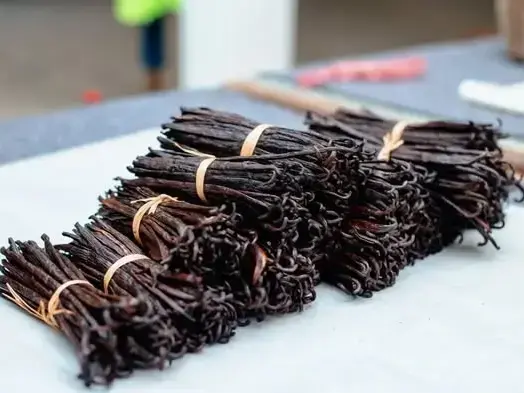
How Vanilla Pre-Harvest Contract Sourcing Works in Madagascar
Vanilla exporters source pre-harvest contracts by finding growers or village suppliers before harvest, checking farm details, estimating crop volume, and setting supply terms early. In Madagascar, the process usually includes field visits, curing checks, quality checks, and sourcing from more than one region to lower weather risk. Written agreements spell out grade, delivery timing, and payment terms. This helps exporters secure Grade B vanilla and small quantities with less risk of last-minute gaps.
What Is Vanilla Pre-Harvest Contract Sourcing?
Vanilla pre-harvest contract sourcing is an early buying method where exporters secure future crop supply before harvest by vetting growers, confirming output, and agreeing on delivery terms in advance. In Madagascar, this supplier verification process helps exporters lower supply risk, improve traceability, and plan Grade B and small-lot purchases more reliably.
It sits inside a wider procurement process and supply chain workflow that starts with origin checks and ends with export readiness. A pre-harvest contract can be a farm-gate agreement, a pre-harvest purchase agreement, or an origin-specific supply contract. Exporters often use it when they need cured vanilla, clear quality rules, and a set delivery schedule before the harvest season opens. It also helps when village aggregators handle the total volume, because the buyer still needs proof of farm-level origin. For Madagascar vanilla growers, this forward contracting style gives both sides clearer contract terms and better planning for quality grading, traceability, and steady supply.
How Does the Pre-Harvest Sourcing Process Work Step by Step?
The pre-harvest sourcing process starts with supplier identification and ends with harvest-linked delivery. Exporters first screen growers, then verify farm location and crop status, estimate volume, negotiate grade and delivery terms, sign the written contract, and track the crop until harvest. This order reduces buying risk and gives a clearer view of supply.
Step 1: Identify Growers and Regional Supply Sources
Step 2: Verify Farms, Ownership, and Traceability
Step 3: Estimate Flowering, Pod Set, and Expected Volume
Step 4: Agree on Grade, Quantity, Timing, and Payment Terms
Step 5: Monitor the Crop and Confirm Harvest Readiness
What Should Exporters Verify Before Signing a Supplier Contract?
Exporters should verify that the supplier can legally and consistently deliver vanilla from a known farm or region, has realistic crop volume, understands quality requirements, and can support traceable handoff at harvest. In Madagascar, this verification matters because regional variation, weather exposure, and informal aggregation can affect reliability and quality.
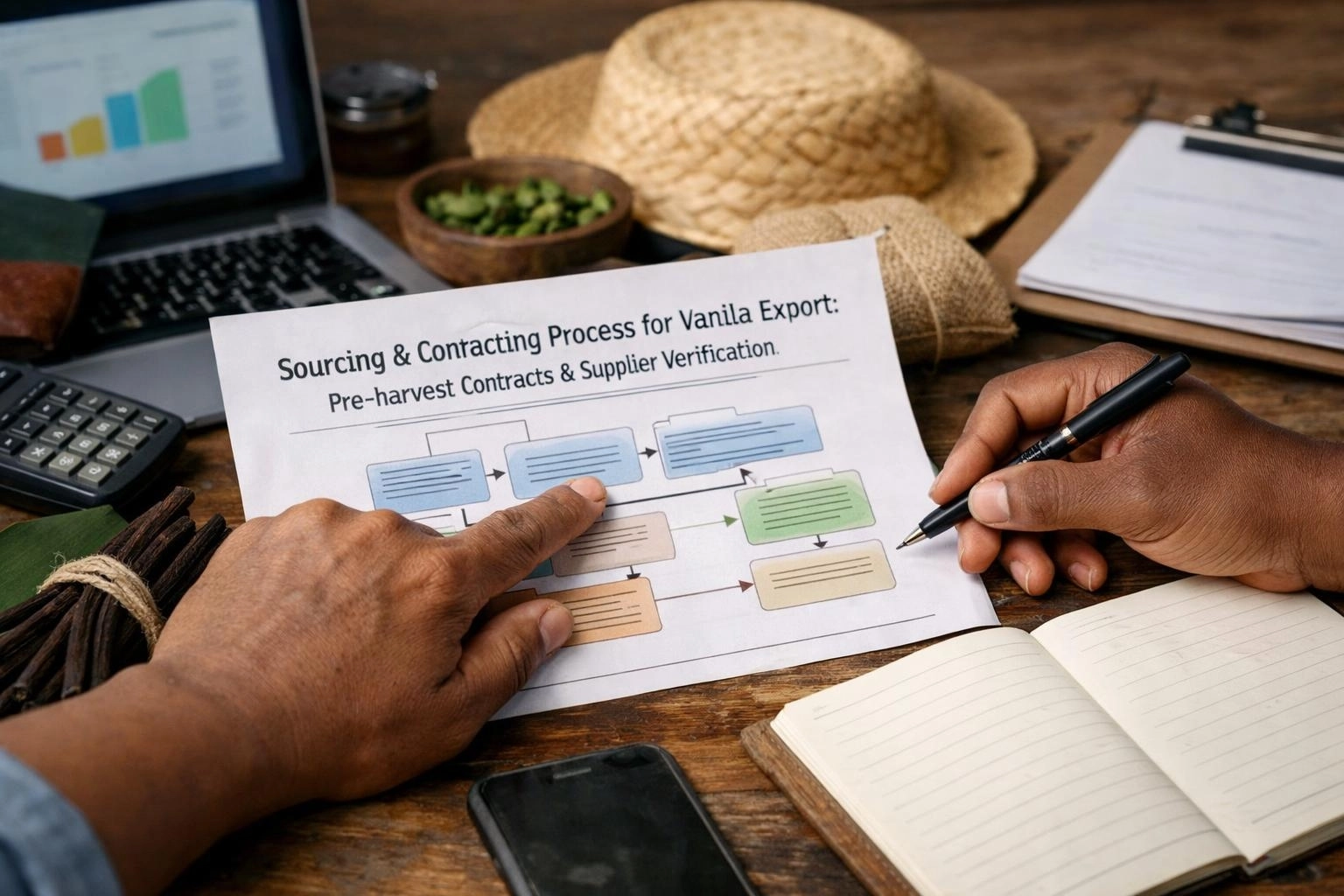
Supplier due diligence should start with farm gate verification and continue through export compliance checks. The exporter needs to know who owns the plot, whether the lot matches the stated origin, and whether the handoff path is clear enough for shipping and legal transfer. Cyclone and rainfall exposure can disrupt flowering, pod development, and harvest logistics, so the buyer should ask how the supplier manages crop forecast updates and field access after rain. Local teams also need to understand curing standards, because a lot can look ready but still fail quality grading if it was not handled well. In many villages, informal aggregation can weaken traceability unless the exporter confirms origin before contracting. That matters most when the buyer wants Grade B Vanilla or small quantity vanilla orders that still need dependable export readiness.
How Long Does Vanilla Pre-Harvest Contracting Take?
Contract timing depends on supplier readiness, farm access, and how many regions are included in the sourcing plan. Small purchases can move fast when a verified supplier is already known, while larger multi-region programs usually take longer because exporters must confirm more farms, volumes, and harvest windows.
| Project size | Typical duration | What affects the timeline |
|---|---|---|
| Small | About 1 to 3 weeks | Known supplier, easy farm access, simple delivery window, and faster contract terms. |
| Average | About 3 to 6 weeks | More than one farm visit, crop forecast review, and confirmation of quality grading and payment terms. |
| Large | About 6 to 10 weeks or more | Multi-region supply, extra supplier due diligence, and longer export compliance review. |
These ranges are typical, not fixed. If the crop is already visible and the supplier has clear origin verification, the process may move faster. If the buyer is building a broader procurement process across several districts, the sourcing timeline often stretches because each farm-gate agreement needs confirmation.
Why Exporters Use Multi-Region Supply for Madagascar Vanilla?
Exporters use multi-region supply to spread risk across different growing zones and lower dependence on one crop area. In Madagascar, this approach helps protect against local weather problems, uneven flowering, and timing differences between regions, making pre-harvest contracts more stable for buyers who need steady export supply.
Crop variation from one region to another changes both availability and timing, so a buyer who sources from more than one district can keep supply continuity even when one area is late or damaged. Cyclone and rainfall exposure can also hit one zone harder than another, which makes diversification useful for harvest forecasting. This is why many exporters combine field visits, origin-specific supply contracts, and curing checks across several producing areas. Multi-region supply also supports smaller buyer needs, since one district may not offer enough small quantity vanilla in one handoff. By balancing lots from several local channels, the exporter can keep export compliance simpler and reduce last-minute shipment gaps.
Frequently Asked Questions
To discuss source planning, farm-gate agreement checks, and origin-specific supply contract support, use the contact form for a direct review.
Related Resources
Cost Comparison: Grade A Gourmet Vanilla vs Grade B Vanilla (Madagascar Bourbon)
how much does Grade A vs Grade B Madagascar vanilla cost
What It CostsSmall Quantity vs Wholesale Vanilla Pricing: Per-Kg Breakpoints and MOQ Effects
how much does small quantity vanilla cost vs wholesale price per kg
What It CostsHow Seasonality and Pre-Harvest Contracts Affect Vanilla Prices in Madagascar
how does Madagascar vanilla season affect prices and what do pre-harvest contracts cost
Compared ToGrade A Gourmet Vanilla vs Grade B Vanilla: Which Madagascar Export Should You Buy?
Grade A vs Grade B vanilla export Madagascar