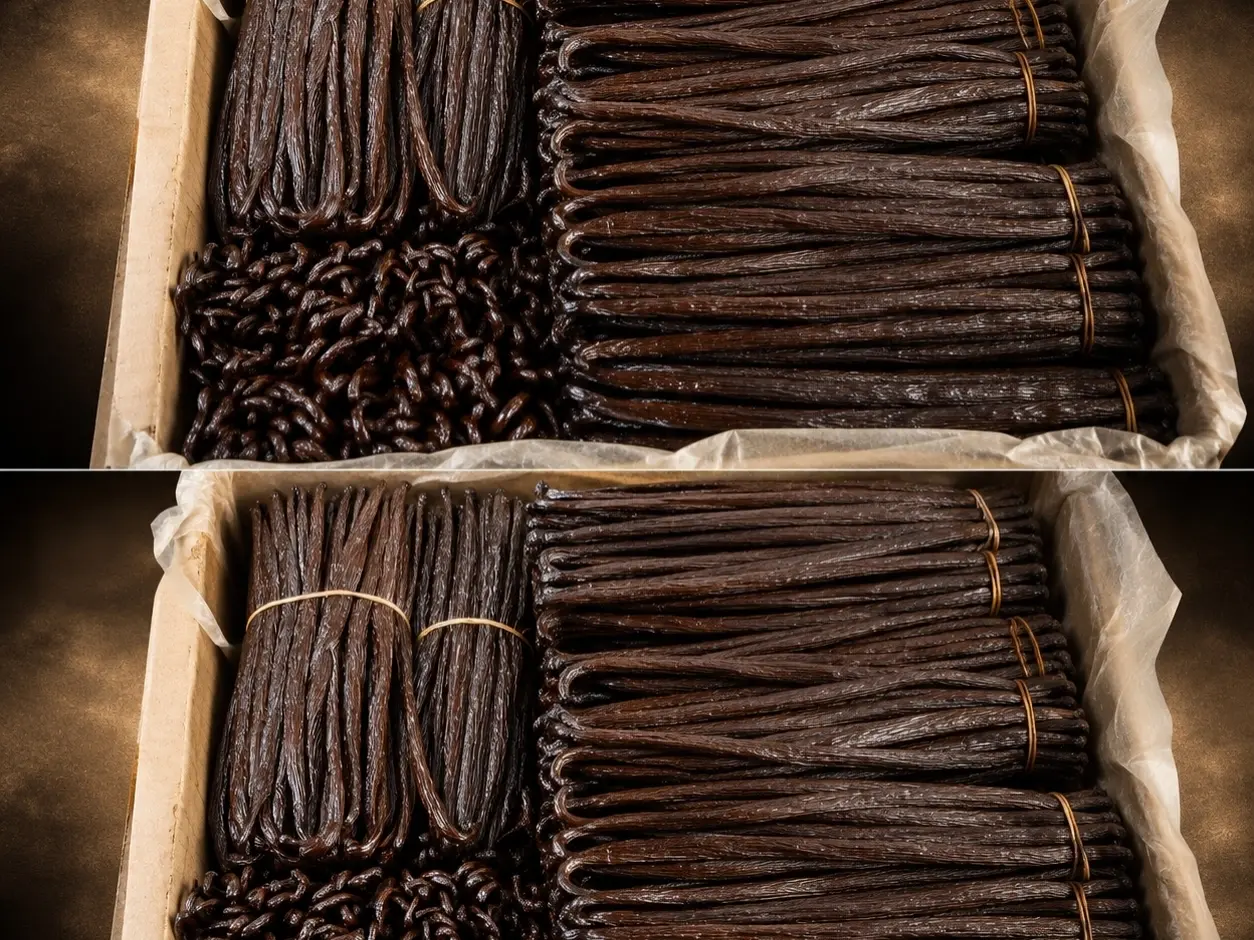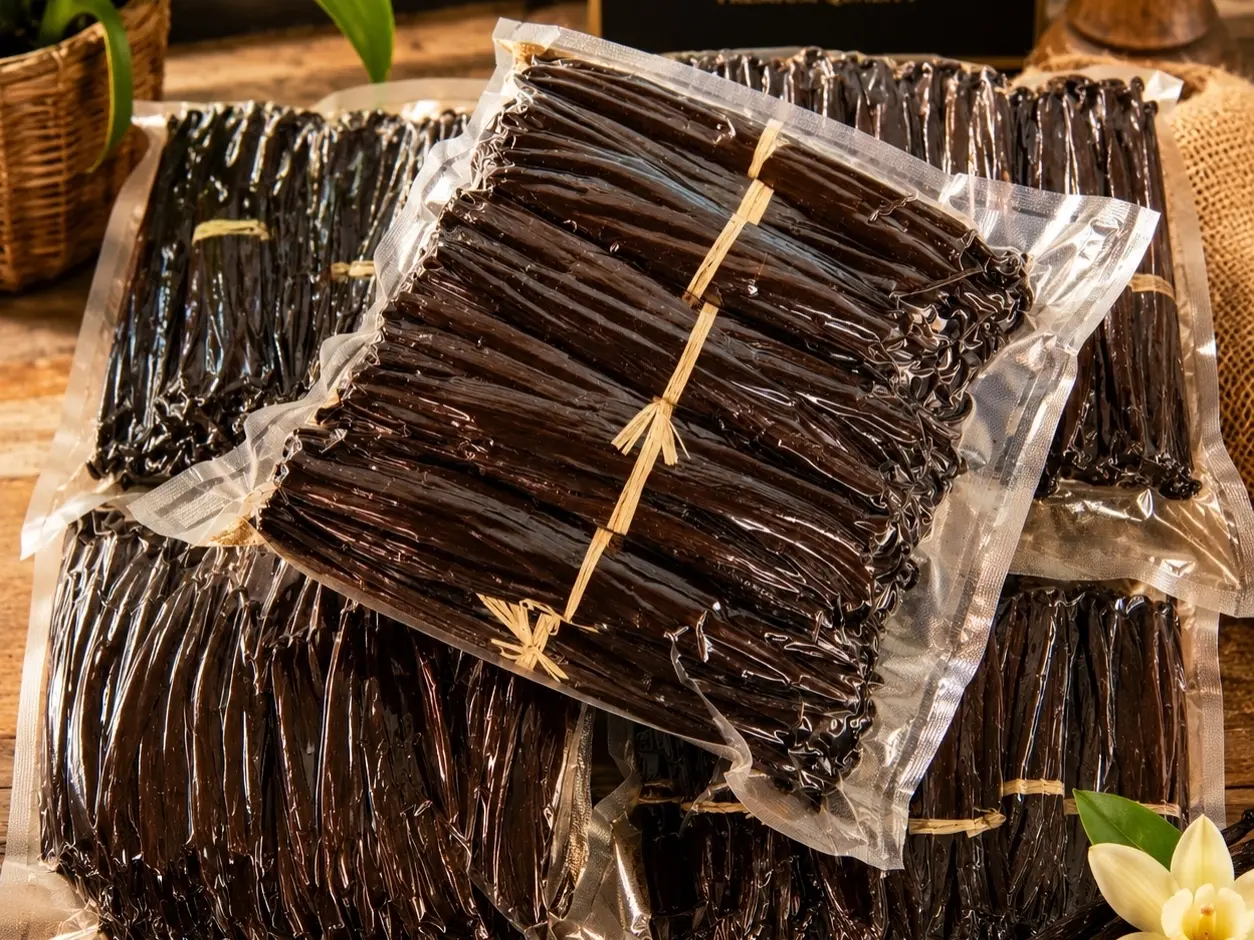
Black Bourbon vs Red Bourbon Vanilla Export in Madagascar
Black Bourbon vanilla usually gives export buyers lower risk, wider acceptance, and better consistency, while Red Bourbon vanilla usually gives lower upfront cost, more visible curing variation, and stronger value for buyers willing to sort. In Madagascar, the better choice depends on your market, spec, and tolerance for flavor, moisture, and appearance variation. If you need stable export lots and easier resale, choose Black Bourbon. If you buy for price and can manage sorting, Red Bourbon can improve margins.
Black Bourbon vs Red Bourbon Vanilla: Which Export Grade Fits Your Buyer Profile?
Black Bourbon vanilla is usually the safer export choice for buyers who want consistent appearance, easier grading, and broader market acceptance, while Red Bourbon vanilla fits buyers who can tolerate more variation and want a lower-cost buying position. In Madagascar, the right grade depends on your resale channel, quality spec, and sorting capacity.
| Factor | Option A | Option B |
|---|---|---|
| Cost position | Black Bourbon Vanilla | Red Bourbon Vanilla |
| Timeline | More predictable curing and conditioning | More variable lot readiness |
| Maintenance | Lower buyer-side sorting and moisture control risk | Higher need for sorting and lot handling |
| Best-for | Premium resale, food manufacturing, strict buyer spec | Value buying, flexible channels, margin-led trading |
For most export buyers, the decision is less about flavor and more about risk. Madagascar's country-of-origin grading and supply conditions can change by region, and regional supply chains can make lot sorting and conditioning costs a real buyer-side factor. If your customer expects a clean export lot with low rejection risk, Black Bourbon fits better. If your team can manage inspection, re-grading, and downstream resale, Red Bourbon can work well.
Comparison Table: Cost, Timeline, Maintenance, and Best Use Cases
Black Bourbon vanilla often commands a stronger market position, while Red Bourbon vanilla can be cheaper at purchase and more dependent on buyer-side sorting. Timeline is shaped by curing and conditioning, maintenance by moisture control and lot handling, and best use depends on whether the buyer wants premium consistency or value stock.
| Factor | Black Bourbon Vanilla | Red Bourbon Vanilla |
|---|---|---|
| Cost | Usually priced higher because buyers pay for appearance, uniformity, and lower rejection risk. | Often priced lower, which can help buyers seeking a better entry point on agricultural export commodities. |
| Timeline | More stable once cured and conditioned, so shipping plans are easier to align with the buyer spec. | May need extra inspection time because visible variation can signal mixed readiness across the export lot. |
| Maintenance | Lower maintenance for the buyer if moisture content and packaging are already aligned. | Higher maintenance because sorting, conditioning, and moisture balance may need more buyer attention. |
| Best use | Premium quality programs, ingredient buyers, and resale channels with strict uniformity needs. | Value stock, blended programs, and buyers who can re-sort before sale. |
Typical ranges vary, but most projects fall between faster resale on clean Black Bourbon lots and more hands-on handling for Red Bourbon lots. The practical question is whether your team wants a smoother export path or a cheaper starting point that may require more work later. In Madagascar, seasonal humidity can slow drying and raise the need for careful post-harvest handling, so the maintenance gap between grades can widen during wetter periods.
Black Bourbon Vanilla: Pros and Cons for Export
Black Bourbon vanilla is preferred for export when the buyer needs darker pods, more uniform presentation, and easier compliance with premium retail or ingredient specs. Its main drawback is higher price and stricter quality expectations, so buyers pay more but often reduce rejection risk and downstream sorting costs.
Pros
Cons
For export buyers, the main advantage is confidence. Black Bourbon is easier to place with retail programs, ingredient makers, and traders who want fewer disputes. If the lot comes from regions where drying is uneven, the darker grade can still perform well, but only if the post-harvest handling is disciplined. Black Bourbon Vanilla remains the safer fit for buyers who value consistency over bargain pricing.
Red Bourbon Vanilla: Pros and Cons for Export
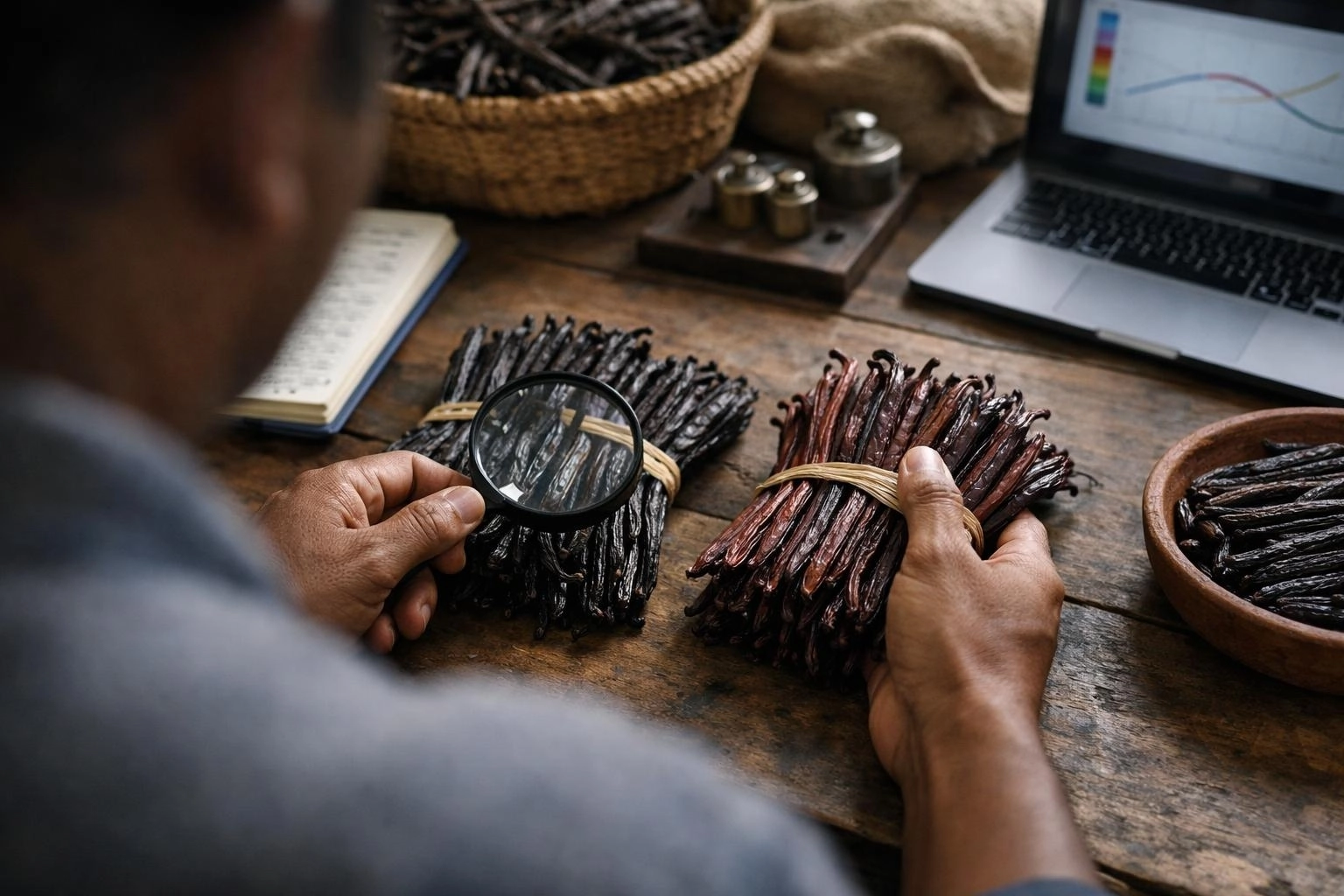
Red Bourbon vanilla is attractive when the buyer wants value pricing, can separate lots by size and appearance, and does not need the most uniform premium presentation. Its trade-off is more visible variation, more buyer-side sorting, and a higher chance that the lot needs reconditioning or tighter inspection before resale.
Pros
Cons
Red Bourbon works best when the buyer has a clear re-sale plan. It can be useful for traders who buy in Madagascar's regional supply chains and then sort, condition, and reposition the stock for another market. The upside is price. The downside is work. If your team lacks capacity for quality control, the cheaper lot can become the expensive one after handling costs are added.
Extra Long Pods and Short Pods: How Size Changes Export Value
Extra long pods vanilla usually support premium positioning because they signal careful grading and stronger visual appeal, while short pod vanilla often trades at a discount when buyers prioritize volume over presentation. For export buyers in Madagascar, pod length affects lot pricing, customer perception, and how much sorting is needed before shipment.
In practical grading, pod length is a meronym of quality, not the whole story. Extra long pods can be easier to place in high-end channels because the larger size looks more premium and can support cleaner uniformity across a lot. Short pods can still be useful, especially for manufacturing buyers, but they are often bundled into lower-priced export categories or mixed with Other beans after sorting. That is why grading by pod length matters as much as bean skin color in Madagascar's vanilla product grades.
The main buying rule is simple: longer pods often justify a better price when the lot also has good conditioning and traceability. Shorter pods can still move well if moisture level, cure quality, and documentation are strong. Buyers should treat size as one input in supplier selection, not as a standalone measure of value.
What Madagascar Buyers Should Verify Before Placing an Order?
Madagascar buyers should verify curing stage, moisture balance, pod length distribution, traceability, and export documentation before committing to either Bourbon grade. These checks reduce quality disputes, help align the lot with the target market, and prevent cost overruns from re-sorting, reconditioning, or shipment delays.
These checks matter because Madagascar's curing and drying conditions can create lot-to-lot variation. A lot that looks acceptable at first glance may still need more conditioning, and a mixed lot may be rejected by a premium customer if documentation is incomplete. Strong quality control helps both parties avoid disputes and lowers the chance that sorting problems show up after purchase.
Which Bourbon Vanilla Grade Should You Buy from Madagascar?
Buy Black Bourbon vanilla if you need the most dependable export lot for premium resale, food manufacturing, or strict quality specs. Buy Red Bourbon vanilla if your model is margin-led and you can manage sorting, conditioning, and broader tolerance for variation. Vanillababa can help match the grade to the target market.
The right choice depends on whether your business wins through certainty or through hands-on value creation. Black Bourbon reduces rejection risk and supports easier buyer spec alignment. Red Bourbon can unlock better purchase economics, but only if your team can handle inspection, sorting, and traceability checks without losing time or margin. For many importers, the best answer is not one grade forever, but the one that fits the current export lot and resale channel.
Frequently Asked Questions
Author: Randrianantenaina Landry
Get a Free EstimateRelated Resources
Pricing Guide: Whole Pods, Vanilla Cuts, Extract, Paste and Powder
how much does vanilla extract paste powder pods cost
How It WorksMadagascar Vanilla Export: Step-by-Step Export Process for Bourbon Vanilla
how does Madagascar vanilla export process work step by step
How It WorksVanilla Curing, Processing and Grading: Preparing Pods for International Export
what is the vanilla curing and grading process for export
Types & CategoriesBlack Bourbon Vanilla Export Options from Madagascar
types of Bourbon vanilla export black Bourbon Madagascar