Export Vanilla to the UAE: Madagascar Customs & Clearance Checklist
To export vanilla from Madagascar to the UAE, match the product form to the right HS code. Prepare a full commercial invoice, packing list, bill of lading or airway bill, origin documents, and any food safety or phytosanitary paperwork the UAE importer needs. Check labeling, shelf life, and halal or food registration rules before shipment. A clean file and early buyer coordination can cut holds, delays, and storage fees.
Exporting vanilla from Madagascar to the UAE starts with a complete pre-shipment file. You need the right product classification, buyer details, invoice, packing list, origin proof, and any food export documents the importer asks for. Without those basics, United Arab Emirates customs clearance can stop at arrival and lead to inspection, re-documentation, or storage costs.
What Do You Need Before Exporting Vanilla from Madagascar to the UAE?
Which Documents Should Be Ready Before the Cargo Leaves Madagascar?
Vanilla must be classified and described the same way on the invoice, packing list, and customs declaration. That keeps UAE clearance moving. The product form matters too. Whole beans, paste, and syrup can fall under different customs descriptions, so the shipment should list the exact commercial name, ingredient profile, and packaging details.
How Should Vanilla Be Classified and Described for UAE Customs?
Use one product identity from start to finish. The invoice, packing list, and customs declaration should all name the goods the same way. For vanilla beans, describe the whole cured pods, moisture condition, and pack style. For vanilla paste and vanilla syrup, add the ingredient list, whether sugar or Other carriers are used, and the retail or bulk format. That consistency helps the customs broker file the right HS code and lowers the chance of a shipment hold.
In practice, the description should be clear enough for a UAE importer, customs officer, or cargo inspector to match the papers to the boxes. If Madagascar export timing has been affected by harvest season, curing process, or humidity control, state the real condition plainly in the support files. That matters even more when long port logistics raise the risk of a document mismatch before arrival. The customs declaration should not use a generic food label if the cargo is a specialty spice extract or processed sweetener.
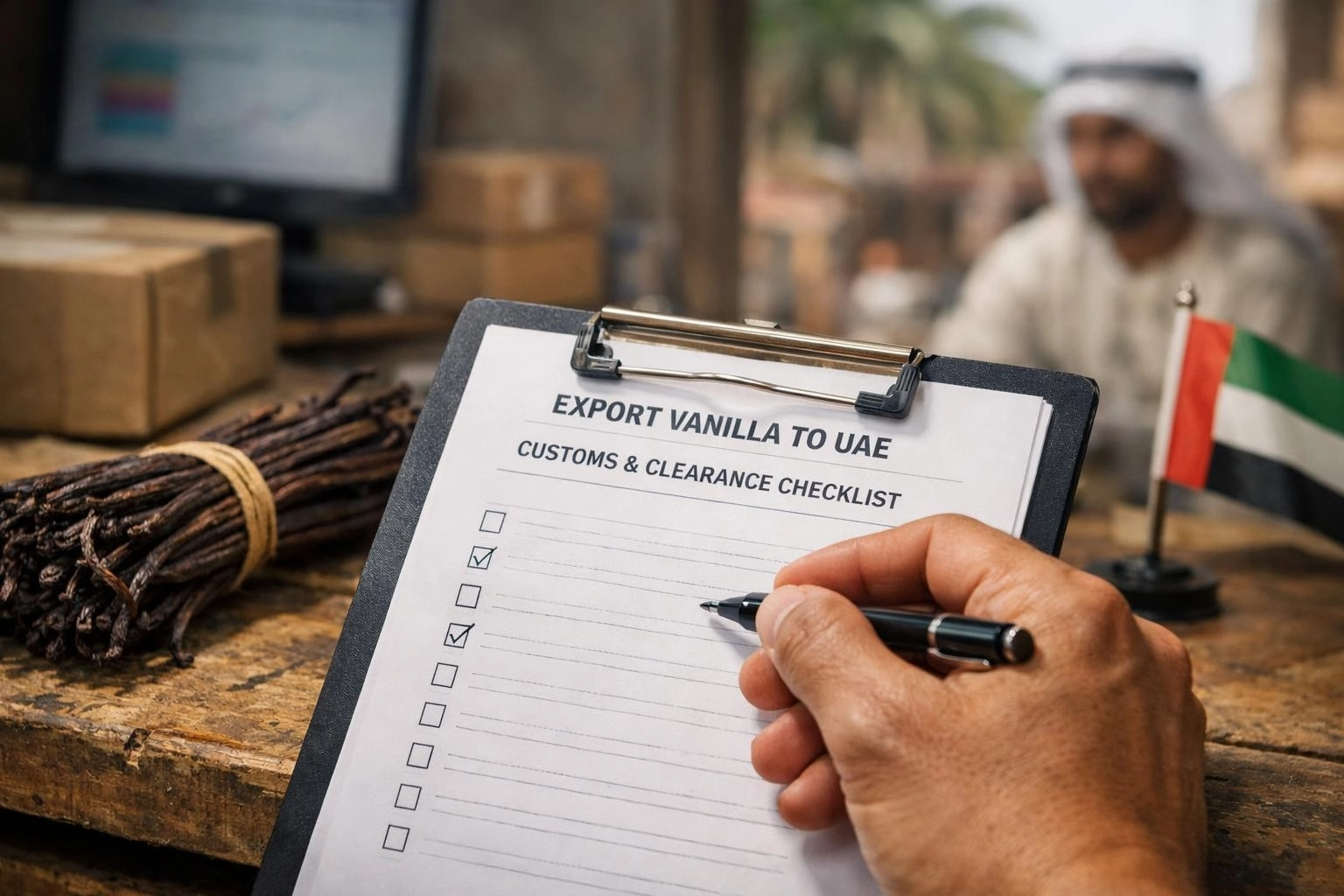
The UAE customs clearance checklist begins before arrival with document review. Then it moves through declaration submission, inspection readiness, duty assessment, and cargo release. If the importer, broker, and exporter agree on product description and paperwork early, the shipment usually moves faster and avoids holds.
What Is the Step-By-Step Customs Clearance Checklist for the UAE?
Vanilla shipments are most often held at UAE customs when the documents do not match the cargo, labels are incomplete, the declared quantity differs from the packing list, or food compliance paperwork is missing. These errors signal risk to customs and can lead to inspection, delays, or rejected entry.
What Red Flags Cause Vanilla Shipments to Be Held at UAE Customs?
Vanilla paste and vanilla syrup usually need a tighter food document check than whole beans. They are processed products, so they need ingredient declarations, shelf-life data, and closer label review. The exporter should confirm the exact formula and make sure the paperwork matches the finished retail or bulk pack.
How Do Vanilla Paste and Vanilla Syrup Change the Clearance Checklist?
| Product form | Main paperwork focus | Extra checks | Typical clearance note |
|---|---|---|---|
| Premium Vanilla Paste | Ingredient declaration, commercial invoice, packing list, and certificate of origin | Shelf life, food labeling, and possible food registration | Processed food details must match the finished pack exactly. |
| Vanilla Syrup | Ingredient declaration, HS code, customs declaration, and transport document | Sugar content notes, shelf life, and retail label review | Often treated as a stricter packaged food entry than whole beans. |
For both products, the exporter should confirm the formula before shipment, because a sweetened blend may trigger different food labeling compliance steps than cured pods. The UAE importer may also ask for shelf-life support and product registration details before release. If the pack is retail-ready, the label language and ingredient panel must be clear enough for inspection. If the pack is bulk, the broker still needs a consistent customs declaration and matching support documents.
Madagascar export timing is shaped by harvest season, curing quality, and humidity-sensitive handling. All three affect vanilla condition and customs readiness. Because vanilla is a high-value agricultural product, delays in drying, grading, or consolidation can create quality disputes or extra handling before shipment.
What Madagascar Factors Affect Export Timing, Quality, and Clearance?
The biggest local issues are Madagascar harvest season, the curing process, and how the lot is protected from moisture before loading. When curing is uneven, the beans may look different from what the documents describe, and that can slow customs clearance. Strong humidity control in storage and consolidation helps protect aroma, texture, and grade so the cargo reaches the UAE in the condition stated on the papers.
Port logistics also matter. Longer routing from Madagascar ports raises the chance of file changes, late document swaps, or missed pre-arrival coordination with the broker and importer. For that reason, the export compliance file should be locked before departure, not after the vessel sails. A well-managed shipment protects product quality, supports export documentation, and lowers the risk of a hold once it reaches inspection.
Frequently Asked Questions
Author
Randrianantenaina Landry writes on Madagascar export compliance, origin documents, and food shipment clearance for international buyers and sellers.
Next Step
Use this vanilla export checklist before booking freight, then align the customs broker and UAE buyer on the same documents. If you want the paperwork reviewed before departure, contact our team through the contact page.
Get a Free EstimateRelated Resources
Pricing Guide: Whole Pods, Vanilla Cuts, Extract, Paste and Powder
how much does vanilla extract paste powder pods cost
What It CostsExport Pricing to China, Asia, Europe, America and UAE: Freight, Duties and Landing Costs
how much does it cost to export Madagascar vanilla to China/Europe/USA/UAE
How It WorksLogistics, Packaging and International Shipping Process for Vanilla Exports
how does shipping and logistics work for vanilla export from Madagascar
Compared ToOrganic Vanilla Extract vs Premium Vanilla Paste: Which Product Should Importers Source from Madagascar?
organic vanilla extract vs vanilla paste importers