Trusted Local Service Experts
Comparison table: types of vanilla by destination
Direct answer: Use the table to match product form with key features, typical cost range, and best fit by buyer use and market.
| Type | Key Features | Typical Cost | Best For |
|---|---|---|---|
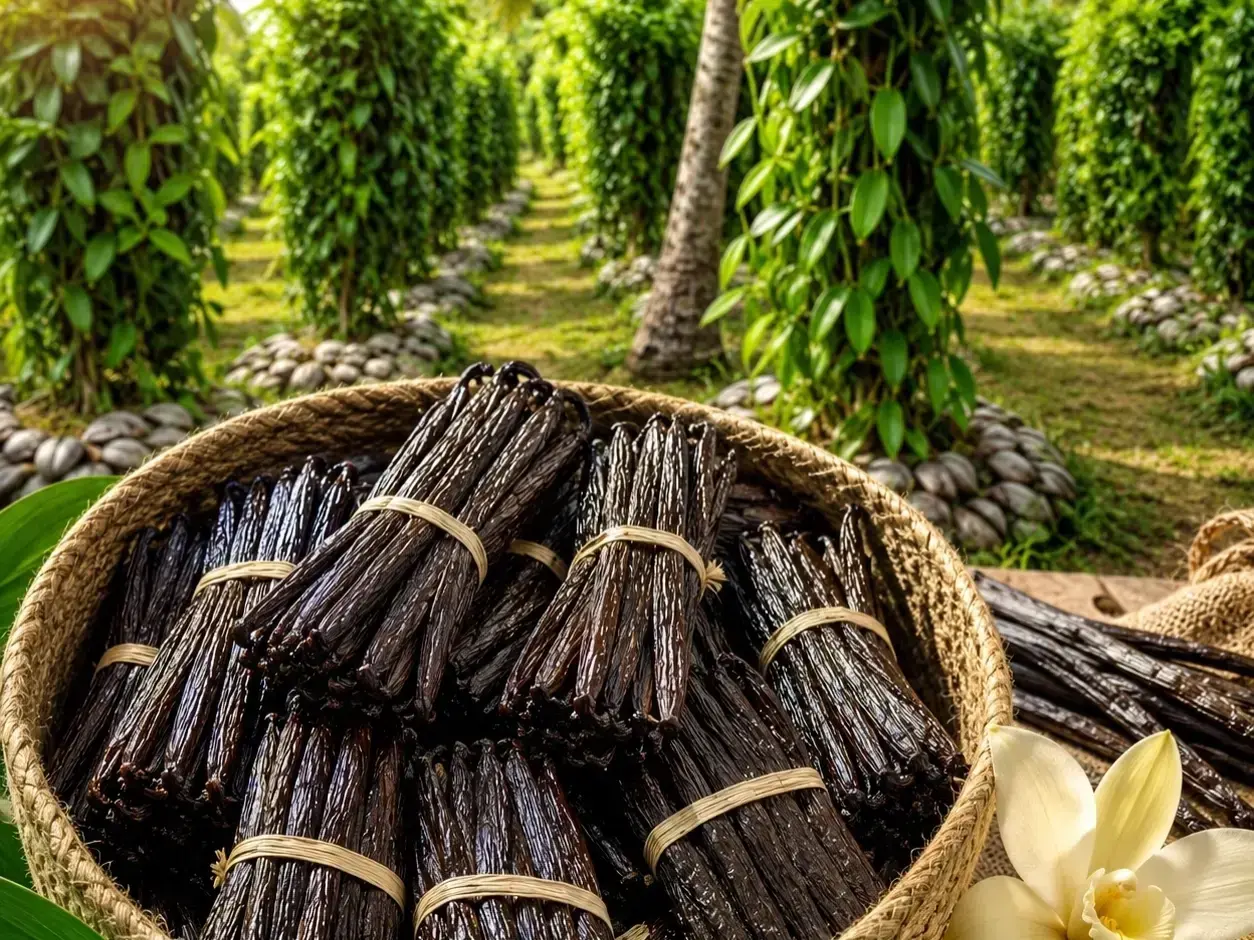
| Whole cured Bourbon pods | Aromatic, graded (grade A / grade B pods), long shelf stability, vacuum-sealed packaging | Typically higher per kg for grade A; illustrative ranges vary by season | Gourmet markets, Europe, specialty importers |
| Split / graded lots (broken, split) | Lower price, suitable for immediate use, often bulk packed, fits HS code 0905 | Lower than whole pods; typical for industrial buyers | China, some Asia buyers, mass-market processors |
| Vanilla extract | Shelf stable liquid, standardized vanillin content, requires compliance with food regulations | Mid to high depending on concentration; cost-effective for manufacturers | Rest of Asia, America, food industry |
| Vanilla paste | Thick, contains seeds, higher sensory impact than extract, easier dosing | Similar to extract but premium for artisan products | Cafés, patisseries, Asian urban markets |
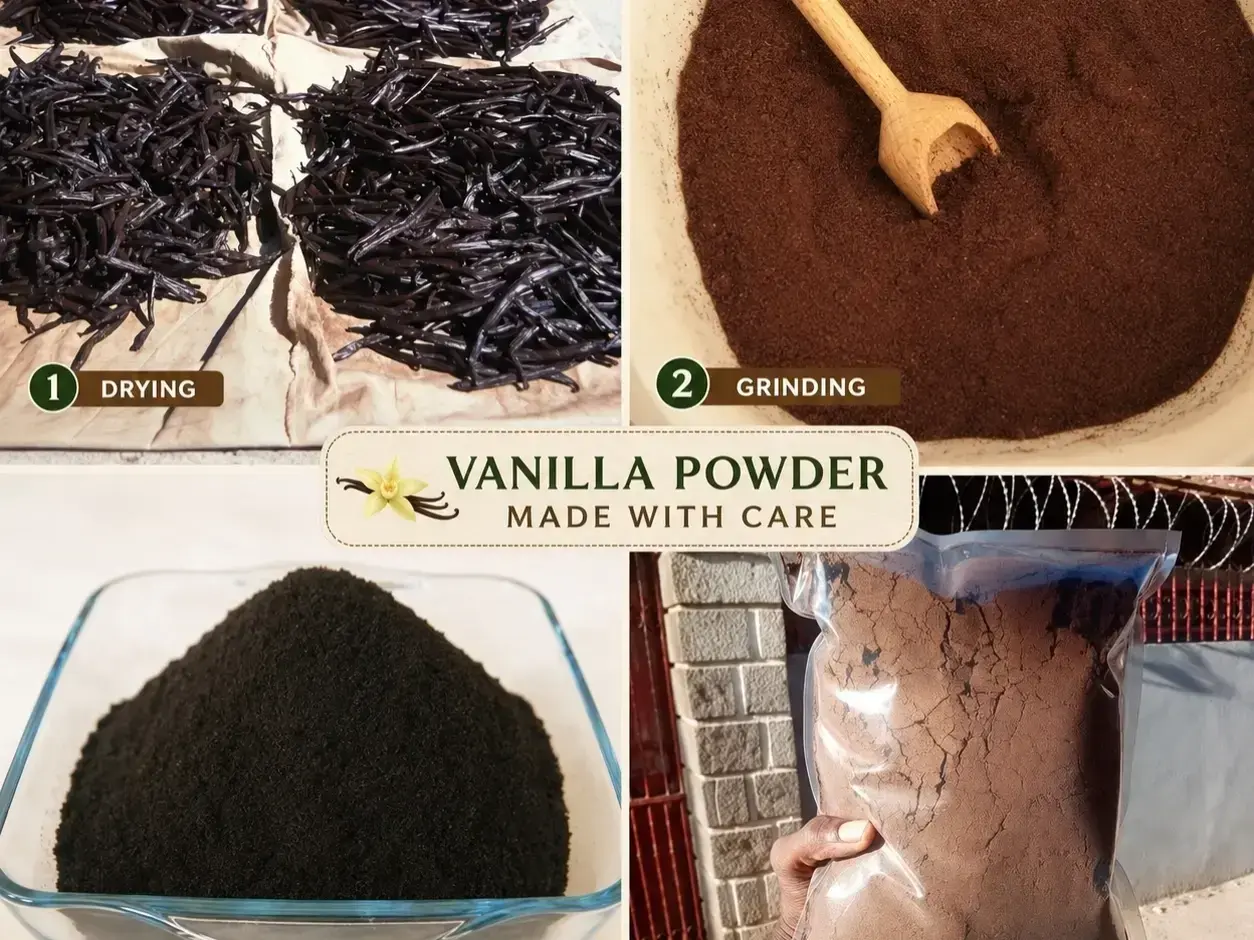
| Powder & processed formats | Dry, measured dosing, long shelf stability, used in blends | Variable; often lower per-use cost in bulk | Food processors, UAE blends and re-exports |
Regulatory & trade requirements by destination
Direct answer: Exports require a phytosanitary certificate, correct HS code 0905 on paperwork, and compliance with destination rules like EU food regulations and US FDA requirements.
Every shipment of vanilla pods or processed vanilla products must usually carry a phytosanitary certificate to prove pest-free status and meet plant health rules. Use HS code 0905 as the primary tariff/classification on customs declarations. For the European Union, exporters must follow EU food regulations: labelling, maximum residue limits, and often organic certification or fair-trade documentation if claimed. For the United States, align with US FDA requirements for food additives and labelling, and check vanillin declaration rules for extracts. China and many Asian markets have specific import permits and customs checks; provide clear product form descriptions (whole cured pods, split/graded lots, extract, paste). Incoterms FOB and CIF are common; choose FOB for seller-arranged export handling and CIF if buyer wants freight covered. Air freight speeds customs clearance but raises cost; sea freight reduces cost for bulk lots. Packaging for phytosanitary procedures should use vacuum-sealed packaging or sealed cartons with traceable lot IDs. For re-export hubs such as UAE (Jebel Ali), include commercial invoices and keep records for potential re-export documentation. Typical seasonal variations and quality grading (grade A pods vs grade B pods) affect regulatory sampling rates during inspections.
Destination-specific guidance: which type to choose
Direct answer: Match product form to market needs: whole cured Bourbon pods for Europe, split/graded or whole for China, extract/paste for wider Asia and the Americas, and value-added formats for the UAE re-export trade.
Start with the buyer use case. European gourmet buyers want origin-traceable Bourbon vanilla, often organic certification and fair-trade proof, preferring whole cured pods for retail and premium food manufacturers. In contrast, industrial buyers in North America and parts of Asia buy vanilla extract or paste for consistent vanillin levels and easier dosing. China shows strong demand for whole cured vanilla and split/graded lots; many importers value appearance and pod oiliness as signals of quality. For regional buyers in Asia, cost-efficiency and shelf stability matter, so powder and extracts are attractive. The UAE acts as a logistics hub—Jebel Ali frequently receives value-added formats and re-exports to Africa and the Middle East; blends and packed pastes are common there.
Consider regulatory fit. Use HS code 0905 on all declarations. Ensure phytosanitary certificate and customs clearance documentation align with destination rules. For the EU, check EU food regulations for labelling and residue; for the US follow US FDA requirements. Incoterms FOB CIF affect who handles customs clearance and freight insurance. Packaging choices such as vacuum-sealed packaging and airtight secondary cartons protect shelf stability for air freight or sea freight shipments.
Quality grading matters: grade A pods command premium prices and suit gourmet markets; grade B pods or split/graded lots work for processors and markets prioritizing cost. Vanilla extract and paste should come with specification sheets showing vanillin content and shelf stability. Organic certification and fair-trade documentation open European and premium US channels but add audit requirements. Vanillababa helps exporters match supply chain steps, from quality grading to market introductions, reducing friction when entering selective markets.
Below we give market-by-market pros and cons and tactical tips to choose a product form.
China—whole cured beans & split grades
Direct answer: China buyers typically prefer whole cured vanilla beans or split/graded lots depending on price and end use; appearance and oil content drive demand.
China importers often source whole cured vanilla when targeting retail or gifting markets; they also buy split/graded lots for food processing where cost matters. Use HS code 0905 and provide a phytosanitary certificate. Pros: higher acceptance for whole cured beans, simpler customs checks when documentation is complete. Cons: price sensitivity and variable tariff lines. Incoterms FOB is common for established relationships; air freight is used for urgent, high-grade lots. Offer grade A pods for premium buyers and split lots for industrial clients.
Rest of Asia—bulk extract & vanilla paste
Direct answer: Across Asia, bulk vanilla extract and vanilla paste are preferred by manufacturers for dosing control and cost-efficiency.
Bulk buyers and food manufacturers value shelf stable liquid formats and paste for blending into sauces, confectionery and beverages. Pros: easier logistics, predictable vanillin content, longer shelf stability. Cons: requires lab specs, and compliance with local food rules. Use clear labelling, provide vanillin percentages, and arrange Incoterms CIF if buyers want freight-included. Powder may be chosen for dry mixes. Vanillababa recommends working with buyers on sample specs and providing vacuum-sealed packaging for coastal sea freight.
Europe—gourmet Bourbon pods & certified product lines
Direct answer: Europe favors gourmet Bourbon pods and certified product lines (organic & fair-trade) for retail and premium food industry use.
EU food safety expectations make whole cured pods with traceability and optional organic certification attractive. Pros: premium pricing for grade A pods, strong market for authentic Madagascar Bourbon vanilla. Cons: audits for organic & fair-trade, stricter EU food regulations for labelling and contaminants. Include phytosanitary certificate and accurate batch traceability. Use Incoterms FOB or negotiated terms; many European buyers prefer supplier-managed export logistics. Vacuum-sealed packaging and clear provenance notes reduce friction at customs.
America (North & South) — extract, paste, and specialty grades
Direct answer: The Americas use vanilla extract and paste extensively; specialty grade whole pods are sold to niche markets and craft producers.
US and Latin American buyers expect compliance with US FDA requirements or local food authorities, especially for extracts and pastes used as ingredients. Pros: steady demand for extracts and paste, scalable contracts for processors. Cons: labelling and additive rules may require reformulation. Offer specification sheets for vanillin content and shelf stability. For whole pods, provide grade A / grade B distinctions for gourmet buyers. Incoterms FOB is common; air freight for small premium lots, sea freight for bulk extract drums.
UAE—blends, value-added formats and re-export hubs
Direct answer: The UAE, with Jebel Ali as a logistics node, handles blends and value-added formats and often re-exports to the Middle East and Africa.
UAE re-export hubs like Jebel Ali receive bulk extracts, pastes and powder destined for regional markets. Pros: efficient logistics, re-export opportunities, consolidated shipping. Cons: additional paperwork for re-export and possible tariff reclassification. Use clear commercial invoices and state HS code 0905. Many buyers ask for Incoterms CIF to simplify import. Vanillababa recommends packaging for long shelf stability and ready-to-blend formats for local packers.
Pricing, logistics & packaging checklist
Direct answer: Follow a clear checklist: pick Incoterms (FOB, CIF), choose air vs sea freight by urgency and cost, and ensure packaging meets phytosanitary and shelf stability needs.
- Incoterms (FOB, CIF): Decide who handles freight and insurance; FOB common for seller-export, CIF if buyer prefers delivered cost.
- Air vs sea freight: Use air freight for perishable, high-value grade A pods; sea freight for bulk extracts and split lots to control cost.
- Packaging for phytosanitary: Vacuum-sealed packaging and sealed cartons with lot numbers ease inspections and preserve shelf stability.
- Documentation: Include phytosanitary certificate, HS code 0905 on invoices, specification sheets for extracts/paste, and any organic certification.
- Logistics node: For the UAE use Jebel Ali as a hub for consolidation and re-export planning.
How Vanillababa supports Madagascar exporters?
Direct answer: Vanillababa helps with supply chain coordination, quality grading and market introductions to match product type with destination rules.
- Supply chain: Assistance with logistics planning, Incoterms FOB CIF choices, and handling air vs sea freight options.
- Quality grading: We grade pods into grade A pods and grade B pods, organise vacuum-sealed packaging and provide lab specs for vanilla extract and paste.
- Market introductions: Connections to buyers in China, Europe, the Americas and UAE re-export hubs, plus help preparing phytosanitary certificate and HS code 0905 paperwork.
Frequently asked questions
Related Resources
Export Pricing to China, Asia, Europe, America and UAE: Freight, Duties and Landing Costs
What It CostsUrgent Shipments & Fast Sample Order Pricing: Expedited Logistics and Rush Fees
How It WorksMadagascar Vanilla Export: Step-by-Step Export Process for Bourbon Vanilla
How It WorksLogistics, Packaging and International Shipping Process for Vanilla Exports