How shipping and logistics work for vanilla exports from Madagascar
Vanillababa manages Madagascar vanilla export by sequencing harvest-grade packaging, phytosanitary and customs documentation, inland transport to port, refrigerated/consolidated container stuffing, ocean/air freight to China, the USA or the UAE, and final clearance and delivery; this process minimizes spoilage and meets destination import rules.
Overview: logistics landscape for Malagasy vanilla exports
Direct answer: Madagascar vanilla exporters must balance post-harvest preservation, export regulations and transport options to move bean export consignments to markets like China, the USA and the UAE with minimal loss.
Madagascar vanilla is an agricultural commodity that requires quick, regulated steps after curing to meet export regulations. Exporters such as Vanillababa—service provider / exporter-managed logistics coordinate packing, a phytosanitary certificate, CN / HS codes for tariff classification, and customs broker interaction at the port of Toamasina or Other exit points. The supply chain blends traditional preservation (vacuum/foil packaging, pallets and packing cartons) with modern cold chain elements when shipments are vulnerable to heat. Importers must follow destination rules—import quota checks and quality assurance sampling are common—and select incoterms like FOB or CIF based on who pays for freight and insurance. This overview highlights the hypernym of the work: international trade and supply chain management focused on bean export quality and compliance.
5–7 step export process (from farm to overseas delivery)
Direct answer: The process follows sequential steps: post-harvest packaging, quality checks, inland transport to port, container stuffing or consolidation, export customs clearance, international transit (ocean or air freight), and destination clearance and delivery.
- Harvest grading & post-harvest packaging
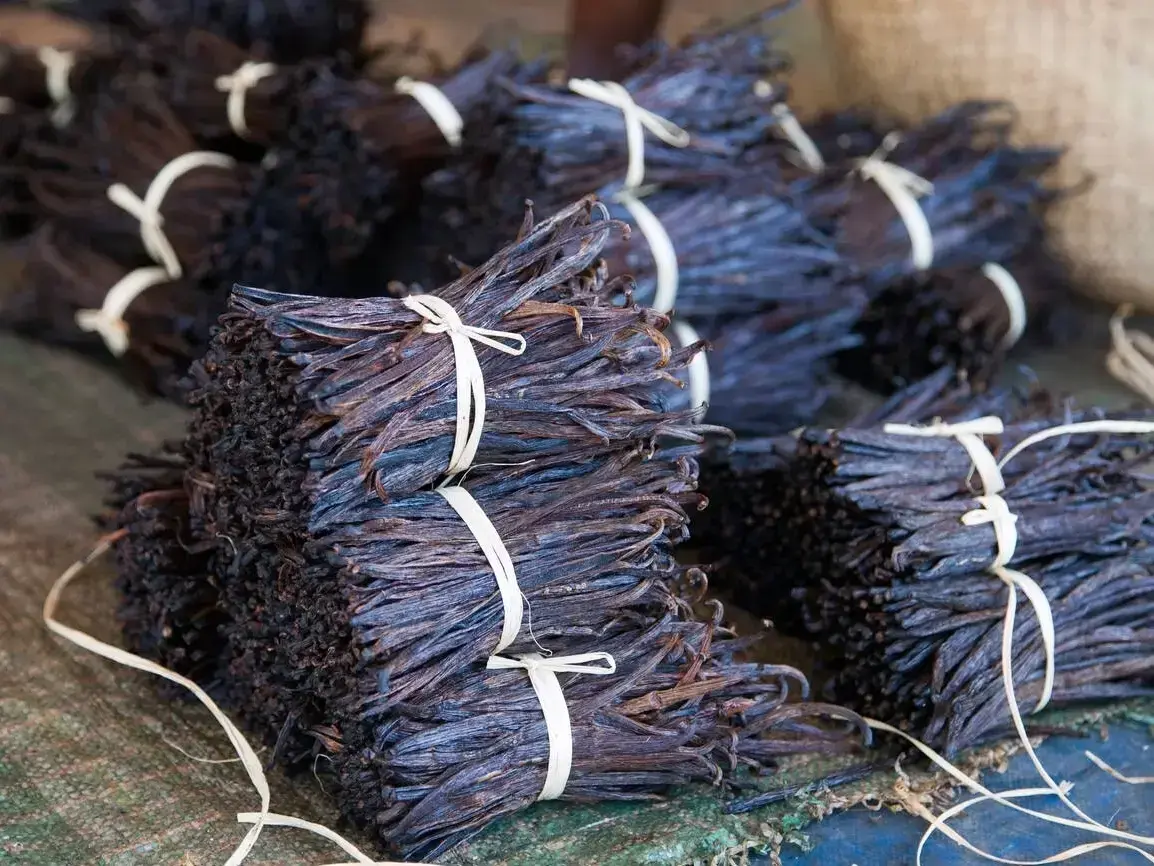
Immediately after curing, beans are graded and moisture-checked. Vanillababa uses food-grade packing cartons and pallets with vacuum/foil packaging or sealed bags to reduce oxidation. Proper labeling includes CN / HS codes, lot numbers and packing lists for easier customs clearance later.
- Quality assurance sampling and paperwork
Samples are drawn for sensory and lab checks; results determine export eligibility. Documentation prepared now includes the commercial invoice, certificate of origin, packing list and the application for the phytosanitary certificate.
- Inland transport to port of exit
Be mindful of road conditions and temperature. For longer road legs Vanillababa arranges temperature-controlled trucks or shaded, ventilated trailers to maintain the cold chain where required. Transport insurance and a documented chain of custody accompany the load.
- Container stuffing: FCL, consolidated LCL or air cargo
Choice between FCL / LCL or air cargo affects handling. For FCL, pallets are loaded into refrigerated container reefers if a cold chain is necessary; for LCL, consolidation hubs are used with humidity and temperature monitoring. Container stuffing is documented with container numbers and seal numbers.
- Export customs clearance
Vanillababa submits the commercial invoice, packing list, phytosanitary certificate, certificate of origin and any permits to Madagascar customs and the customs broker. Correct incoterms (FOB, CIF) determine who files certain documents and pays charges.
- International transit: ocean freight or air freight
Ocean freight (reefers or dry containers) is cost-effective for large loads; air freight suits small, urgent vanilla shipment consignments with higher freight cost but faster transit time. Transit time and temperature requirements determine the carrier choice.
- Destination clearance and delivery
At arrival, a local customs broker handles inspection, duty assessment, and documentation checks. After release, goods move by road to the final warehouse or buyer. Vanillababa supports final QA checks and release of goods to the importer.
Step details: packaging standards and temperature control
Direct answer: Packaging must prevent moisture ingress and mold while preserving aroma; vacuum/foil packaging plus cold chain measures are used where transit heat is a risk.
Use inner layers of foil or vacuum-sealed bags to cut oxygen exposure and outer packing cartons on pallets for mechanical protection. For long ocean transit to China, the USA or the UAE, consider a refrigerated container (reefer) when ambient temperatures or humidity could cause flavor loss or mold prevention problems. Consolidated LCL shipments should be palletised inside a humidity-controlled consolidation area to avoid cross-contamination. Label each carton with CN / HS codes and lot data and keep chain-of-custody documents with the shipment. Routine temperature logging during shipment helps with claims and quality assurance on arrival.
Required documentation and phytosanitary compliance
Direct answer: Core documents are the phytosanitary certificate, commercial invoice, certificate of origin, packing list and any permits; all must match CN / HS codes and the declared incoterms.
- Phytosanitary certificate — issued by Madagascar authorities to confirm plant health and pest-free status.
- Commercial invoice — value declaration used for duty and import formalities.
- Certificate of origin — proves Madagascar origin for tariff preference where applicable.
- Packing list—shows cartons, pallets, gross/net weights and CN / HS codes for each line.
- Export permit or licence if the destination requires quota or additional controls.
- Air waybill or bill of lading and insurance certificate aligned with chosen incoterms (FOB, CIF).
Shipping modes, transit options and cost factors
Direct answer: Choose FCL for large volumes, LCL/consolidated shipments for smaller loads, and air freight when speed outweighs cost; freight mode, container type and incoterms drive price and risk allocation.
Ocean freight with refrigerated containers (reefers) is the hyponymic solution for preservation during long transit, offering lower cost per kilo for large shipments. Consolidated LCL (consolidated LCL shipment) is cost-effective for smaller bean export lots but increases handling and potential exposure, so quality control at consolidation hubs is essential. Air freight or air cargo consignments reduce transit time and spoilage risk but at a higher freight rate. Cost factors include carrier rates, fuel surcharges, seasonality, port congestion, insurance, and documentation fees. Incoterms (FOB vs CIF) determine if the exporter arranges freight and insurance; under FOB, Vanillababa typically handles export customs clearance and the buyer arranges main carriage. Use CN / HS codes to estimate duties and avoid delays at destination customs. Typical transit time is influenced by carrier schedules and chosen route to China, USA or UAE.
Timeline by project size
Direct answer: Typical project durations vary: small shipments clear and move faster; large projects take longer because of consolidation, certification and vessel schedules.
| Project size | Typical duration (illustrative ranges) | Notes |
|---|---|---|
| Small shipments (samples / air cargo) | 3–10 days | Fastest by air freight; quicker customs if docs ready. |
| Average shipments (consolidated LCL / small FCL) | 2–6 weeks | Includes consolidation and ocean transit; dependent on vessel frequency. |
| Large shipments (full FCL, reefers) | 3–9 weeks | Typical for ocean reefers with port-to-port schedules and inland delivery time. |
Risks, quality checks and mitigation measures
Direct answer: Main risks are mold, heat damage and documentation mismatches; mitigation includes sampling and QA, cold chain, correct CN / HS codes and careful container stuffing.
- Mold prevention — use vacuum/foil packaging, control moisture before packing, and consider refrigerated containers for long or hot routes.
- Sampling and QA — routine sensory checks and lab tests pre-shipment to document quality and support claims if problems arise.
- Container stuffing controls — secure pallets, check seals, and log container temperatures; consolidated LCL shipments need segregation to avoid odor transfer.
- Documentation mismatch—ensure commercial invoice, certificate of origin and phytosanitary certificate match CN / HS codes to prevent holds at destination.
- Insurance and claims—arrange cargo insurance aligned with incoterms and retain chain-of-custody records for disputes.
Practical checklist for exporters working with Vanillababa
Direct answer: Prepare documents, choose carrier and mode, ensure packing and QA, and confirm incoterms and CN / HS codes before booking transport with Vanillababa.
- Documentation checklist: phytosanitary certificate, commercial invoice, packing list, certificate of origin, bill of lading or air waybill.
- Packing & preservation: vacuum/foil packaging, pallets, humidity control and optional refrigerated container if recommended.
- Carrier selection: decide FCL vs LCL vs air freight based on volume, cost and transit time.
- Confirm incoterms with buyer (FOB, CIF) and align responsibilities for freight and insurance.
- Assign a customs broker at origin and destination and register CN / HS codes for tariff classification and duty estimates.
- Arrange sampling and QA schedule with Vanillababa and set up temperature logging for cold chain shipments.
Frequently Asked Questions