How Madagascar Region Changes Vanilla Prices in Maroantsetra, Ambanja and Toamasina
Yes, vanilla price varies by region in Madagascar because origin affects curing quality, bean length, moisture, defect rate, and supply conditions. Maroantsetra and nearby Analanjirofo areas often price differently from Ambanja, Toamasina, and inland routes because harvest timing, farm access, and post-harvest handling differ. Buyers pay more for better-graded, well-cured beans and for lots with stronger traceability and steady aroma. Vanillababa helps compare origins, grades, and seasonal availability before you buy.
Does Vanilla Price Vary by Region in Madagascar?
Vanilla price in Madagascar varies by region because origin changes farm access, curing quality, moisture levels, and supply consistency. Maroantsetra, Ambanja, Toamasina, and the wider Analanjirofo zone can each produce beans with different grading outcomes, so buyers often see different prices for visually similar lots.
The main reason is that origin region affects the supply chain from farm to exporter. In eastern Madagascar, cyclone exposure and heavy rainfall can slow drying and transport. That raises risk and can push up the price per kilogram. In drier or better-connected areas, cured vanilla may arrive with a lower moisture level and better appearance, which lifts value.
Two lots can look close in size, but one may have better bean quality, less defect rate, and stronger traceability. Buyers then treat that lot as a better export grade, even if it came from the same harvest season, So regional vanilla pricing is about more than place name. It also reflects the handling and storage that happened after harvest.
Why Maroantsetra, Ambanja and Toamasina Often Price Differently?
Maroantsetra, Ambanja, and Toamasina often price differently because each origin faces different logistics, drying conditions, harvest flows, and buyer access. Remote areas can carry higher collection and transport costs, while better-known trading hubs may command premiums for traceability, grading confidence, and steadier supply.
Maroantsetra sits in an eastern Madagascar origin zone where road and river access can be difficult, especially after heavy rain. When access slows, collectors spend more time and money moving beans, and that raises the final asking price. The same pressure can appear across parts of Analanjirofo, where local expertise helps farmers and traders manage vanilla curing and bring lots together.
Ambanja is linked with a strong northern cacao-and-vanilla trade area, so buyers often compare it with eastern lots. Its pricing can reflect market familiarity, local skill, and more regular trading flows. Meanwhile, Toamasina benefits from coastal logistics and export access. Easier aggregation, faster movement, and stronger buyer competition can improve pricing clarity, even when the beans themselves are not automatically cheaper.
The biggest difference is usually not a simple north-versus-east rule. It is the mix of harvest timing, post-harvest handling, and local infrastructure. A well-cured lot from a remote district may still outrank a poorly handled lot from a busy port. Buyers pay for reliability, not just the place name.
Typical Madagascar Vanilla Price Tiers by Quality and Origin
Madagascar vanilla is usually priced by a mix of grade and origin, not by region alone. Basic lots tend to have more defects or uneven curing. Standard lots balance aroma and consistency. Premium lots command the highest price because they are longer, cleaner, better cured, and more traceable.
The table below shows typical ranges buyers often use when comparing origin-based vanilla pricing. These are illustrative market tiers, not fixed quotes, because the final price also depends on bean length, moisture content, and the strength of post-harvest handling in each supply chain.
| Tier | Typical price range | What it usually means | Common origin pattern |
|---|---|---|---|
| Basic grade | Lower market range, often the most affordable option | More defects, uneven curing, weaker aroma, or mixed bean size | Can come from any origin region when drying or storage is inconsistent |
| Standard grade | Mid-range pricing, usually the most common commercial tier | Balanced bean quality, acceptable moisture level, and fair consistency | Often seen in established trading routes with moderate traceability |
| Premium grade | Highest typical range, especially for gourmet buyers | Longer beans, cleaner appearance, low defect rate, and strong aroma | More common in well-cured lots with clear origin verification and export grade discipline |
In practice, buyers often see a regional premium when a lot from a known origin also meets strong quality grading. That premium comes from careful vanilla curing, better storage, and proof that the beans were handled well after harvest. A lower-priced lot can still be a good buy if the moisture content and defect rate are well controlled.
What Local Factors Push Prices Up or Down?
Local prices move up when rainfall, drying delays, or weak post-harvest handling lower bean quality and raise risk. Prices move down when supply is abundant, beans are well cured, and buyers can easily verify origin, moisture level, and defect rate. Traceability and consistency are major price drivers.
In Maroantsetra and parts of Analanjirofo, cyclone exposure and heavy rainfall can disrupt curing and transport, which makes supply less predictable. In coastal trading centers like Toamasina, easier aggregation may reduce some friction, but prices still reflect bean quality and how well the lot was managed before export. The cheapest offer is rarely the safest choice if the moisture level is too high or the beans were rushed.
How to Compare Offers from Maroantsetra, Ambanja and Toamasina?
To compare regional offers, buyers should verify origin, confirm grade, check moisture and defect levels, and compare how the beans were cured and stored. The cheapest offer is not always the best value if the lot has hidden defects or weak traceability that lower usable yield.
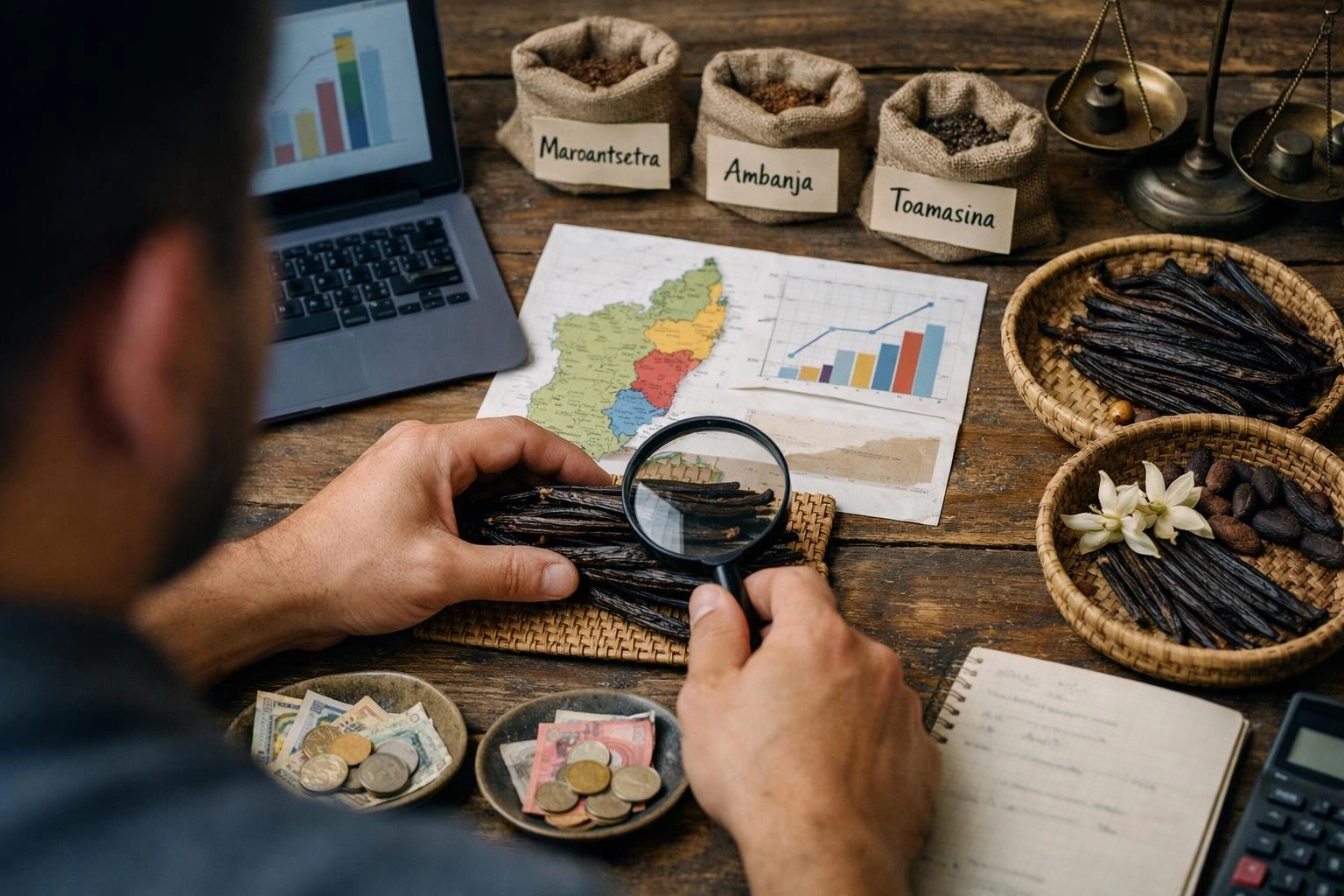
Buyers who compare on these points usually make better decisions than buyers who focus only on price per kilogram. A lot from Toamasina may move faster because of export access, while a remote lot from eastern Madagascar may need extra checking before it is worth the same money. Local expertise helps spot those trade-offs early.
5 Ways to Save Money Without Lowering Quality
You can save money on Madagascar vanilla by timing your purchase well, comparing multiple origins, and setting clear quality rules before you buy. The best savings come from buying smarter, not from accepting weak beans or poor traceability.
These tactics help buyers balance cost and quality across the full spice pricing picture. A strong commercial lot with clear post-harvest handling can be more cost-effective than a cheaper lot that loses yield during sorting or storage. Good quality grading protects margin over time.
When Vanillababa Can Help You Choose the Right Origin?
Vanillababa helps buyers choose the right Madagascar origin by comparing regional pricing signals, grading differences, and supply conditions across service areas like Maroantsetra, Mananara Avaratra, Fénérive Est, Soanierana Ivongo, Ambanja, Ambilobe, Toamasina, Brickaville, Vatomandry, and Mahanoro. That local expertise reduces guesswork and helps buyers match price to true bean quality.
It is useful when you need to compare vanilla origin pricing across different trade routes, especially if one supplier emphasizes traceability while another offers a lower headline rate. The team can help you judge whether the lot’s moisture content, defect rate, and curing process support the asking price. That matters because a fair buy depends on the whole supply chain, not just a single quote.
If you are sourcing cured vanilla for resale or manufacturing, local market knowledge can save time and reduce risk. Vanillababa is most helpful when the offer looks attractive but the origin region, storage history, or export grade is unclear. In that case, the right comparison can protect both margin and product consistency.
Frequently Asked Questions
About the Author
Randrianantenaina Landry writes about Madagascar agricultural markets with local expertise in origin-based vanilla pricing, quality grading, and buyer expectations across eastern and northern trade routes. The goal is to help buyers make clearer decisions using real-world supply chain signals, not generic spice pricing advice.
Related Resources
Cost Comparison: Grade A Gourmet Vanilla vs Grade B Vanilla (Madagascar Bourbon)
how much does Grade A vs Grade B Madagascar vanilla cost
What It CostsPricing Guide: Whole Pods, Vanilla Cuts, Extract, Paste and Powder
how much does vanilla extract paste powder pods cost
What It CostsExport Pricing to China, Asia, Europe, America and UAE: Freight, Duties and Landing Costs
how much does it cost to export Madagascar vanilla to China/Europe/USA/UAE
What It CostsSmall Quantity vs Wholesale Vanilla Pricing: Per-Kg Breakpoints and MOQ Effects
how much does small quantity vanilla cost vs wholesale price per kg