Vanilla Export Types by Destination in Madagascar: China, Asia, Europe, America & UAE
Vanilla export types from Madagascar vary by destination market because buyers in China, Asia, Europe, America, and the UAE want different grades, formats, and compliance levels. The right choice depends on quality, processing, packaging, and buyer needs.
Madagascar vanilla beans are known for strong origin quality and trusted regional sourcing. Still, each shipment needs the right export spec for the market. This page matches vanilla grades to buyer needs, so you can line up the cure process, moisture content, and document set with the destination.
For commercial export, the main forms are gourmet vanilla, extract-grade vanilla, cuts and splits, and value-added vanilla product forms like powder or paste. In practice, the best origin lot depends on traceability, smell, packaging, and customs clearance needs.
| Type | Key Features | Typical Cost | Best For |
|---|---|---|---|
| Gourmet vanilla beans | Long beans, strong aroma, careful cure process, high traceability, premium grading | Usually the highest priced export grade | Premium foodservice, specialty retail, luxury buyers in the UAE and Europe |
| Extract-grade beans | Functional beans, stable vanillin content, acceptable visual quality, consistent lot size | Mid-range, often below gourmet pricing | Food manufacturing, extract makers, industrial contracts in America and Asia |
| Cuts and splits | Broken or opened beans, useful aroma, lower cosmetic value, fast processing input | Lower cost, function-led pricing | Processors that want flavor output over appearance |
| Off-grade vanilla | Mixed sizes, imperfect look, still usable for industrial blending or extraction | Lowest cost among exportable lots | Bulk processors, compound flavor houses, value-driven buyers |
| Value-added preparations | Powder, paste, or prepared formats with tighter export specification and packaging | Varies by processing level and compliance | Retail, food manufacturing, and presentation-focused trade |
Typical export choices also follow practical shipping needs. Madagascar’s humid curing and drying conditions affect bean moisture, so exporters often use careful post-harvest drying and vacuum packing to protect quality in transit. Cyclones and transport delays can slow inland collection, so buffer stock and safer shipping schedules help keep supply steady.
Madagascar vanilla grades matter by destination because Europe usually wants stronger traceability and cleaner sensory profiles, China often accepts flexible packaging and mixed formats, the UAE values premium presentation, and America often checks grade consistency, moisture control, and contract reliability.
Gourmet vanilla is the top choice for buyers who want strong aroma and good bean appearance. These lots usually come from careful selection, tighter moisture control, and a cleaner cure process. Europe and the UAE often reward that work, while premium foodservice buyers use traceable beans to support menu quality and brand story. A well-documented origin lot from Malagasy producing zones also helps buyers prove traceability.
Extract-grade vanilla sits lower on the cosmetic scale, but it still works well in commercial export. It is often chosen when vanillin content, supply stability, and batch consistency matter more than length or appearance. America and parts of Asia often buy these lots for food manufacturing, especially when contracts need repeatable results and steady logistics.
Cut vanilla, splits, and off-grade material serve a different role. They fit processors that want flavor yield, not perfect bean shape. That makes them useful for industrial blending, extraction, and some compound flavor systems. These forms are practical when buyers need lower entry cost and can handle broader export spec rules.
Gourmet Vanilla Beans for Premium Buyers
Gourmet beans are the right choice for premium foodservice and luxury retail because they offer the best look, aroma, and traceability. They suit buyers who need a strong origin story, a clean sensory profile, and dependable grading. In most cases, these are the preferred vanilla shipment types for high-value shelves and chef programs.
Use them when the buyer asks for whole beans with tight sorting and clear documents. The main benefit is presentation. The main trade-off is higher cost and stricter quality control.
Extract-grade Vanilla for Industrial Use
Extract-grade beans are best for food manufacturing and extract production because they deliver reliable vanillin content without the premium price of gourmet lots. These commercial export lots are selected for function, not display. They work well when the buyer wants steady aroma release across batches.
Use them when a processor needs bulk input, repeatable performance, and simple customs clearance. Their strength is utility. Their drawback is weaker presentation for retail-facing channels.
Cuts, Splits, and Off-Grade Vanilla for Processing
Cuts, splits, and off-grade vanilla are used when the goal is flavor extraction or blending rather than premium shelf appeal. They are often the most practical hyponyms in a value-driven supply chain because they lower cost while keeping useful aroma and extract potential.
Use them for processors that can work with uneven size, mixed condition, or a broader export spec. The benefit is lower input cost. The trade-off is reduced visual quality and weaker appeal for high-end buyers.
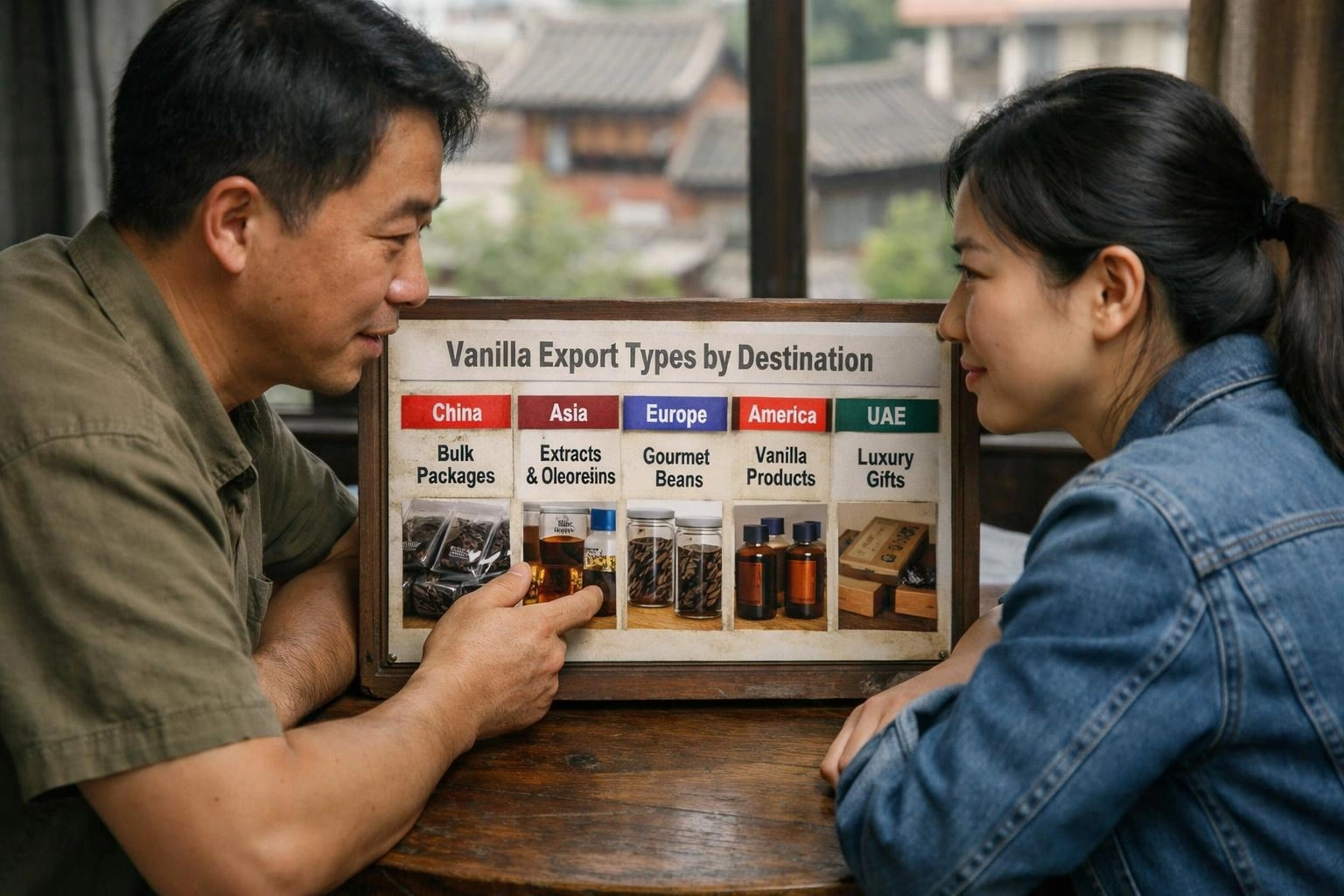
The best vanilla export type depends on destination demand and buyer intent. Europe and the UAE usually favor premium, traceable beans; China and broader Asia can take both premium and industrial formats; America often wants stable specs and documents; and lower-grade material fits processors that care more about function than looks.
China and broader Asia are often the most format-flexible destinations. Buyers there may accept vacuum-packed beans, bulk commercial packaging, or mixed grades if the paperwork is clear and the price is right. This flexibility helps move both premium and industrial lots from Madagascar without forcing every shipment into one model.
Europe is the strictest on traceability and food safety compliance. Buyers usually expect a clean origin chain, a valid phytosanitary certificate, and lots that match declared quality. In practice, exporters should keep batches separate, document curing and drying carefully, and avoid poorly mixed shipments.
America and the UAE are more spec-led in different ways. American buyers often check moisture content, lot stability, and contract reliability, while the UAE premium food trade places heavy weight on presentation and high-value positioning. For both, the right packaging and accurate export specification can protect price and reduce rejection risk.
China and Broader Asia: Flexible Commercial Formats
Europe: Traceable Premium Beans and Compliant Lots
America and the UAE: Specification-Led Premium Trade
Export format changes vanilla value because packaging and certification protect quality in transit and meet buyer needs. Vacuum-packed beans, sealed cartons, batch traceability, and phytosanitary documents help Madagascar exporters lower rejection risk and match each shipment with the destination market’s standards.
Format choice starts with the cure process. If beans are still unstable in moisture content, the shipment can suffer during sea transport or border inspection. That is why exporters check drying quality carefully before packing. A stable lot with clear origin traceability is easier to clear and easier to sell, especially when buyers compare commercial export options across countries.
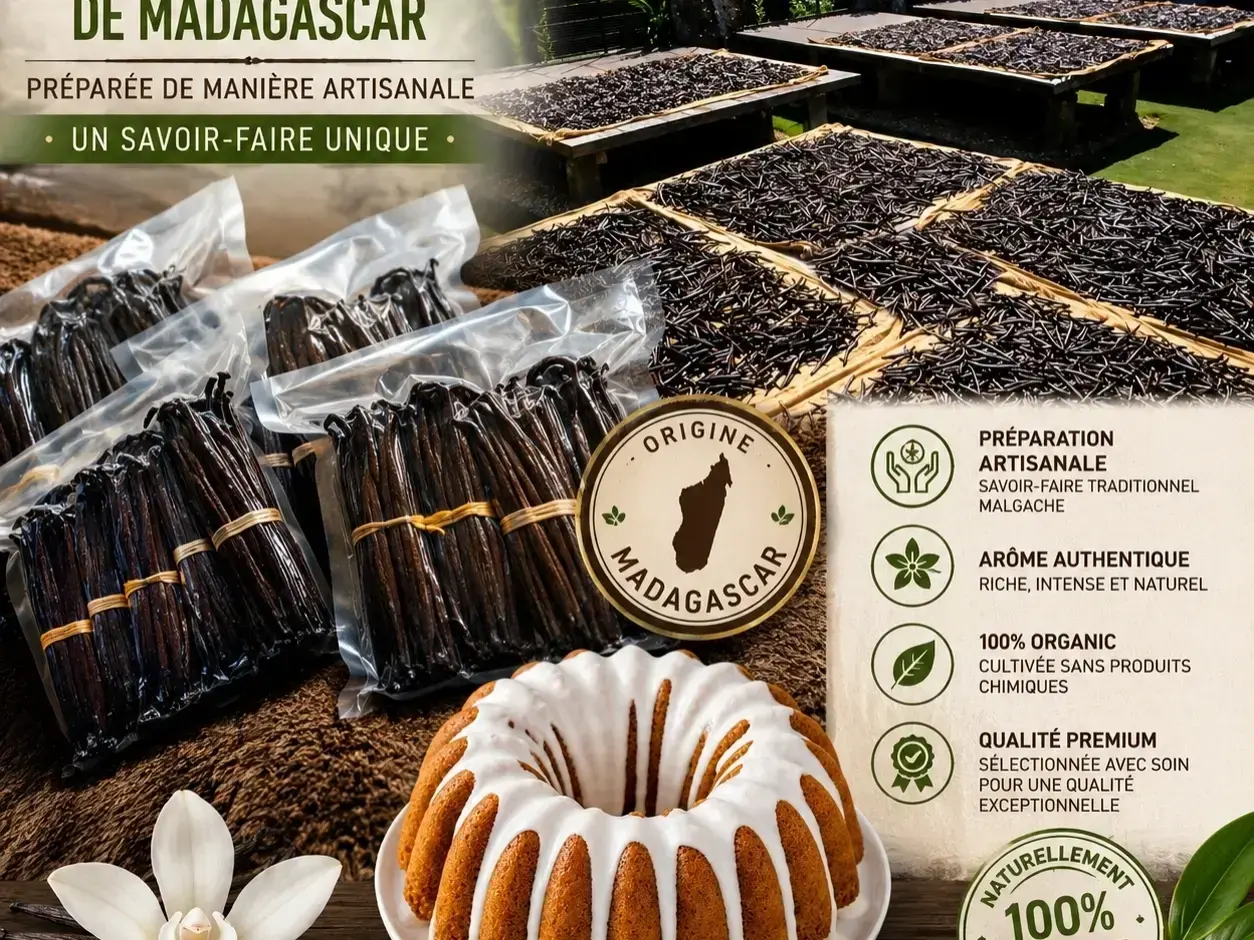
Packaging also affects smell. Vacuum packing can protect aroma, reduce moisture swings, and lower damage risk in humid transit conditions. Sealed cartons add another layer of control, which matters when the buyer wants neat presentation or long shelf life. For many destinations, the right pack format is as important as the grade itself.
Certification closes the loop. A phytosanitary certificate, batch records, and Other customs clearance documents show that the shipment is fit for export and matches the declared origin lot. For Europe and Other compliance-heavy markets, food safety compliance is not optional. For China, Asia, America, and the UAE, proper paperwork still speeds release and lowers dispute risk.
Buyers should choose the vanilla export type from Madagascar by matching the product grade to the end use, destination compliance needs, and expected shelf life. The right selection balances quality, documents, packaging, and logistics so the shipment arrives with the right sensory profile and commercial value.
In short, shipment planning should start at the farm gate, not at the port. Madagascar exporters who align quality control, traceability, and transport timing usually face fewer surprises and earn more buyer trust. That is especially true when the receiving market is strict about documents or shelf life.
Vanillababa helps buyers source Madagascar vanilla export types that match destination needs, whether the goal is premium beans, extract-grade lots, or mixed commercial formats. The advantage is destination-specific sourcing support, steady export coordination, and supply options aligned with China, Asia, Europe, America, and the UAE.
As a Madagascar supplier, the value is not just product access but fit. Vanillababa can help match gourmet vanilla, extract-grade vanilla, cuts and splits, or Other vanilla product forms to the buyer’s market, packaging, and paperwork needs. That matters when mixed batches won’t work or when a customer wants a very specific export spec.
Working with a local source also helps with traceability from Malagasy producing zones. That local proof supports cleaner origin records, better quality control, and smoother export coordination. For buyers who want a reliable commercial export partner, the strongest offer is the one that connects the right lot to the right destination without losing time in transit or at customs.
Frequently Asked Questions
Randrianantenaina Landry provides this guide to help buyers compare vanilla export grades, commercial export choices, and destination-specific sourcing from Madagascar. Use it as a practical starting point, then match the final lot to the buyer specification, documents, and shipping plan.
Related Resources
Export Pricing to China, Asia, Europe, America and UAE: Freight, Duties and Landing Costs
how much does it cost to export Madagascar vanilla to China/Europe/USA/UAE
What It CostsUrgent Shipments & Fast Sample Order Pricing: Expedited Logistics and Rush Fees
how much does expedited vanilla shipping and fast sample orders cost
How It WorksMadagascar Vanilla Export: Step-by-Step Export Process for Bourbon Vanilla
how does Madagascar vanilla export process work step by step
How It WorksLogistics, Packaging and International Shipping Process for Vanilla Exports
how does shipping and logistics work for vanilla export from Madagascar