Types of Grade B Vanilla Export in Madagascar
Grade B vanilla export in Madagascar means cured vanilla beans with lower moisture and less even looks than gourmet grade. They work best for extracts, powder, and wholesale industrial buyers. Exporters sort Grade B by bean size, condition, cut, and split style in Madagascar supply.
What Is Grade B Vanilla Export from Madagascar?
Grade B vanilla beans from Madagascar vanilla export channels are the industrial cured bean category used for extraction, flavoring, and wholesale processing. They’re less flexible and more varied in appearance, but they suit manufacturing well. Buyers often care more about aroma and processing results than perfect looks.
In practice, this vanilla export grade includes beans with normal curing changes, light surface marks, and moisture levels that may be lower or less even than premium lots. Buyers in the extract trade often accept more sorting, because cure method, drying time, and post-harvest handling shape the final result. For B2B buyers, the real value is steady flavor, traceability, and usable bean structure.
Because Madagascar supply comes from different growing areas, two lots with the same label can still differ in length, split rate, and texture. That’s why commercial importers want clear lot separation and simple quality sorting. Grade B isn’t weak product. It’s processing-grade vanilla built for bulk export, extraction, and industrial supply chains.
Types of Grade B Vanilla Beans and Export Formats
Grade B Madagascar vanilla is exported in several industrial formats, including whole cured beans, split beans, cuts, and wholesale lots. Buyers choose the format based on extraction needs, moisture behavior, sorting tolerance, and price sensitivity in manufacturing supply chains. That matters most when the goal is reliable bulk export, not retail display.
| Type | Key Features | Typical Cost | Best For |
|---|---|---|---|
| Whole beans | Intact cured pods, easier to inspect, good pod length, flexible handling | Usually mid-range within Grade B pricing | Processors wanting full bean form for infusion or blending |
| Split vanilla | Naturally opened beans, stronger aroma release, more exposed interior | Often slightly lower than whole beans | Extract makers focused on efficient extraction |
| Vanilla cuts | Broken or cut pieces, easy to process, less sorting waste | Usually the most cost-efficient option | Industrial extraction and maceration |
| Wholesale lots | Bulk packaging, traceable lots, mixed industrial formats | Priced by volume and consistency | Distributors, manufacturers, and exporters |
Whole Grade B Vanilla Beans
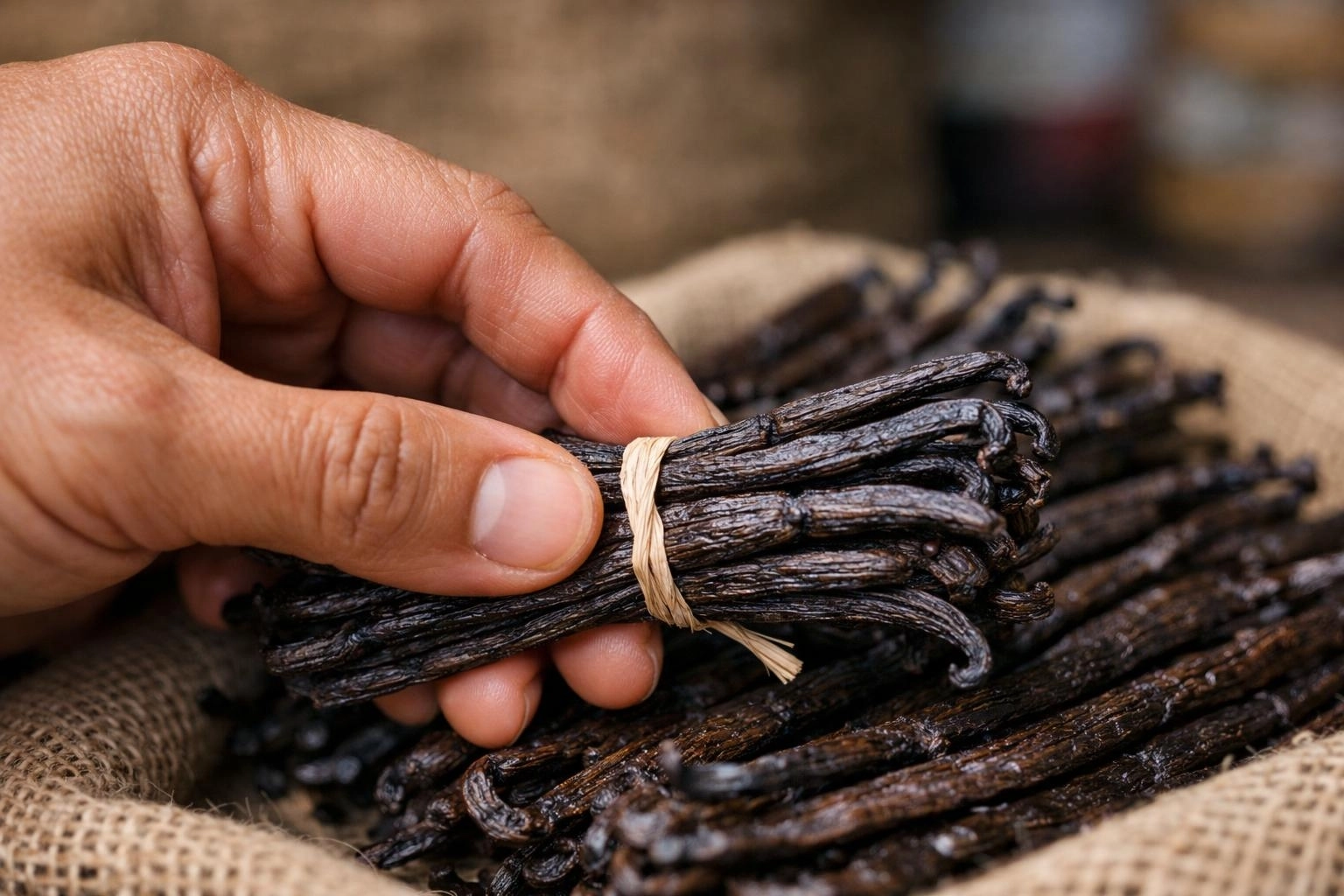
Whole beans are cured pods exported intact for extraction, infusion, and blending. Buyers choose them when they want easy handling, visible pod integrity, and more flexibility for industrial use. They still want bean form, not pre-cut material, and traceability often matters in sourcing.
These beans work well when a buyer wants simple sorting and less breakage during transport. In Madagascar, humidity during curing can change how soft the beans stay, so one lot may feel different from another. The upside is cleaner bulk packaging. The tradeoff is a slightly higher cost than cuts and more sensitivity to moisture level.
Split Vanilla Beans
Split vanilla beans are Grade B beans that open naturally during curing or handling, exposing the inside and boosting aroma release. They’re often used when extract makers care more about flavor extraction than appearance. That makes them common in industrial vanilla supply and vanilla extract production.
Because the inside is exposed, split pods can release flavor faster in extraction. They also need tighter storage control. In Madagascar, tropical weather and curing humidity can raise the split rate in some lots, so exporters sort carefully to keep quality steady. The plus side is strong extraction performance. The downside is less visual uniformity and a greater need for moisture control.
Vanilla Cuts for Industrial Use
Vanilla cuts are smaller pieces of Grade B beans used for extraction, maceration, and bulk processing. They’re a cost-friendly option for manufacturers because they reduce sorting waste and fit jobs where bean length and visual uniformity matter less. That’s especially true in processing-grade vanilla supply.
Many buyers choose cuts when they want a lower entry price and easy loading for large extraction tanks. The cutting step usually comes during quality sorting, where a processor separates short beans, broken pieces, and trimmed sections into a useful industrial grade format. The benefits are speed, less waste, and better cost control. The limits are weaker visual appeal and fewer display options for the final product.
Wholesale Grade B Vanilla Lots
Wholesale vanilla beans in Grade B lots are bulk shipments made for processors, distributors, and industrial buyers who need steady supply. They’re chosen for volume, traceability, and usable cure quality, not premium looks. That makes them a strong fit for export contracts and wider bulk export programs.
In Madagascar, wholesale lots often depend on regional curing and careful sorting. One lot may contain more whole pods, while another may lean toward split pods or vanilla cuts, so buyers should confirm lot structure before purchase. The upside is reliable supply and contract readiness. The risk is batch differences if traceability is weak or moisture isn’t controlled well.
Compare the Main Grade B Vanilla Types
The main Grade B vanilla types differ by form, handling, and industrial fit. Whole beans suit flexible processors, split beans improve aroma release, cuts lower costs for extraction, and wholesale lots support buyers who need steady volumes for manufacturing and export distribution.
| Type | Key Features | Typical Cost | Best For |
|---|---|---|---|
| Whole beans | Intact, easier to inspect, flexible for different uses, stronger visual integrity | Medium | Processors that want full cured beans |
| Split vanilla | Open bean split, high aroma release, often needs more careful storage | Low to medium | Extraction buyers focused on flavor yield |
| Vanilla cuts | Broken pieces, lower waste, easy batch processing, less sorting burden | Lowest | Industrial users seeking cost control |
| Wholesale lots | Bulk export format, traceable, can mix formats by contract spec | Varies by volume and grade mix | Distributors and large-scale buyers |
Typical cost differences come from sorting, bean length, and moisture level. In most projects, whole pods cost more than cuts, while split pods sit in the middle because they still carry strong aroma profile value. Buyers in Madagascar often compare lots by how much post-harvest curing was needed to reach a stable export condition, not just by looks.
How Madagascar Supply Conditions Shape Grade B Quality?
Madagascar supply conditions shape Grade B quality through tropical humidity, curing time, post-harvest drying, and sorting discipline. These factors affect bean flexibility, split rate, aroma retention, and the consistency buyers see across export lots from different growing areas.
For importers, the main lesson is simple: quality isn’t only about the bean itself. It also depends on how the lot was handled from harvest through curing and packing. Good suppliers protect traceability, separate lots by condition, and manage moisture so the industrial vanilla arrives ready for extraction or blending.
Frequently Asked Questions
Request a Quote
Wholesale Grade B vanilla buyers should request a quote when they need a clear match between format, moisture level, traceability, and shipment volume. For Madagascar vanilla export supply, the best offers usually come from lots that are well sorted, clearly labeled, and matched to your extraction or industrial use case.
Randrianantenaina Landry reviews each inquiry with care for origin, quality sorting, and export readiness so buyers can compare whole beans, split vanilla, and vanilla cuts without guesswork. If you need bulk export support or a processing-grade vanilla supply plan, start with your target format and expected monthly volume.
Related Resources
Cost Comparison: Grade A Gourmet Vanilla vs Grade B Vanilla (Madagascar Bourbon)
how much does Grade A vs Grade B Madagascar vanilla cost
What It CostsPricing Guide: Whole Pods, Vanilla Cuts, Extract, Paste and Powder
how much does vanilla extract paste powder pods cost
What It CostsExport Pricing to China, Asia, Europe, America and UAE: Freight, Duties and Landing Costs
how much does it cost to export Madagascar vanilla to China/Europe/USA/UAE
What It CostsSmall Quantity vs Wholesale Vanilla Pricing: Per-Kg Breakpoints and MOQ Effects
how much does small quantity vanilla cost vs wholesale price per kg