Trusted Local Service Experts
Before export—Pre-shipment checklist (5–8 steps)
Direct answer: Complete these pre-shipment steps to verify pod quality, assign lot IDs and gather farm records before any packing begins.
- Quality inspection: Visually inspect pods for grade A criteria—length, flexibility, uniform dark oil sheen and absence of mold; record vanillin aroma notes and flag defects.
- Moisture content test: Run an AOAC/ISO moisture testing protocol on a representative sample; log results in the traceability ledger entry (typical buyer ranges noted).
- Sorting and SKU tagging: Separate Grade A Gourmet Vanilla from lower grades and note any Vanilla Caviar‑Vanilla Seeds SKUs in the manifest.
- Farm records collection: Assemble farm traceability documents: grower name, location, harvest date and cultivation notes; store copies in batch-level traceability files.
- Batch ID assignment: Create unique lot codes and lot number labels for each batch; link QR/GS1 links where used and record in the traceability ledger.
- Buyer pre-check: Verify buyer specification sheets and note any special humidity control or vacuum sealing requests.
- Phytosanitary pre-clearance: Confirm phytosanitary certificate requirements and prepare samples for official inspection.
- Export readiness sign-off: A designated quality manager signs the export readiness checklist and confirms export compliance paperwork is queued.
During packing and handling—On-site packing checklist (5–8 steps)
Direct answer: Follow these packing steps to protect Grade A vanilla with correct packing materials, hygiene controls and palletization procedures on-site.
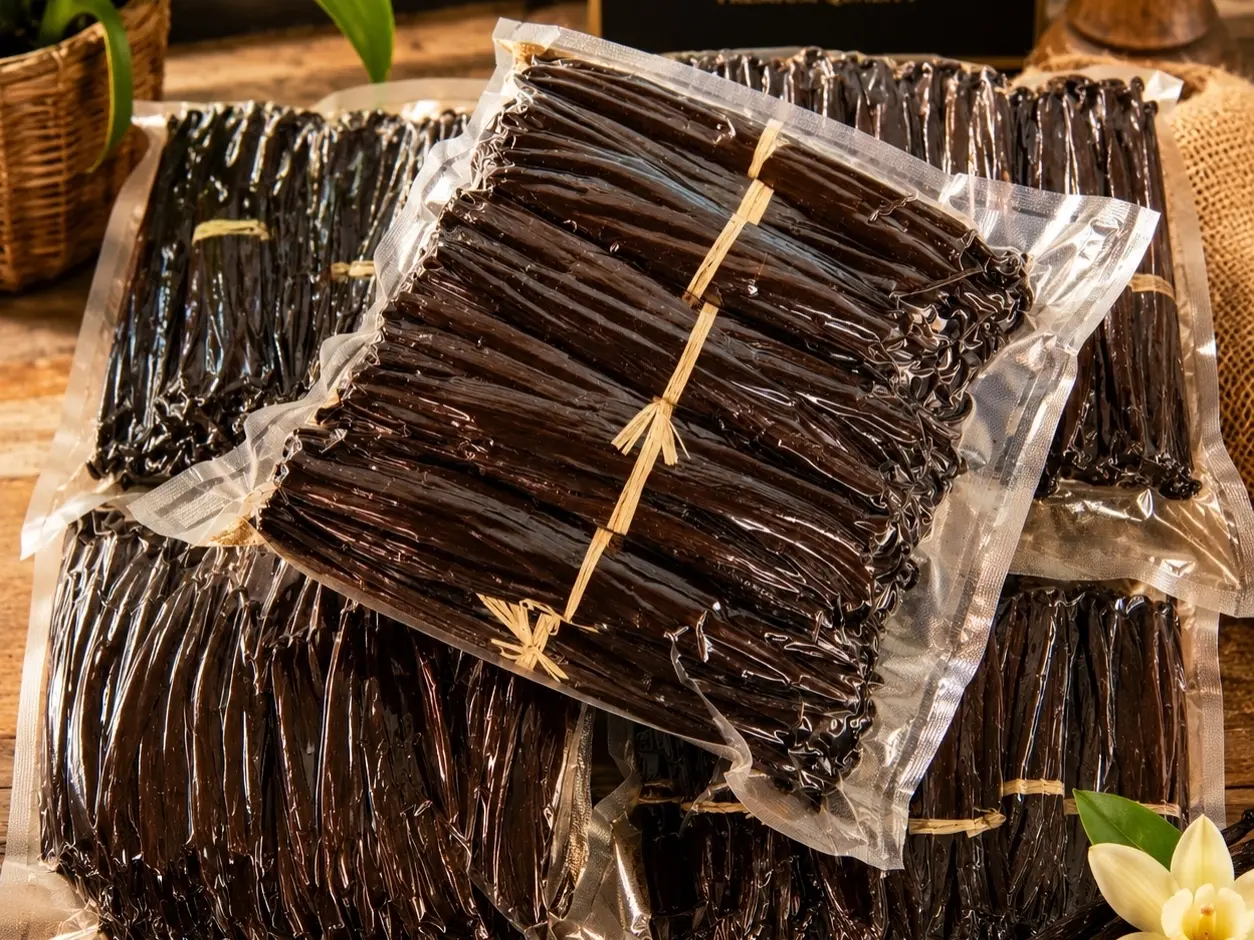
- Packing materials: Use approved vacuum bags or food‑grade linen wraps, desiccant packs and robust cartons sized per packing material specification.
- Vacuum sealing / humidity control: Vacuum sealing is preferred; when not used, ensure humidity control and include desiccant to maintain moisture targets noted in the moisture testing protocol.
- Hygiene controls: Ensure handlers wear clean gloves, work in a sanitized area and maintain cross‑contamination controls to preserve vanillin aroma and prevent mold.
- Carton labeling: Affix lot ID labels, QR/GS1 links and SKU notes (e.g., Vanilla Caviar‑Vanilla Seeds) to each carton for batch-level traceability.
- Palletization: Stack cartons per pallet specs, secure with straps and shrink-wrap, and add a master pallet label with the pallet lot number for batch reconciliation.
- Temperature and humidity monitoring: Record on-site humidity readings; if cold chain or controlled atmosphere is required by the buyer, document set points and logs.
- Packing inspection: Final visual and sample checks before sealing pallets to verify no visible defects or contamination.
After packing—Final export checks and documentation (5–8 steps)
Direct answer: Complete final documentation, export permits and traceability reconciliation after packing to clear shipment for export.
- Final batch reconciliation: Reconcile carton counts to lot numbers and pallet IDs; confirm batch-level traceability entries match physical labels.
- Export documentation: Prepare commercial invoice, packing list and buyer compliance forms; attach carton-level lot number references.
- Phytosanitary certificate: Secure the national phytosanitary certificate and append any required laboratory test reports for moisture content or contaminants.
- Traceability files: Assemble digital and physical traceability files linking lot codes to farm records and any QR/GS1 scans for audit.
- Quality manager sign-off: Quality assurance completes an export readiness checklist and signs off that grade A criteria and packing material specification were met.
- Carrier handover protocol: Provide carrier with pallet-level lot IDs and handling notes (humidity control, no stacking restrictions) and record handover time.
- Post-shipment audit log: Create an audit log entry for batch reconciliation and mark the shipment closed in the traceability ledger for future verification.
Packing specifications table—Grade A packaging standards
Direct answer: Use this table to match packing method to required humidity control, carton and pallet specs for Grade A vanilla.
| Item | Specification / Typical range | Notes |
|---|---|---|
| Vacuum pack | Food‑grade vacuum bag; single or double seal | Preferred for long transit; reduces vanillin aroma loss |
| Humidity control | Desiccant packs + monitored RH; maintain within buyer-specified range (typical guidance provided) | Record on packing manifest |
| Carton specs | Double-walled cartons, internal liners or linen wraps | Include lot ID label and SKU (Vanilla Caviar‑Vanilla Seeds if applicable) |
| Palletization | Max height per pallet per carrier; master pallet label with pallet lot number | Use straps and shrink-wrap; note stacking limits |
| Moisture control checks | Document AOAC/ISO moisture content test results in batch file | Typical ranges are buyer-guided; record method used |
Batch-level traceability: how to record, link and verify
Direct answer: Record a unique lot code for each batch, link it to farm records and carton/pallet labels, and verify via batch reconciliation and QR/GS1 scans.
Batch-level traceability is the backbone of export compliance and buyer trust for Madagascar vanilla. Start by issuing a unique lot number whenever pods are graded Grade A. Each lot code must be entered in the traceability ledger and linked to the farm traceability files that include grower name, location and harvest date. For products like Vanilla Caviar‑Vanilla Seeds, indicate the sub-SKU in the same lot record so co-occurring items remain traceable. Use lot ID labels and, where possible, QR/GS1 links on cartons and pallets to enable rapid verification during audits.
During packing, perform a batch reconciliation step: match physical carton counts and pallet IDs to the ledger entries and confirm moisture content and vanillin aroma notes are logged. Keep digital backups of the traceability files and a printed manifest in the shipment. Verification can include QR scans, cross-checking the lot number against farm records, and a final sign-off from a quality manager. If a discrepancy is found, perform a trace-back by lot code and halt shipping until resolved. This process supports buyer audits, phytosanitary inspections and post-shipment claims. Use traceability ledger entries as formal traceability templates that integrate the traceability meronyms such as vacuum bag and lot ID label to provide a full chain of custody.
Red flags to stop shipment (3–4 items)
Direct answer: Stop shipment if any of these critical red flags appear during checks.
- Mold/fermentation defects: Visible mold, off-odors or abnormal fermentation on pods.
- Missing farm source records: No farm traceability files or unclear farm traceability links for the lot number.
- Failed moisture content test: Moisture outside buyer-guided ranges or inconsistent AOAC/ISO test data.
- Packing failures: Damaged vacuum bags, missing lot ID labels or unsecured palletization that risks contamination.
Frequently Asked Questions
Author: Randrianantenaina Landry
Semantic note: Grade A Gourmet Vanilla requires a pre-export checklist covering quality, packing and batch-level traceability—a concise summary of the semantic triple: Grade A Gourmet Vanilla requires a pre-export checklist covering quality, packing and batch-level traceability.
CTA: Get a Free Estimate
Contact: /contact/
Hero image placeholder: images/image-h-10.webp
Related Resources
Cost Comparison: Grade A Gourmet Vanilla vs Grade B Vanilla (Madagascar Bourbon)
What It CostsPricing Guide: Whole Pods, Vanilla Cuts, Extract, Paste and Powder
What It CostsCertification & Traceability Costs: Organic, Batch Traceability and Export Documentation Premiums
What It CostsHow Seasonality and Pre-Harvest Contracts Affect Vanilla Prices in Madagascar