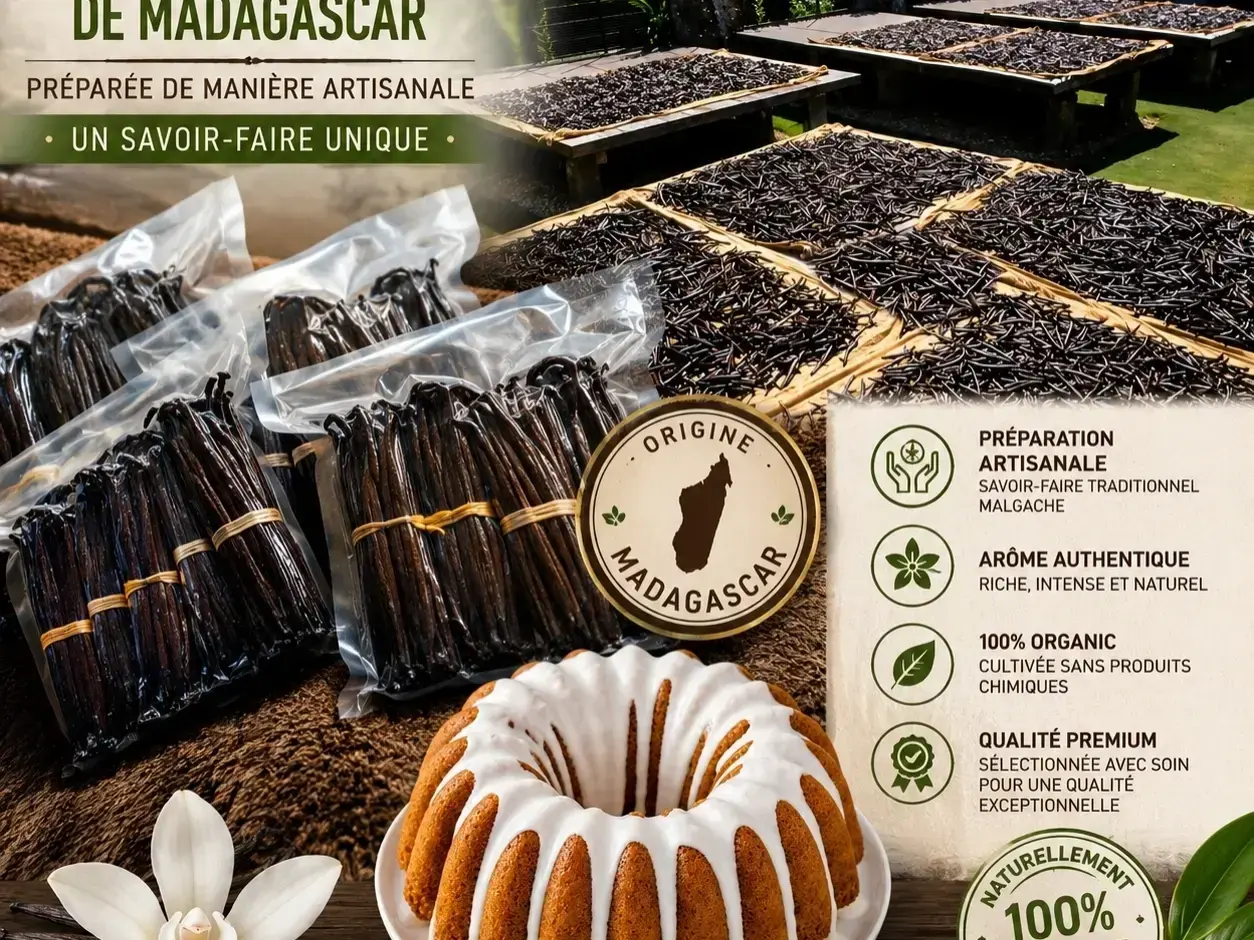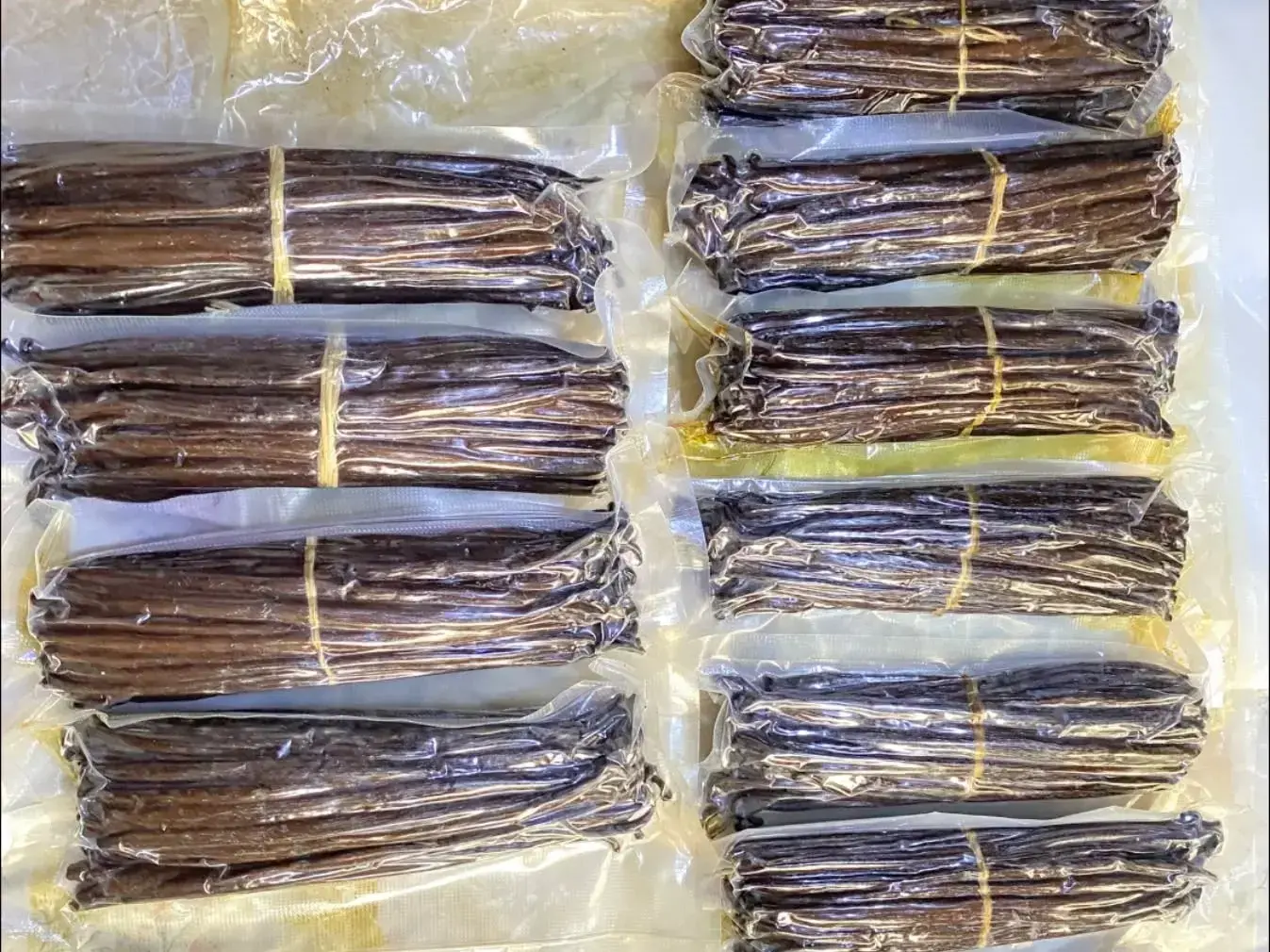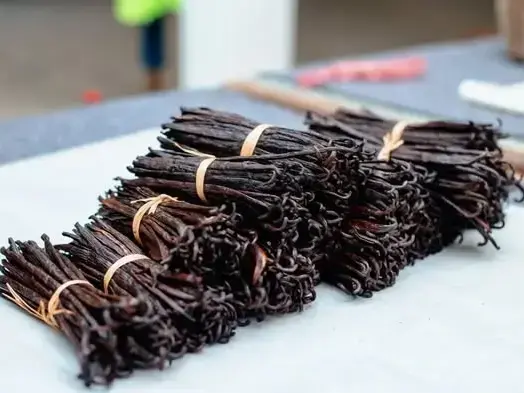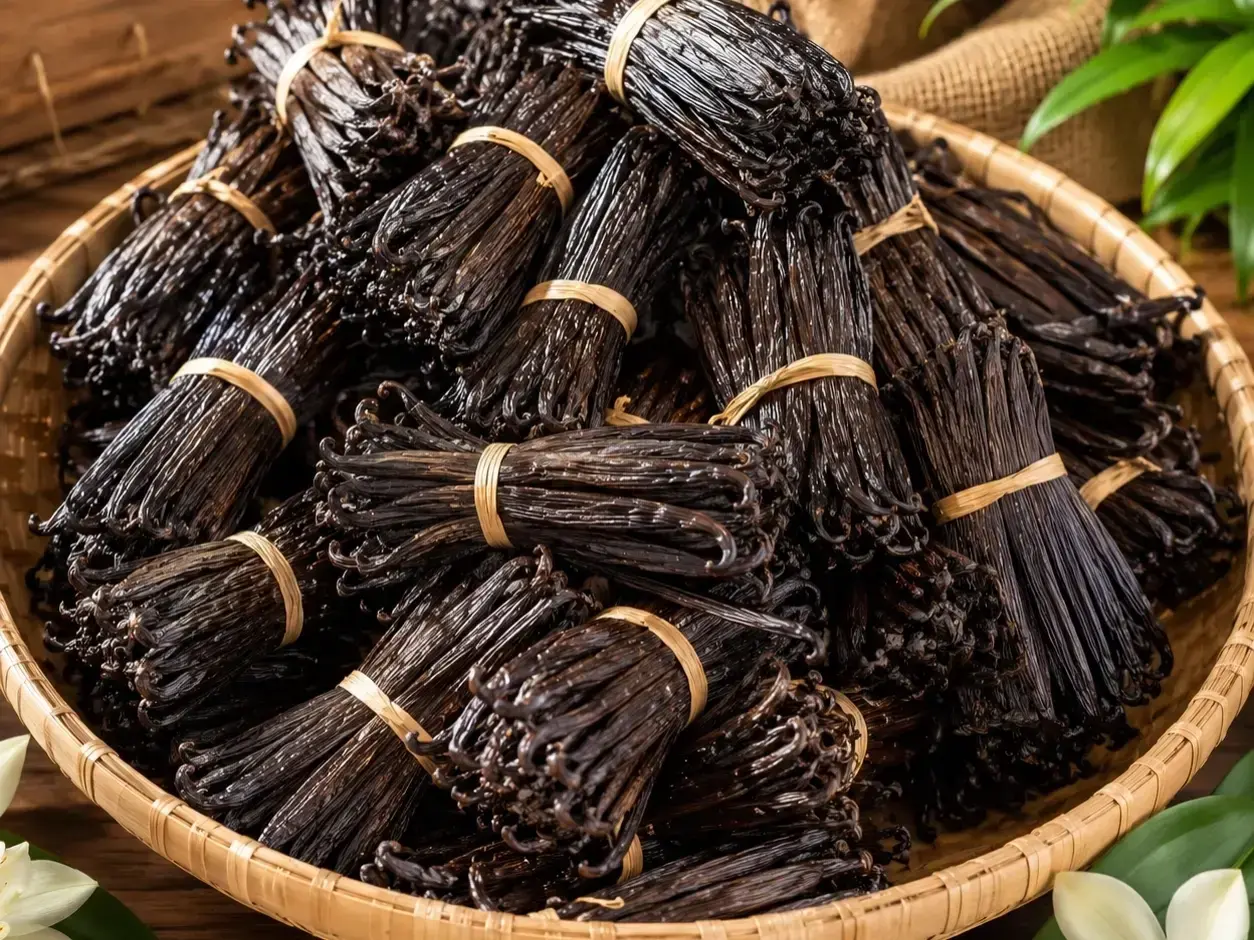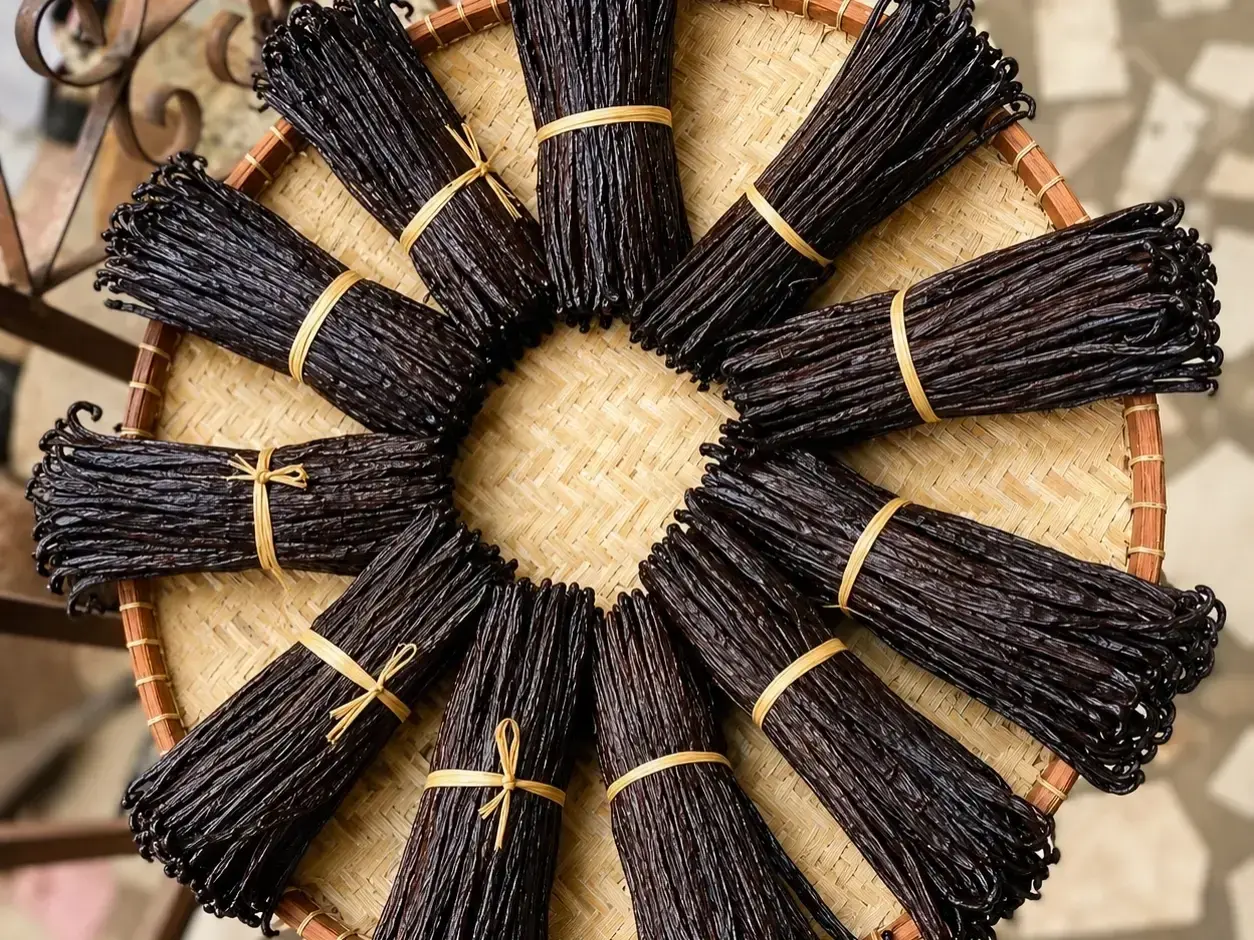
Buyers choose by quality, moisture content, vanillin profile, certification, and end use.
Madagascar origin matters because buyers value its aroma, steady supply ties, and traceability. Buyers can choose whole cured beans, processed ingredients, or vanilla extract based on use and compliance needs.

| Type | Key Features | Typical Cost | Best For |
|---|---|---|---|
| Cured beans | Whole vanilla pods, flexible, aromatic, strong on visual quality and moisture control | Usually highest per kilo | Premium retail, chefs, gourmet packaging |
| Gourmet beans | Top export grade, long, supple, high aroma, sorted for appearance | Premium pricing range | Food service, specialty shops, culinary use |
| Extract-grade beans | Lower cosmetic standard, strong extraction value, suitable for processing | Mid-range pricing | Manufacturing, vanilla extract, bulk supply |
| Cuts and splits | Broken pods, still flavorful, easier for infusion and industrial blending | Lower than whole beans | Food manufacturing, liquid extraction, ingredient use |
| Powder and extract | Processed forms with consistent dosing and formulation convenience | Varies by concentration | Bakeries, beverage makers, industrial formulation |
In practice, the main export vanilla types move from whole pods to processed ingredients. Whole beans stay central for premium food demand. Cuts, powder, and extract support food manufacturing where consistency, traceability, and buyer specs matter more than appearance.
The main Madagascar vanilla export types differ by quality grades, moisture content, vanillin content, and use. Gourmet beans fit premium retail. Cuts and powder suit manufacturing. Extract suits formulation, and cost often improves as the product moves from whole beans to processed forms.
| Export form | Quality profile | Typical moisture / vanillin focus | Best buyer use |
|---|---|---|---|
| Gourmet beans | Uniform, long, supple, visually attractive, strong aroma | Careful moisture content control; vanillin profile valued for aroma | Retail, chefs, high-end culinary lines |
| Extract-grade beans | Less cosmetic appeal, still rich in flavor, suitable for batch processing | Moisture still checked; vanillin content supports extraction yield | Industrial extraction, bulk supply, food manufacturing |
| Cuts and splits | Broken or opened pods with practical flavor value | Often used where uniform appearance is less important | Infusions, bakery ingredients, compound products |
| Powder | Fine, easy to dose, good for standardized recipes | Consistency matters more than pod shape | Dry mixes, confectionery, manufacturing |
| Vanilla extract | Processed liquid derivative with repeatable flavor strength | Standardized concentration replaces pod inspection | Beverages, syrups, bakery and industrial formulation |
For bulk supply, extract-grade material often improves economics because it cuts cosmetic waste. In Madagascar, harvest timing and crop changes can shift the grade mix from season to season. Buyers should match product choice with lead times and tolerance ranges.
Madagascar vanilla bean grades are often sorted into gourmet, extract, and lower-grade industrial material. Sorting depends on length, pliability, aroma, and defect level. The grade decides whether the beans fit retail packaging, extraction, or ingredient manufacturing, especially when organic certification and traceability are needed.
Gourmet Vanilla Beans
Gourmet vanilla beans are premium beans sold for direct culinary use and retail packaging. They are chosen for long pods, supple texture, deep aroma, and attractive appearance. Buyers usually want clear traceability, organic certification, and steady moisture content so the beans arrive ready for chefs, specialty stores, and branded jars.
Extract-grade Vanilla Beans
Extract-grade vanilla beans are made for industrial use, especially vanilla extract and Other food processing lines. They are often shorter, more marked, or less uniform, but still rich in flavor. These beans support food manufacturing where vanillin content and batch consistency matter more than visual perfection.
Cuts, Splits, and Off-Grade Material
Cuts, splits, and off-grade material are practical ingredients for bulk supply and processing. They work well when buyers need lower-cost input for infusions, powders, or extracts. In island logistics, careful packing and shipping documents matter because mixed lots can be sensitive to delays and handling damage.
Buyers should choose the vanilla export form by matching the product to its final use, certification needs, and handling needs. Premium culinary buyers usually choose whole beans. Manufacturers often choose extract-grade or processed forms, and each shipment should match moisture, aroma, and traceability specs.
Madagascar’s humid tropical climate makes curing and storage sensitive. Moisture control should be part of every buying decision. Regional harvest timing can also shift availability, so lead times should be discussed before any bulk supply order is confirmed.
Certification and quality checks protect Madagascar vanilla exports from compliance failures and buyer rejection. Organic status, traceability, moisture control, visual grading, and phytosanitary documents matter most.
What Documents Buyers Usually Request?
Why Shipping Insurance Matters for Vanilla?
matters because cargo risk is real in island export trade. Vanilla can lose value through moisture exposure, transit delay, or handling damage, so export protection helps buyers and sellers reduce loss. For Madagascar shipments, insurance also supports smoother dispute handling when goods move through multiple ports and containers.
Frequently Asked Questions
Request a quote through Vanillababa
Get a Free EstimateRelated Resources
Pricing Guide: Whole Pods, Vanilla Cuts, Extract, Paste and Powder
how much does vanilla extract paste powder pods cost
What It CostsCertification & Traceability Costs: Organic, Batch Traceability and Export Documentation Premiums
how much extra does organic certification and traceability add to vanilla export cost
How It WorksQuality Control & Compliance Workflow for Vanilla Exports: Lab Testing to Phytosanitary Clearance
how does quality control and compliance work for vanilla export
Compared ToOrganic Vanilla Extract vs Premium Vanilla Paste: Which Product Should Importers Source from Madagascar?
organic vanilla extract vs vanilla paste importers