Madagascar Organic Vanilla Export Costs: Certification, Traceability, and Documentation
Organic certification, batch traceability, and export papers all add to Madagascar vanilla export cost. Buyers pay for audits, separate handling, paperwork, and lower risk. For most shipments, the extra cost stays fairly small per deal, but it can grow across the supply chain. That happens most with small lots and strict document checks. Vanillababa helps buyers see these costs clearly for organic vanilla extract and vanilla caviar from Madagascar.
Organic vanilla export cost in Madagascar rises when the supply chain must pay for certification audits, separate lot handling, batch tracking, and export paperwork. Organic and traceability premiums often show up as a per-kilo bump or a service fee. Small lots, tighter records, and full export prep usually cost more.
How Much Extra Do Organic Certification and Traceability Add to Vanilla Export Cost in Madagascar?
The extra cost is usually a certification premium plus a traceability surcharge based on how much control the buyer wants over each lot. In simple terms, the extra comes from audit work, record keeping, and the labor needed for batch tracking. It is not one fixed fee. A basic shipment may only need normal compliance help, while a stricter organic order may need more separation, more checks, and more document review.
For exporters, scale matters most. Small volumes usually carry a higher quality assurance cost because the same audit report, lot code system, and compliance files get spread over fewer kilos. That is why a small specialty lot can seem costly even when the farm-gate product is excellent. Larger shipments often lower the per-kilo burden because customs clearance, export papers, and certificate handling are shared across more units.
In Madagascar, the local sourcing network also plays a part. If a buyer wants a strong chain of custody, the exporter must show where the vanilla came from, how it was handled, and which batch it belongs to. That premium exists for a reason. It lowers buyer risk, supports organic claims, and makes approval easier at destination.
These costs are not just admin work. They build buyer trust, reduce border delays, and support premium placement in organic and specialty markets.
These charges often sit inside a wider quality assurance cost, but buyers see them most clearly as service fees or price uplifts.
Organic vanilla export services are often priced in tiers because not every shipment needs the same level of support. Basic covers essential compliance, Standard adds stronger traceability and document control, and Premium includes tighter lot separation, fuller audit help, and export-ready packing for higher-risk buyers.
Organic, Traceability, and Export Documentation Pricing Table
| Tier | Typical price range | What is included | Best for |
|---|---|---|---|
| Basic tier | Typical low uplift for essential compliance support | Organic audit coordination, core export documentation, standard lot code setup | Simple shipments with limited document complexity |
| Standard tier | Typical mid-range uplift for tighter control and review | Batch-level traceability, stronger chain of custody records, certificate handling, buyer-spec file checks | Most organic buyers who need reliable paperwork and clean customs clearance |
| Premium tier | Typical highest uplift for fully managed export compliance | Full segregation, audit support, export-ready packing, certificate of analysis, enhanced document control |
The table shows a typical service setup, not fixed public rates. In the market, the real quality assurance cost depends on volume, destination rules, and how much back-and-forth the buyer needs before release. More review and more physical control usually mean higher pricing.
Long inland transport, seasonal supply swings, and paper-heavy customs steps all raise the labor needed to export vanilla cleanly.
Why Madagascar Adds Specific Compliance and Logistics Costs?
Madagascar export compliance is more complex than a simple warehouse handoff. Vanilla often comes from remote farm areas and then moves through long inland routes before it reaches export processing. That movement increases the need for segregation, relabeling, and careful record keeping.
Seasonal supply changes also affect the cost picture. During busy periods, exporters may need to sort mixed arrivals, uneven curing schedules, and delayed farm deliveries while still protecting batch-level traceability. That creates extra work The paperwork load grows too, because Madagascar export shipments rely on several customs documents, phytosanitary checks, and origin records that must match before customs clearance.
These local realities matter most for buyers who want premium pricing with low risk. The process is not only about moving product out of port. It is about proving that the shipment is the same lot that entered the system, that the organic claims are valid, and that export papers match the goods exactly. That is why the pricing uplift in Madagascar often reflects labor, timing, and compliance control more than the vanilla itself.
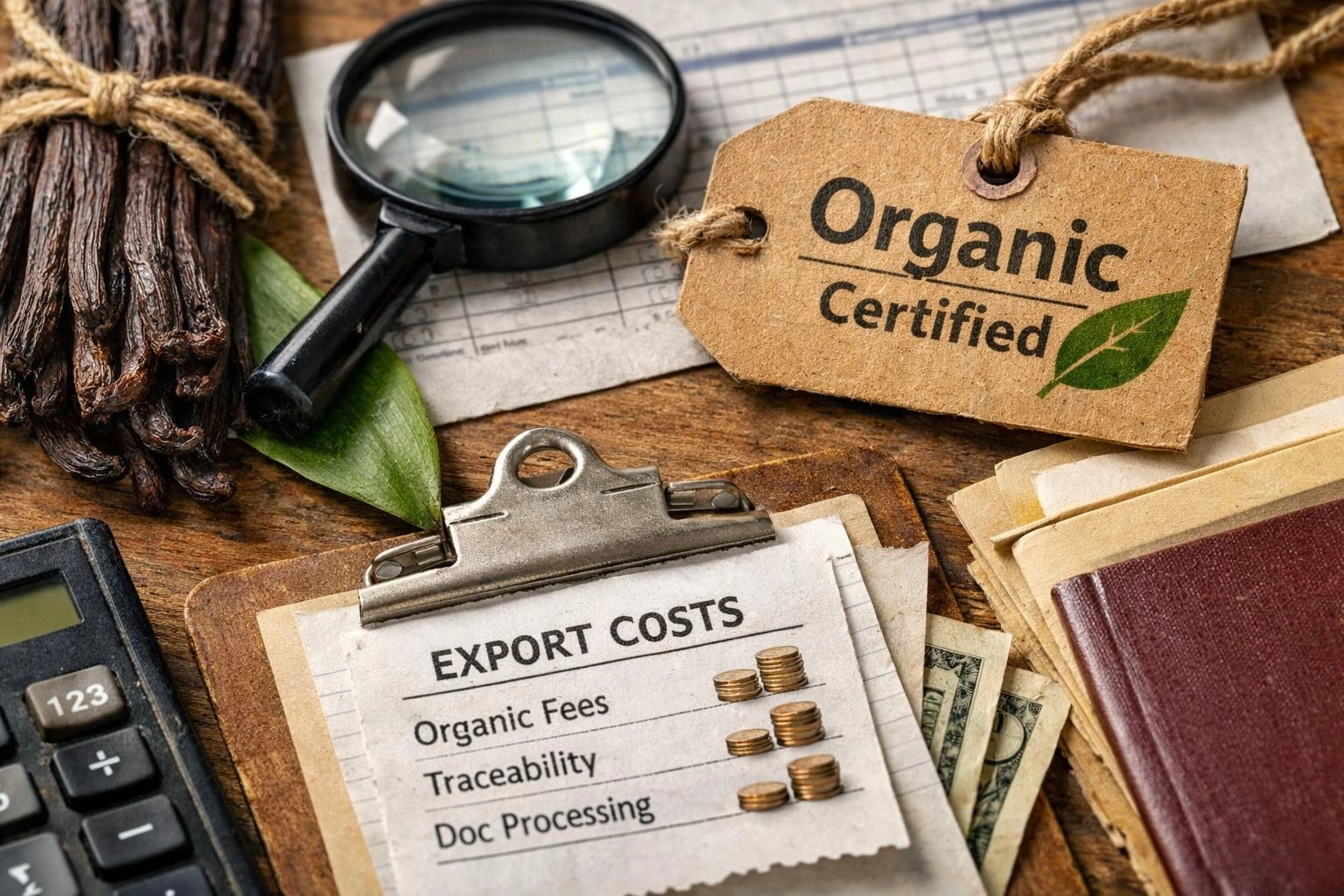
Buyers can lower premium costs by combining lots, planning volumes earlier, standardizing document requests, matching supplier records, and avoiding many small shipments. The biggest savings usually come from fewer split lots, less paperwork rework, and better planning before harvest and export booking.
5 Ways to Reduce Organic and Traceability Premiums Without Lowering Compliance
For buyers, the best savings usually come from removing friction, not lowering standards. Clear buyer specs, steady order patterns, and tidy records reduce the compliance uplift while keeping traceability and organic status intact. That helps most in specialty vanilla programs, where paper accuracy matters as much as flavor quality.
These products need stronger identity control, more detailed lot records, and cleaner paper trails than bulk vanilla material.
Which Vanilla Products Carry the Highest Documentation Premium?
Organic vanilla extract and vanilla caviar usually face the highest paperwork burden because they are higher-value specialty forms and are often sold with strict buyer specs. That is where the documentation premium shows up.
These products also sit closer to retail and food-service claims, so the exporter must protect the story behind the product. In practice, that means more review before release and a higher service charge for compliance management.
Vanillababa often helps buyers package these details into one export quote so the landed cost makes sense before booking. That matters most when the order combines extract, seeds, and Other specialty items that need separate identity control.
When a Buyer Should Choose Full Export Documentation?
Buyers should choose full export documentation when they need customs readiness, retail compliance, and low-risk international shipment release. The added cost makes sense when the shipment must move fast, prove origin, and support organic or traceability claims across several parties.
Full documentation is usually the right choice when the shipment needs a bill of lading matched to the invoice, a certificate of origin that supports country claims, and a phytosanitary certificate that clears food and plant-health review. It is also the safer choice for large buyers, contract programs, and any order where delay would be costly. In those cases, the paperwork is part of the product value, not an afterthought.
Frequently Asked Questions
Randrianantenaina Landry writes on Madagascar export compliance, organic certification premiums, and specialty vanilla logistics with a focus on practical buyer decisions and clean documentation.
Related Resources
Quality Control & Compliance Workflow for Vanilla Exports: Lab Testing to Phytosanitary Clearance
how does quality control and compliance work for vanilla export
How It WorksCustoms Documentation & Export Clearance Process for Vanilla: Paperwork, Certificates and Tariffs
what paperwork is needed to export vanilla from Madagascar
How It WorksRisk Management & Contingency Process for Vanilla Exports from Madagascar
how do exporters manage risks when exporting vanilla from Madagascar
Compared ToGrade A Gourmet Vanilla vs Grade B Vanilla: Which Madagascar Export Should You Buy?
Grade A vs Grade B vanilla export Madagascar