Trusted Local Service Experts
Comparison of Bourbon Vanilla Export Types
Short answer: Export types differ by processing, certification, and intended use; compare whole beans, organic, extracts, and caviar by features and typical cost bands.
| Type | Key Features | Typical Cost | Best For |
|---|---|---|---|
| Red Bourbon (cured whole bean) | Hand-cured pods with balanced moisture, aromatic vanillin profile, common grade A/B classification, long shelf life. | Typical ranges published by suppliers vary by grade and season; illustrative cost bands are used in negotiations. | Artisanal retail, premium food manufacturing, chefs. |
| Black/Traditionally Cured Bourbon | Fully fermented beans with deep aroma, higher surface oil, often lower moisture. | Typical ranges reflect higher processing; price varies by aroma intensity and vanillin content. | Perfumery, high-end confectionery, fragrance houses. |
| Organic Red Bourbon (certified) | Certified under EU organic certification or USDA organic; traceable supply chain and audited curing. | Higher typical cost due to certification and compliance overhead. | Organic product lines, premium labels, health-focused manufacturers. |
| Vanilla Extracts and Concentrates | Processed in Madagascar to reduce logistics cost; available as organic or conventional extracts with measured vanillin levels. | Cost depends on concentration (single-fold to double-fold) and organic status. | Large-scale food manufacturing, beverage, ready-mix producers. |
| Vanilla Caviar / Vanilla Seeds | Pod paste, scraped seeds with intense flavor; short-term shelf life once opened; often sold in small retail jars. | Premium per gram compared with whole beans due to labor and processing. | Gourmet chefs, bakeries, luxury food gifts. |
Type: Red Bourbon (cured whole bean)
Short answer: Red Bourbon cured whole beans are the standard export for culinary and retail uses because they combine aroma, flexibility, and measurable quality metrics.
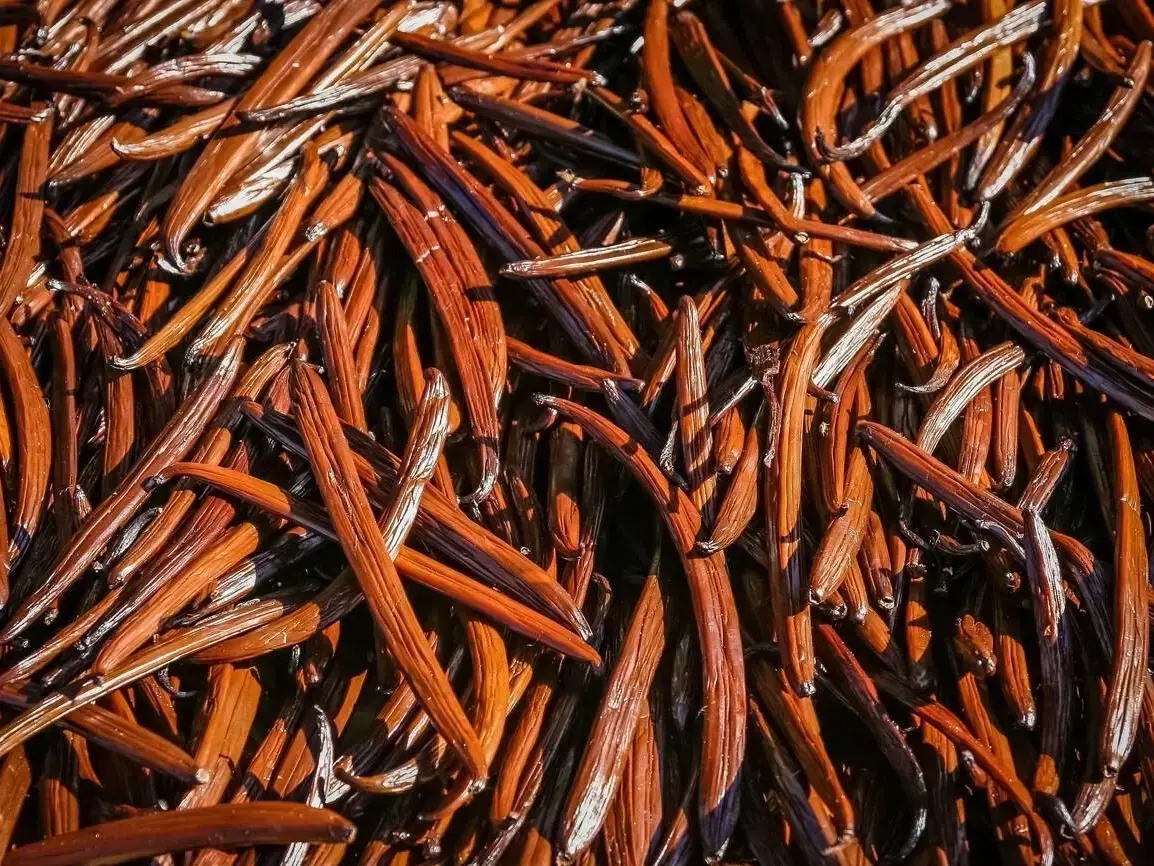
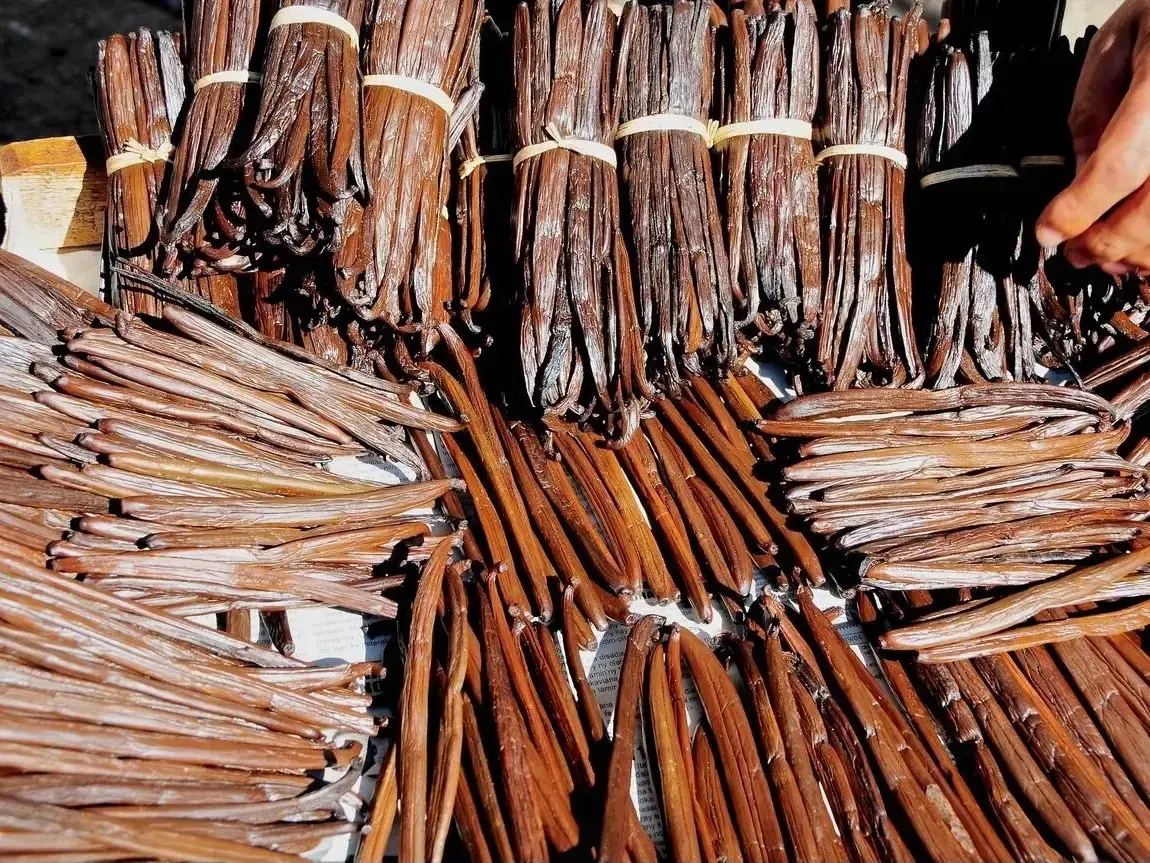
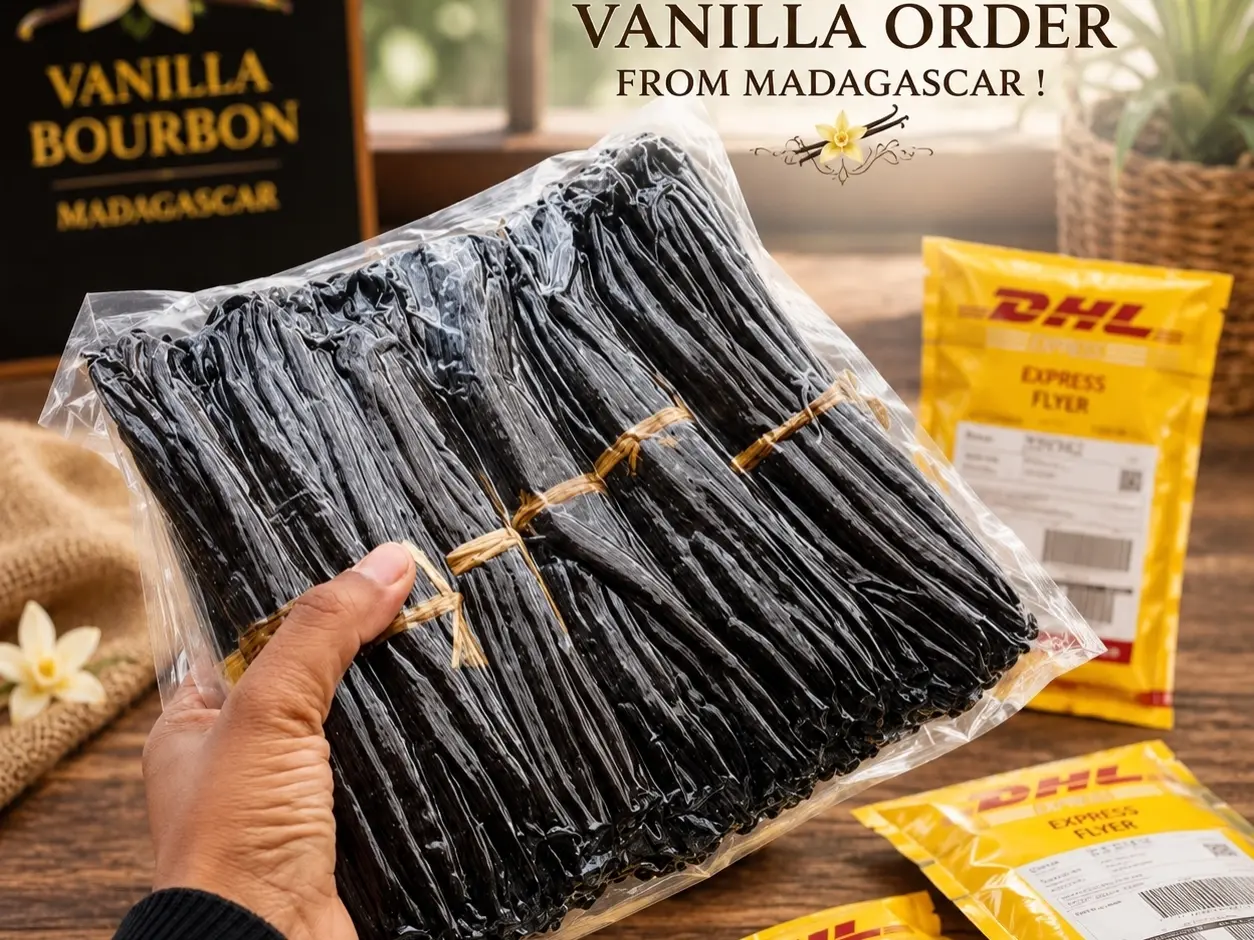
Red cured beans are harvested as green pods and undergo sun-drying and slow fermentation to develop aroma. Buyers check moisture content, pod length, oiliness, and vanillin as quality metrics. Use cured beans when you want whole-pod infusion, long shelf life, or to split pods for seeds. Pros: versatile and long-lasting; cons: variability in grade A vs B affects price and extract yield.
Type: Black/Traditionally Cured Bourbon (fully fermented)
Short answer: Black traditionally cured Bourbon beans are fully fermented to deepen fragrance, making them preferred where high aroma and oil content are required.
Traditional curing emphasizes controlled fermentation and slow drying to concentrate aroma compounds and surface oils. These beans often show higher perceived aroma intensity and may present lower moisture content. They are ideal for perfumery and high-end confectionery. Pros: stronger aroma and oil; cons: sometimes shorter perceived freshness window and higher cost per usable extract.
Type: Organic Red Bourbon (certified organic export)
Short answer: Organic Red Bourbon is certified under regimes such as EU organic certification or USDA organic and is required when buyers need audited, chemical-free supply chains.
Organic Vanilla Extract and whole organic beans come with formal organic certification (EU organic certification or USDA organic). Vanillababa manages traceability and audits for compliance. Organic supply often has lower yields and higher cost per kg due to farming limits and certification overhead. Use when product labels demand certified organic ingredients or when consumers prefer certified sourcing.
Type: Vanilla Extracts and Concentrates (Made in Madagascar)
Short answer: Vanilla extract and concentrates processed in Madagascar provide measured flavor strength and reduce transport of bulk pods for industrial users.
Extracts are solvent- or water-alcohol based concentrates made from cured beans; suppliers offer standardized vanillin levels and fold-strength. Organic Vanilla Extract options are available with matching certification. Pros: consistent flavor dosing and easier handling for manufacturers; cons: less flexibility for whole-pod retail and perception differences versus whole beans.
Type: Vanilla Caviar / Vanilla Seeds (pod paste and seeds)
Short answer: Vanilla caviar (scraped seeds and paste) is the specialty format offering intense flavor used in gourmet gastronomy and premium retail.
Vanilla caviar is produced by splitting pods and collecting seeds or by converting pods to a paste. It concentrates flavor and is usually sold in smaller retail packs. It is a hyponym of vanilla extract and cured bean products. Pros: immediate, intense flavor ideal for pastry and luxury products; cons: per-gram cost is higher and shelf life is shorter once opened.
Export Characteristics that Drive Price and Use
Short answer: Price and best use are driven by vanillin content, moisture, and declared grade, along with certifications and batch traceability.
Typical buyer checks include measured vanillin (reported as a range by laboratories), moisture content (most beans fall between typical moistures for good storage), and grade A vs B which classifies appearance and moisture for culinary or industrial use. Other factors: pod length, aroma profile, fermentation level, and export documentation like certificates of origin and organic certification. Vanillababa provides lab reports and sample analysis so buyers can compare vanillin and moisture before placing orders. These attributes also affect expected landed cost and required shelf life handling.
Typical Uses by Type and Industry
Short answer: Each export type maps clearly to industries: whole beans for artisanal retail and chefs, extracts for large-scale food manufacturing, caviar for gourmet use, and black beans for perfumery.
- Food manufacturing: Uses extracts and Grade B beans for cost-effective flavoring and consistent vanillin delivery.
- Perfumery: Prefers black/traditionally cured beans and concentrated extracts where aromatic oils matter.
- Artisanal retail and chefs: Favor Grade A whole red cured pods and vanilla caviar for visible quality and intense flavor.
Quality Grading & Export Checklist (for buyers)
Short answer: Follow a simple checklist covering grade A vs B, certification, lab reports, and packaging before committing to volume orders.
- Inspect sample for pod length, surface oil, and aroma; confirm Grade A or Grade B classification.
- Request lab analysis for vanillin and moisture content to predict extract yield and shelf life.
- Verify export paperwork, origin, and any EU organic certification or USDA organic documents if organic product is required.
- Confirm packaging and storage recommendations to protect aroma profile during shipping.
Logistics, Certification and Sourcing from Vanillababa (Madagascar)
Short answer: Vanillababa manages sourcing, certification, and export documentation to meet buyer needs and local export regulations in Madagascar.
Vanillababa sources Red Bourbon Vanilla directly from growers, manages traditional curing or extract production, and supports organic certification processes (EU organic certification, USDA organic). Export logistics include packing for moisture and aroma protection, providing lab reports on vanillin and moisture, and preparing export documentation per Madagascar export regulations. Buyers should plan lead times for certified organic batches and expect seasonal availability affecting price per kg and supply chain scheduling. /contact/
Frequently Asked Questions
Related Resources
Pricing Guide: Whole Pods, Vanilla Cuts, Extract, Paste and Powder
What It CostsCertification & Traceability Costs: Organic, Batch Traceability and Export Documentation Premiums
How It WorksQuality Control & Compliance Workflow for Vanilla Exports: Lab Testing to Phytosanitary Clearance
Compared ToBlack Bourbon Vanilla vs Red Bourbon Vanilla: Trade-offs for Export Buyers