Madagascar Vanilla Export Documentation Checklist for Exporters
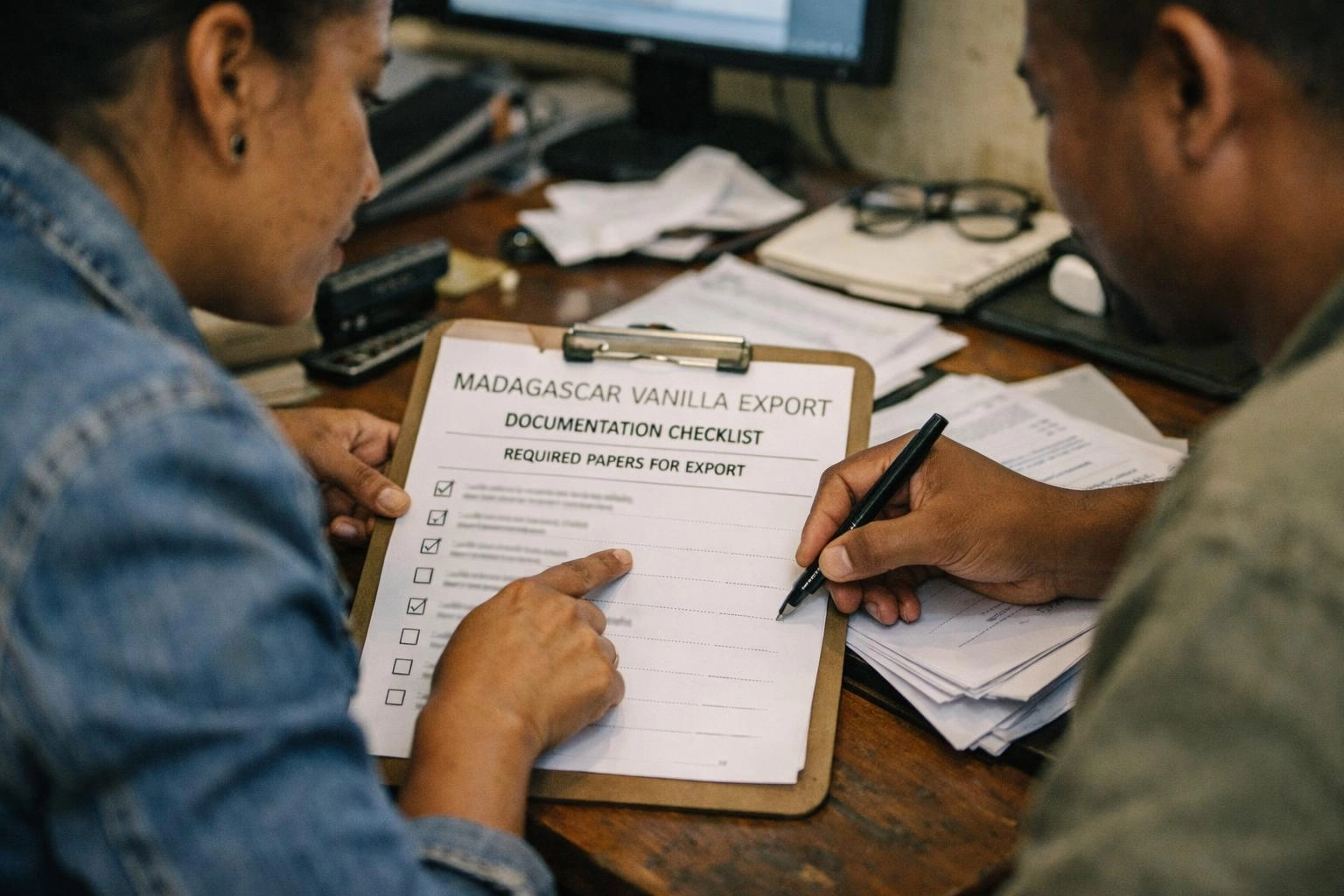
Madagascar vanilla export documentation checklist helps exporters gather the papers they need for customs clearance, buyer checks, and shipment release. For vanilla exports from Madagascar, the core documents usually include the commercial invoice, packing list, bill of lading or airway bill, certificate of origin, phytosanitary certificate, export declaration, and any buyer-country compliance documents. Exporters should also confirm traceability, inspection, and labeling rules before dispatch. A complete checklist cuts delays, helps prevent rejection at port, and supports smooth exports to Asia, Europe, America, and China.
Madagascar vanilla export documentation checklist requires the right papers for legal, traceable, and buyer-compliant vanilla export shipments. For vanilla beans and cured vanilla, the core export file usually centers on the commercial invoice, packing list, bill of lading or airway bill, certificate of origin, phytosanitary certificate, and export declaration, with extra buyer compliance papers added by destination.
What Documents Do You Need to Export Vanilla from Madagascar?
| Document | Why it matters | Typical use |
|---|---|---|
| Commercial invoice | Shows transaction value, seller and buyer details, and invoice details used for valuation. | Customs, payment, and buyer review |
| Packing list | Lists lot number, container number, weights, and package count. | Cargo check and inspection matching |
| Certificate of origin | Proves the goods come from Madagascar and supports trade documentation. | Origin proof and import compliance |
| Phytosanitary certificate | Shows plant-health compliance required before export release. | Sanitary checks and destination clearance |
Madagascar export authority and customs clearance teams usually expect a full trade document set before they release the shipment. Along with the core export paperwork, the bill of lading or airway bill, export declaration, and any buyer-country compliance documents should match the cargo exactly. This matters even more in Madagascar, where port handling and island logistics can create gaps between cargo, inspection, and transport records if the shipping documents are not aligned.
Madagascar vanilla exporters should prepare the pre-shipment paperwork before cargo moves to port. This includes seller registration, export authorization steps, traceability files, product specifications, and any inspection requests needed to prove the vanilla is legal, identifiable, and ready for export.
Before Shipping: The Paperwork to Prepare First
Traceability from farm origin to exporter matters a lot for Madagascan vanilla because buyers often check authenticity and source history. A clean export file should show where the vanilla came from, who handled it, and how the lot was assembled. That local supply-chain proof helps exporters avoid disputes when buyers ask for origin proof or food safety support later.
Madagascar customs and inspection teams check the transport and compliance documents during export clearance. They usually compare the commercial invoice, packing list, phytosanitary certificate, inspection results, and transport document details to make sure the shipment matches the declared vanilla lot and destination.
During Export Clearance: The Documents Customs and Inspectors Check
Customs clearance goes more smoothly when every line in the export file matches the cargo and the route. Officers and inspectors often compare the transport document with the invoice, packing list, and origin proof to catch errors early. In island logistics, a small mismatch can slow release, so exporters should keep the compliance documents consistent from warehouse to port.
After clearance, exporters may still need to send buyer-facing and payment-support documents. These often include the certificate of origin, shipping documents, product specification sheet, and bank documents such as a letter of credit if the sale uses documentary payment terms.
After Clearance: The Papers Buyers and Banks May Still Request
Buyers in Europe, China, America, and Other markets often ask for extra trade documentation even after export clearance is complete. The bank may also review the paperwork if the sale uses a letter of credit. Keeping the export file neat helps the buyer verify the shipment without asking for repeated corrections.
Madagascar vanilla shipments are often delayed when documents do not match the cargo, signatures are missing, traceability is incomplete, or labels conflict with the buyer’s specs. These red flags trigger holds, rechecks, or correction requests that can slow port release and destination clearance.
Red Flags That Can Delay a Madagascar Vanilla Shipment
These problems matter because customs brokers, inspectors, and buyers all read the export file differently. A label error can look small, but it may create a bigger food safety or origin proof issue later. The safest approach is to review every shipping document before loading.
Madagascar vanilla exporters should adapt the document pack to the destination market because Asia, Europe, America, and China can require different compliance proofs. The base export file stays similar, but food safety, labeling, origin, and import documentation can change by buyer, route, and destination customs rules.
Destination-specific Documentation for Asia, Europe, America, and China
| Destination | Extra focus | Common document needs |
|---|---|---|
| Asia | Import compliance and buyer requirements | Shipping documents, origin proof, food safety documents, and product specs |
| Europe | Traceability and labeling discipline | Certificate of origin, phytosanitary certificate, inspection records, and buyer compliance files |
| America | Route-specific customs and food safety checks | Commercial invoice, bill of lading, export declaration, and import paperwork |
| China | Buyer rules and country-specific requirements | Origin proof, food safety documents, transport records, and buyer specification sheet |
Destination-market requirements can change by buyer route, so the document pack must adapt for Europe, China, America, and Other import regimes. Madagascar exporters should keep the export paperwork flexible enough to satisfy different customs systems while protecting the same lot identity. A customs broker can help align the shipping documents with the import compliance rules at the destination.
Frequently requested answers about Madagascar vanilla shipping documents are below, with the key trade documentation points explained in plain language.
Frequently Asked Questions
Randrianantenaina Landry recommends treating the export file as one compliance package, not separate papers. For Madagascar vanilla, that means aligning customs clearance, inspection, transport, and buyer documents so the shipment can move cleanly from farm origin to destination customs.
If you want help checking your export paperwork before dispatch, use the contact page to review your shipping documents and origin proof against your destination rules.
Use this checklist as your export paperwork map: prepare the pre-shipment file first, verify customs clearance documents next, and keep the buyer package ready for payment or destination review. A complete, consistent export file helps Madagascar vanilla move faster and with fewer checks.
Related Resources
Export Pricing to China, Asia, Europe, America and UAE: Freight, Duties and Landing Costs
how much does it cost to export Madagascar vanilla to China/Europe/USA/UAE
What It CostsUrgent Shipments & Fast Sample Order Pricing: Expedited Logistics and Rush Fees
how much does expedited vanilla shipping and fast sample orders cost
What It CostsPackaging, Insurance and Compliance Costs for International Vanilla Buyers
what are packaging insurance and compliance costs for exporting vanilla from Madagascar
How It WorksMadagascar Vanilla Export: Step-by-Step Export Process for Bourbon Vanilla
how does Madagascar vanilla export process work step by step