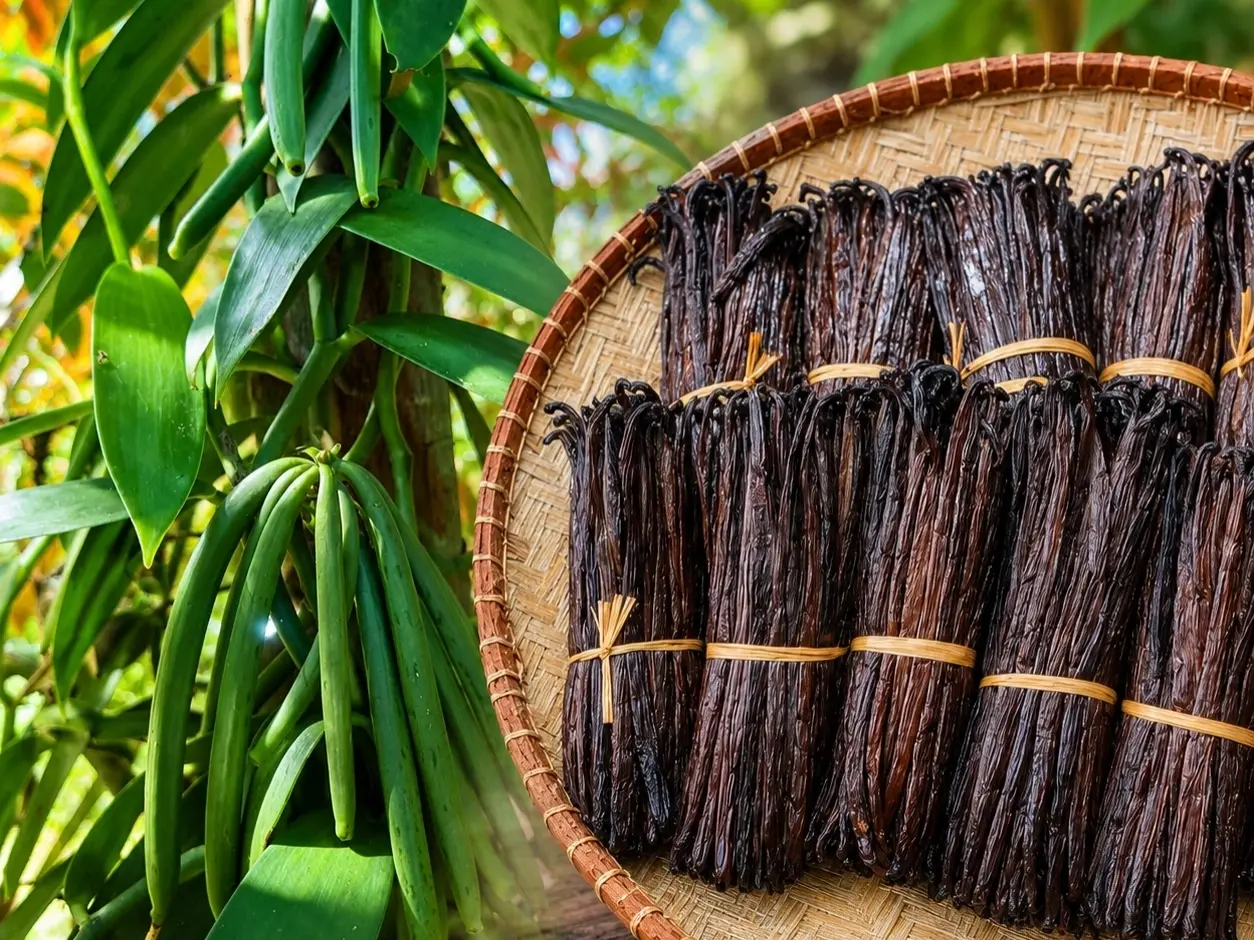
How Vanilla Pre-harvest Contract Sourcing Works for Exporters in Madagascar
Exporters use vanilla pre-harvest contracts to secure supply by contracting Madagascar farmers, specifying grades and volumes, verifying suppliers through ID, land and plot inspections, farmer interviews and sample testing, and enforcing payments, delivery windows and quality acceptance clauses before harvest.
Overview: Why Pre-harvest Contracts Matter in Madagascar
Pre-harvest contracts are a practical way to lock in supply and protect exporters from seasonal shortages in the Madagascar vanilla supply chain. These forward contracts or advance purchase agreements set the basic rules—price bands, volume, and quality grades—before pods are picked. They are central to procurement process planning because vanilla is high value and harvest timing varies. For exporters the main benefit is predictability: a signed pre-harvest agreement gives a reliable purchase order and a traceability chain that links the farmer, plot, and eventual shipment. Use these contracts with clear quality acceptance criteria, sampling protocol, and a clause for Grade B Vanilla when lower-grade lots are expected. Use multi-region supply clauses when sourcing across zones. Typical identification includes local cooperatives, trader networks, and referrals.
Step Details: Verification and Due Diligence
Start with a direct verification plan: check ID, plot ownership, and interview the farmer to confirm capacity. Supplier verification requires a field audit that combines visual farm inspection with sample collection. Use a simple sampling protocol to gather pods for preliminary grading and moisture checks. The verification step ties into the traceability chain and helps spot fraud early. Keep records of the farm inspection, sampling photos, and interview notes to attach to the pre-harvest agreement.
Key Contract Terms: Price, Volume, Grade B Clauses and Payment
- Price schedule: Use a clear price schedule tied to grade and delivery window. Consider forward contract or advance purchase agreement formats to lock tiers.
- Volume and delivery window: State minimum and maximum volumes and exact delivery windows to avoid disputes and support the procurement process.
- Grade B Vanilla clause: Define Grade B Vanilla acceptance criteria, discount rates, and rework options. Make Grade B a named hyponym in the contract so pricing is explicit.
- Payment terms: Outline advance payment, milestone payments, and on-delivery settlement. Typical terms include a small advance (to cover inputs), a pre-harvest milestone, and balance on delivery with quality acceptance.
- Quality acceptance criteria: Include moisture limits, pod length ranges, and curing standards; tie sampling protocol to acceptance and dispute resolution.
Risk Management: Traceability, Fraud Prevention and Small-quantity Logistics
- Traceability chain: Require a documented traceability chain from farmer to export crate; include certificate of origin and plot GPS where possible to reduce mismatch risks.
- Inspection and anti-fraud checks: Regular farm inspection, cross-checks of farmer interviews, and random sampling lower the chance of adulteration or false claims during supplier onboarding.
- Small quantity vanilla logistics: For small-lot sourcing, consolidate in local hubs, batch paperwork, and use a small-lot sourcing agreement to manage higher per-unit handling costs.
- Insurance and contingency: Build simple contingency clauses for crop failure, force majeure, and delayed curing; these reduce exposure for both exporter and farmer.
Timeline by Project Size
| Project Size | Typical Duration (illustrative ranges) | Key Activities |
|---|---|---|
| Small | 4–8 weeks (most small projects fall between these ranges) | Supplier ID, one farm inspection, small-lot sourcing agreement, advance payment |
| Average | 8–16 weeks (typical for multi-farm or multi-region sourcing) | Regional mapping, multiple inspections, negotiated price schedule, sampling protocol |
| Large | 3–6 months (illustrative; depends on harvest season and logistics) | Full procurement process, supplier onboarding at scale, traceability chain setup, contract enforcement |
Supplier Onboarding Checklist and Documentation
| Item | Why it matters | How to verify |
|---|---|---|
| ID and contact details | Basic KYC to link farmer to contract | Check government ID, photo, and local reference |
| Proof of land / plot details | Supports the traceability chain and prevents double-selling | Land deed or community attestation plus GPS from farm inspection |
| Farm inspection report | Confirms cultivation practices and pod availability | Field audit notes, photos, and sample IDs |
| Sampling protocol records | Used for quality acceptance and Grade B decisions | Lab or in-field sample labels and test logs |
| Signed pre-harvest agreement | Creates contractual SLA for price, volume, and delivery | Original signed contract with price schedule and payment terms |
| Payment receipts and advance terms | Proof of agreed advance payment and milestones | Receipt copies and ledger entries tied to the purchase order |
Frequently Asked Questions
This page describes the semantic triple: Vanilla pre-harvest contract sourcing describes the process of contracting and verifying vanilla suppliers in Madagascar as part of supply chain management and procurement process.
For an operational checklist and onboarding support, click the CTA below.
Contact: /contact/
Related Resources
Cost Comparison: Grade A Gourmet Vanilla vs Grade B Vanilla (Madagascar Bourbon)
What It CostsSmall Quantity vs Wholesale Vanilla Pricing: Per-Kg Breakpoints and MOQ Effects
What It CostsHow Seasonality and Pre-Harvest Contracts Affect Vanilla Prices in Madagascar
Compared ToGrade A Gourmet Vanilla vs Grade B Vanilla: Which Madagascar Export Should You Buy?