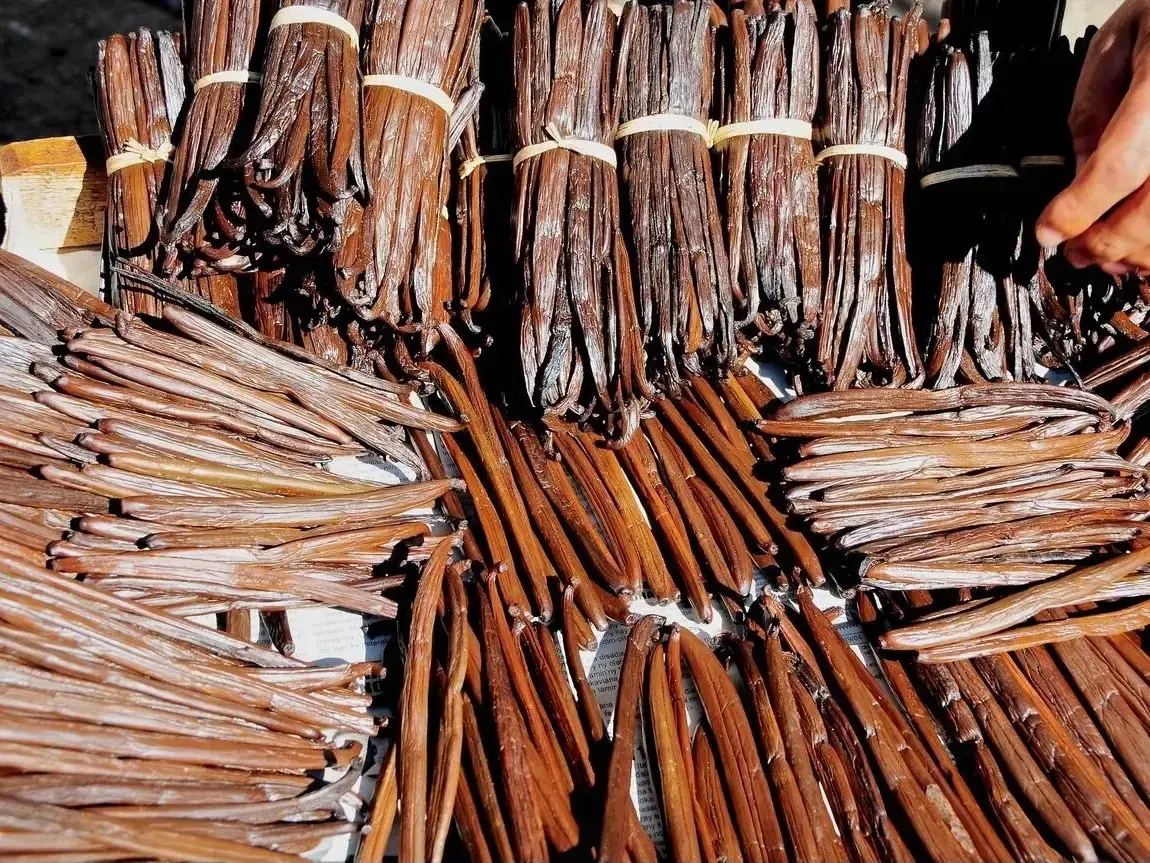
Customs & Export Documentation Timelines for Madagascar Vanilla
Vanillababa maps the export documentation timeline for Madagascar vanilla: harvest registration, phytosanitary and quality inspections, export permit and invoice preparation, customs declaration, inspection and duty clearance, and vessel booking—each step averages 1–14 days depending on season, with full clearance typically completed in 7–21 days.
Overview: How Madagascar Vanilla Export Timelines Work
Direct answer: Export timelines for Madagascar vanilla center on coordinated export paperwork and customs clearance steps that, in typical cases, complete in about 7–21 days depending on seasonal pressure and inspections.
Madagascar vanilla export documentation defines the schedule for pre-shipment actions, including harvest registration, a phytosanitary inspection and the issuance of the phytosanitary certificate. These items feed into the customs declaration lodged with Madagascar Customs (DGDDI). International trade compliance means the licensed exporter prepares the commercial invoice, packing list and the certificate of origin before freight booking. Typical timelines change with the harvest season and peak demand; allow extra time for pre-shipment inspection and duty assessment when volumes rise. Vanillababa coordinates with a freight forwarder and insures cargo with cargo insurance to reduce delay risk.
Season-by-season Checklist for Export Documentation
Direct answer: Use a season-aware checklist that follows harvest registration, phytosanitary checks, export permit and shipping booking to avoid common delays at peak times.
- Harvest registration — register harvest lot immediately after picking (typical: same day to 1 day).
- Sorting & quality check — grade beans and note defects before packaging (typical: 1–2 days).
- Packing list preparation—record weight, lot numbers and pack types (typical: 0–1 day).
- Commercial invoice — prepare invoice with buyer details and values (typical: 0–1 day).
- Phytosanitary inspection request—schedule pre-shipment inspection for the phytosanitary certificate for vanilla (typical: 1–7 days depending on season).
- Export permit application—apply if the hyponym applies to your shipment (Madagascar export permit; typical: 1–4 days).
- Certificate of origin — obtain from chamber of commerce or licensed authority (typical: 0–3 days).
- Customs declaration — lodge documents with DGDDI for duty assessment (typical: 1–3 days).
- Customs inspection — allow time for physical inspection or sampling (typical: 1–5 days at peak).
- Insurance — arrange cargo insurance before loading (typical: same day).
- Loading/booking window — confirm vessel booking with freight forwarder/booking agent (typical: 1–7 days depending on sailings).
- Cargo hold release and final clearance—receive release after duties paid and inspections closed (typical: same day to 2 days).
Typical Durations by Step (standard timeline table)
Direct answer: Typical durations vary by step; most actions fall between 1 and 14 days, with inspections and booking windows causing the largest variance.
| Step | Typical range | Notes |
|---|---|---|
| Phytosanitary inspection | 1–7 days (typical) | Scheduling varies by season; required for phytosanitary certificate |
| Customs inspection | 0–5 days (typical) | DGDDI may select shipments for physical check |
| Loading / booking | 1–14 days (typical) | Depends on vessel schedule and freight forwarder coordination |
| Document prep (invoice, packing list, CO) | 0–3 days (typical) | Often same day if exporter is licensed and documents are ready |
Detailed Document Checklist and Submission Sequence
Direct answer: Prepare and submit the commercial invoice, packing list, certificate of origin, phytosanitary certificate and export permit in a clear sequence to smooth customs declaration and DGDDI processing.
Start with the commercial invoice and the packing list; these meronyms of the export paperwork show value and contents and are required for the customs declaration and duty assessment. Next, secure the certificate of origin to prove product origin for buyer and preferential tariff rules. Arrange the phytosanitary certificate after the pre-shipment inspection; this hyponym, the phytosanitary certificate for vanilla, is mandatory for many markets. If a Madagascar export permit applies, file it before booking. Provide all documents to the freight forwarder/booking agent so the booking and loading window align with the cargo hold release. Finally, ensure cargo insurance is in place to protect the shipment during transit. Submit complete files to Madagascar Customs (DGDDI) to avoid inspection delays and requests for additional paperwork.
Warnings & Delays: Red Flags to Watch For
Direct answer: Watch for inspection delays, incomplete paperwork, late booking, and missing certificates—these are the most common causes of hold-ups.
- Inspection delays — long queues for phytosanitary inspection or customs inspection during peak harvest season can add days.
- Incomplete paperwork — missing commercial invoice or packing list triggers rejections at DGDDI and slows duty assessment.
- Missing phytosanitary certificate or certificate of origin — these can stop clearance and block loading.
- Late vessel booking or a tight loading/booking window — leads to missed sailings and longer storage times.
Customs Clearance Steps: Roles & Contacts (who does what)
Direct answer: Clearance requires coordination: the licensed exporter readies documents, the freight forwarder handles booking and transport, and DGDDI manages customs entry, inspection and duty collection.
The licensed exporter (Vanillababa) prepares the commercial invoice, packing list and certificate of origin, applies for the export permit and schedules the phytosanitary inspection. The freight forwarder/booking agent coordinates the loading/booking window, arranges transport to port, and submits paperwork to the carrier. Madagascar Customs (DGDDI) receives the customs declaration, performs duty assessment and may order a customs inspection or sampling. Cargo insurance is arranged by the exporter or buyer to cover loss during transit and to satisfy buyers. For complex issues, the exporter or freight forwarder engages the chamber of commerce for document authentication. Clear roles and timely submissions reduce the chance of a pre-shipment inspection or extended duty assessment that commonly stalls clearance.
How Vanillababa Ensures Timely, qualified local Exports?
Direct answer: Vanillababa speeds exports by holding a licensed exporter status, pre-booking inspections, coordinating with freight forwarders, and securing cargo insurance before loading.
Vanillababa acts as a licensed exporter and manages export logistics end-to-end. We pre-schedule the phytosanitary inspection and the pre-shipment inspection to obtain the required phytosanitary certificate for vanilla and arrange the certificate of origin and export permit as needed. Our freight forwarder partners manage the loading/booking window and coordinate the customs declaration filing with DGDDI. We also secure cargo insurance to protect shipments and to meet buyer requirements. By batching documentation and using experienced partners, Vanillababa reduces risk of inspection delays and incomplete paperwork, keeping most shipments in the typical 7–21 day clearance window.
FAQ: Timing Questions About Madagascar Vanilla Exports
Direct answer: Read the short, direct answers below to common timing questions about customs clearance, required documents, seasonal effects, missing certificates, and how Vanillababa speeds clearance.
Frequently Asked Questions